
What is 1,4-dioxane pollution?

It’s no secret that industrial chemicals are making their way from factories and other big polluting facilities into our bodies and the environment.
A particularly concerning industrial chemical to watch is 1,4-dioxane, a likely carcinogen found in the following industrial applications:
- Solvents and degreasers,
- Paint strippers,
- Adhesives,
- Dyes,
- Varnishes, waxes, and more.
In February 2026, a North Carolina judge confirmed that state environmental regulators can limit the amount of 1,4-dioxane being discharged into drinking water and require pollution controls in a permit, but three cities that discharge the chemical upstream of almost one million people have appealed this decision — Asheboro, Greensboro, and Reidsville.
For more than 10 years, we have known that these cities are the leading sources of 1,4-dioxane in North Carolina. Now, they have teamed up to fight the North Carolina Department of Environmental Quality’s ability to limit toxic 1,4-dioxane pollution.
The number of chemicals created and in use by industry that wind up polluting our water and communities has grown dramatically in recent decades.
The fight for a healthy environment
1,4-Dioxane can’t be removed with conventional water treatment methods.
The Clean Water Act provides the authority to regulate this harmful chemical, but there are no federal drinking water standards to control this specific pollution. This means that states play an important role in ensuring communities are protected from this harmful chemical.
Our communities and businesses deserve clean water that is free from industrial chemicals like 1,4-dioxane that affect our health, our families’ health, and the health of our rivers and waterways.
Here’s what you need to know about 1,4-dioxane and how we can stop it from harming and making more people sick.
What is 1,4-dioxane?
1,4-Dioxane is a clear, industrial chemical that is toxic to people even in very small amounts and often created as waste from industrial manufacturing.
This chemical does not break down in water, meaning once it is dumped into our rivers, it can travel long distances and contaminate drinking water.
1,4-Dioxane’s negative effects on public health and the environment have been studied for decades. States and local wastewater treatment plants need to use their existing legal authority to stop 1,4-dioxane pollution at its sources, but too often do not.
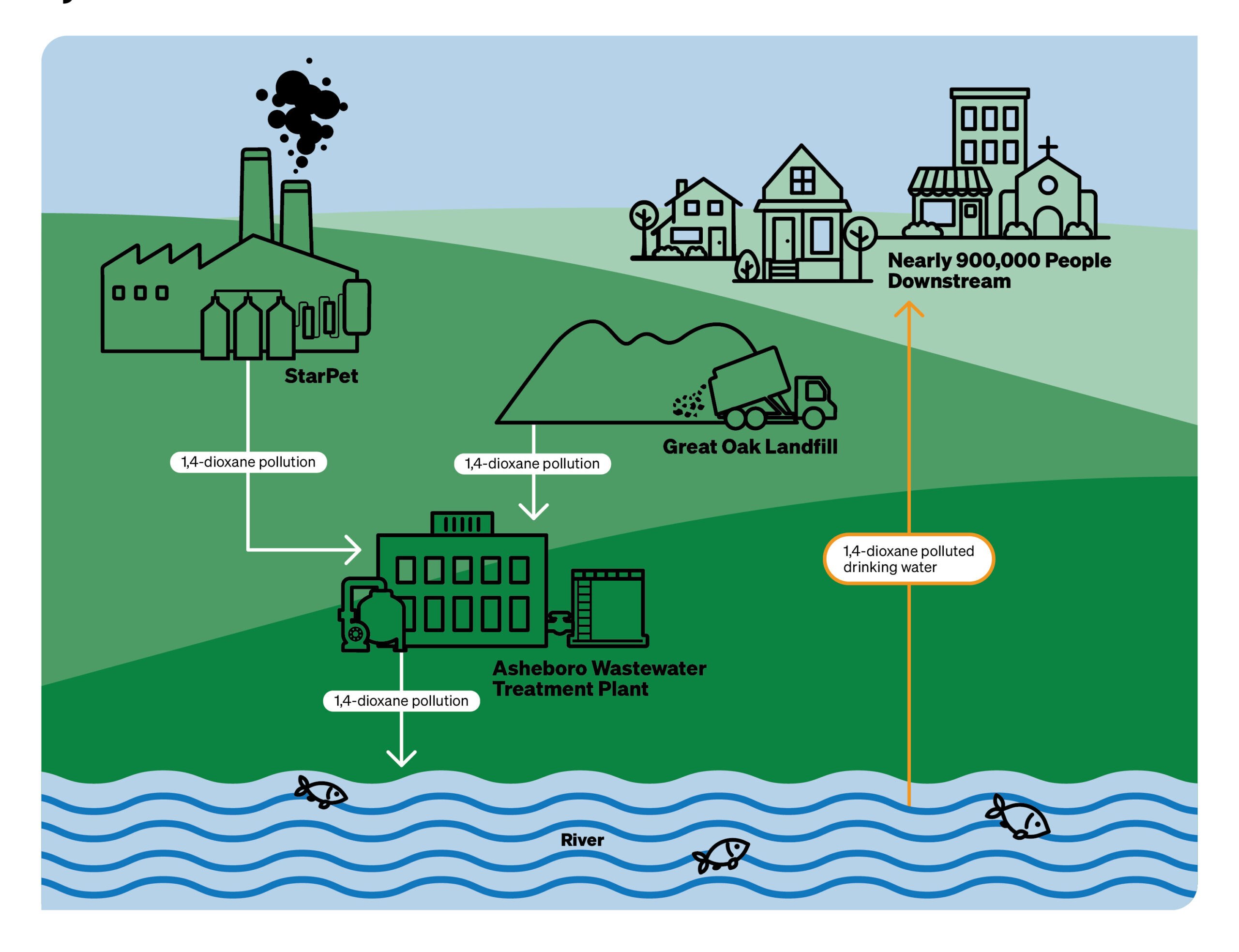
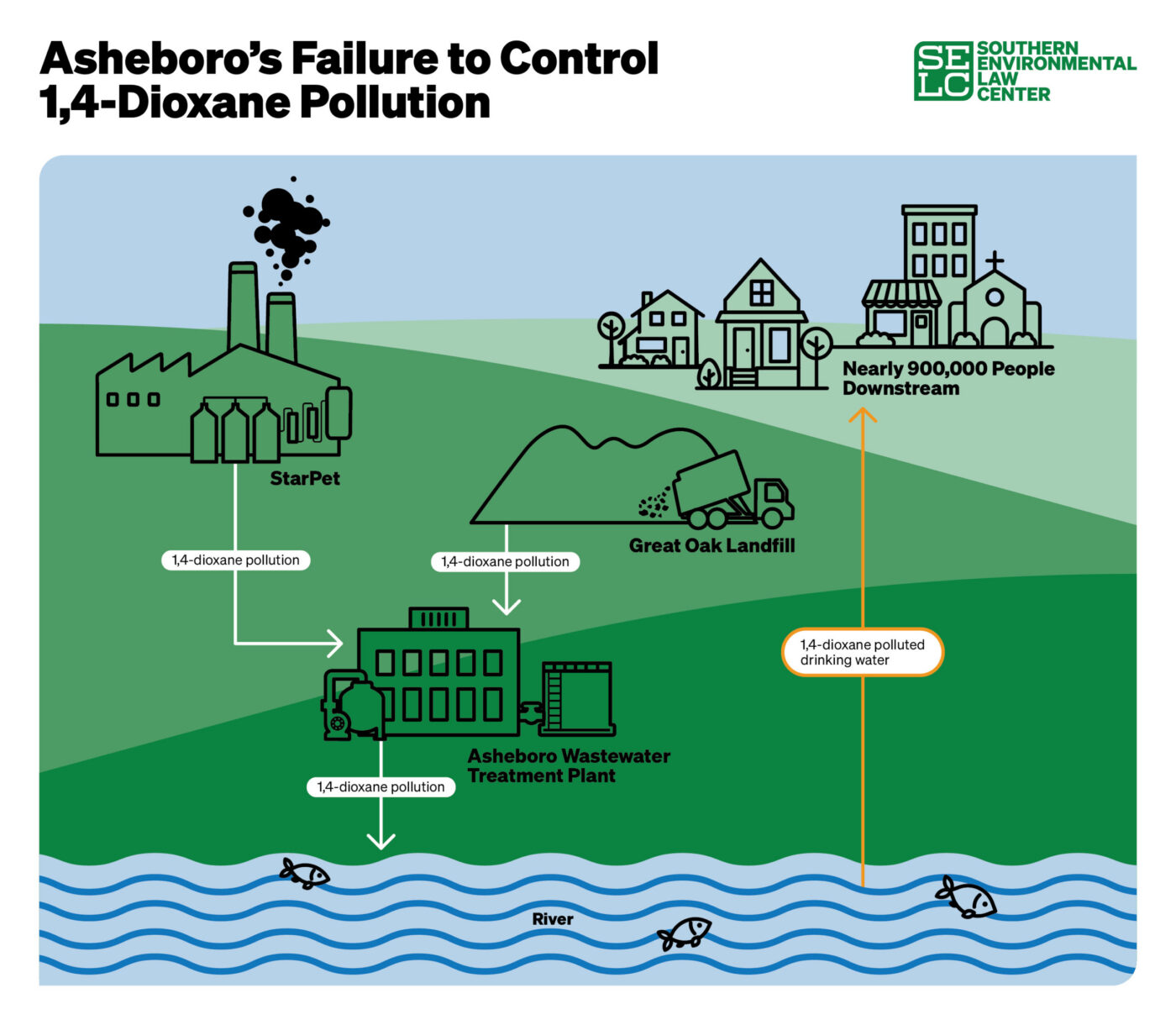
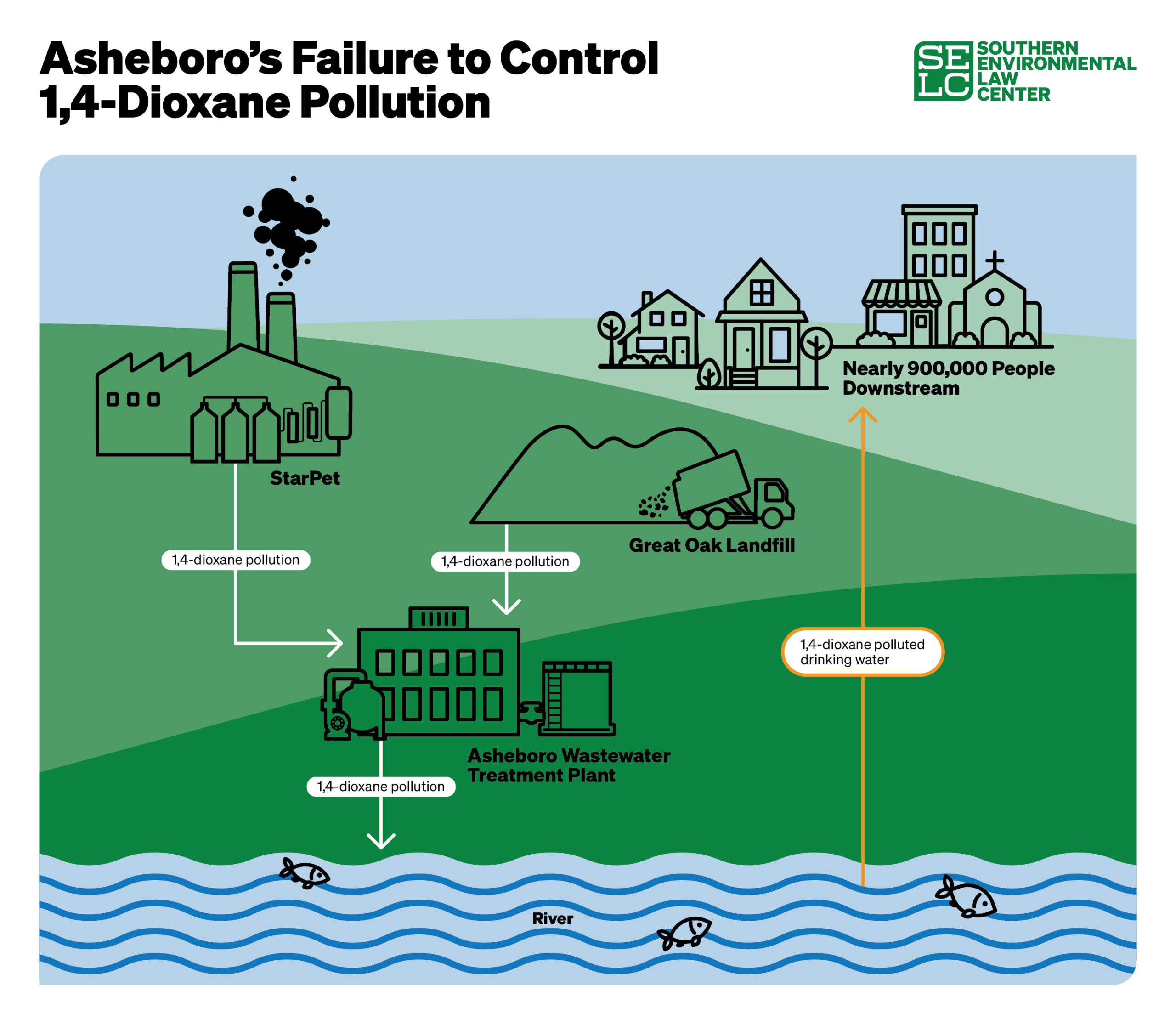
Asheboro’s failure to control 1,4-dioxane pollution
How does 1,4-dioxane pollution happen?
It’s often a toxic byproduct of industrial manufacturing.
Some industries release 1,4-dioxane into our rivers, creeks, and streams and others send their waste to city wastewater plants. Because industry and wastewater treatment plants do not remove 1,4-dioxane from their wastewater, the toxic chemical flows downstream into our drinking water supplies.
1,4-Dioxane is not removed by conventional drinking water treatment. Once released by industries and wastewater treatment plants, 1,4-dioxane can and will contaminate drinking water supplies and groundwater.
What are the health harms from 1,4-dioxane pollution?
1,4-Dioxane has been linked to multiple forms of cancer, with chronic exposure known for causing severe damage to the liver and kidneys.
The U.S. Environmental Protection Agency says drinking water with 0.35 parts per billion of this chemical — a very small amount — increases the risk of cancer.
Along with ingestion, industrial chemicals can be inhaled and absorbed through the skin. Short-term exposure can cause eye, nose, throat, and skin irritation.
Keep toxic pollution out of North Carolina’s waterways.
How can toxic 1,4-dioxane pollution be stopped?
Technologies exist to remove 1,4-dioxane from industrial wastewater. If industries use these technologies, the pollution would be stopped before it reaches our drinking water.
State permitting agencies and local wastewater treatment plants have the legal responsibility to ensure industries are properly controlling their pollution at the source.
We know this process works. The Southern Environmental Law Center has succeeded in getting industries to stop sending toxic waste to city wastewater plants.
When polluters are held accountable, they can stop their 1,4-dioxane pollution from harming communities downstream.
Who pays — people or polluters?
Stopping 1,4-dioxane at the source makes sure that polluters pay for their own pollution rather than families and drinking water utilities nearby and downstream.
This approach is far more cost-effective than treating 1,4-dioxane at municipal wastewater treatment plants or at downstream drinking water utilities. It also avoids placing the burden of contaminated drinking water on the health and finances of nearby and downstream communities.
What is SELC doing?
EPA, state agencies, and wastewater treatment plants have the authority and responsibility to stop industrial pollution before it gets into drinking water sources or waters where we fish and swim. But too often the agencies and plants do not enforce pollution controls.
That’s why SELC has a long history of stepping up to stop 1,4-dioxane pollution at the source in North Carolina.
Most recently, on behalf of two riverkeeper organizations, SELC sued the city of Asheboro to stop its skyrocketing 1,4-dioxane pollution in federal court.