
New legal capacity is holding the federal government accountable and protecting communities
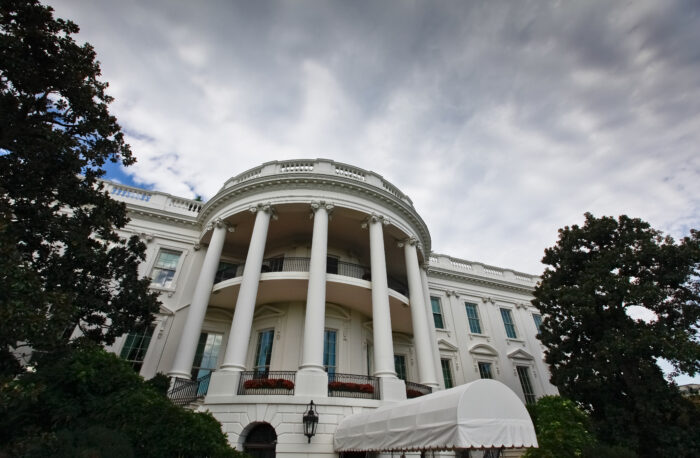
When a new Trump administration took office in January, it announced plans to begin dismantling our country’s most important environmental protections and the government agencies enforcing them. We knew meeting this historic moment would require more legal muscle.
SELC’s next move was to grow our team of more than 130 lawyers and policy experts into a more powerful force than ever.
“Doing our part to close the gap in federal environmental oversight has made the organization’s strong presence even stronger,” said Kym Meyer, SELC’s litigation director.
“We were deliberate in recruiting expertise that includes decades of combined experience at the nation’s imperiled agencies that enforce our bedrock environmental laws.”
As we approach one year of this unprecedented assault on our public health and the environment, our silver lining is welcoming SELC’s newest talent hired to put us in the best position to navigate the current federal landscape from our home base in the South.
The legal force
We’ve been building our legal strength and capacity since opening the door to one office in central Virginia in 1986. Meet some of SELC’s newest experts who are committed to taking on the Trump administration during this pivotal time.
Joe DeGaetano, Senior Attorney

U.S. Department of Justice, Assistant U.S. Attorney
SELC office: Atlanta
Current work: Monitoring air pollution from Elon Musk’s xAI data center
Joe was an environmental justice coordinator for the Department of Justice’s Eastern District of Tennessee when the Trump administration announced its plans to kill the program. He’s also known for prosecuting the January 6 Capitol Riot cases.
After approximately 25 years as a trial lawyer culminating with his service as a federal prosecutor, Joe shares that he is, “excited to join the fight to ensure the fundamental rights to clean air and safe water in the South.”
At SELC, he’s fighting for clean air in South Memphis where one of the world’s most controversial data centers is pushing pollution onto nearby communities. But it’s not his first time collaborating with Tennessee Office Director George Nolan.
Long before either litigator joined the organization, Joe shares that one of his first cases involved helping George represent more than a dozen whitewater rafting outfitters, “in a case in which a tractor-trailer crashed into the Ocoee River and spilled 40,000 pounds of frozen chicken.”
Emily Ertel, Senior Attorney
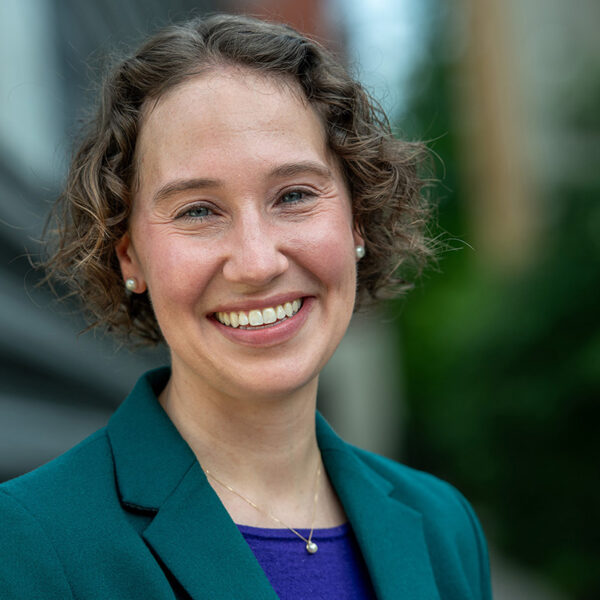
Honors fellow, Office of General Counsel, Environmental Protection Agency
Office: Nashville
Current work: Opposing USDA’s federal loan guarantees to industrial chicken operations because those funds were specifically reserved by Congress for family farmers.
Emily spent some time as an honors legal intern at EPA before graduating from Drake Law School in 2013. After that, she headed back to the agency for a year of advising attorneys and program staff as an Honors fellow.
Her role was informing the agency’s attorneys and program staff on environmental Indian law, administrative law, and appropriations law — the latter meaning laws governing how federal funds are allocated.
Since moving to Tennessee, Emily has enjoyed exploring the Western Highland Rim Forest around Nashville and riding her bike on the Cumberland River Greenway.
“My favorite thing has been learning about the incredible biodiversity in the South from SELC colleagues and partner groups,” she said.
Ben Grillot, Senior Attorney
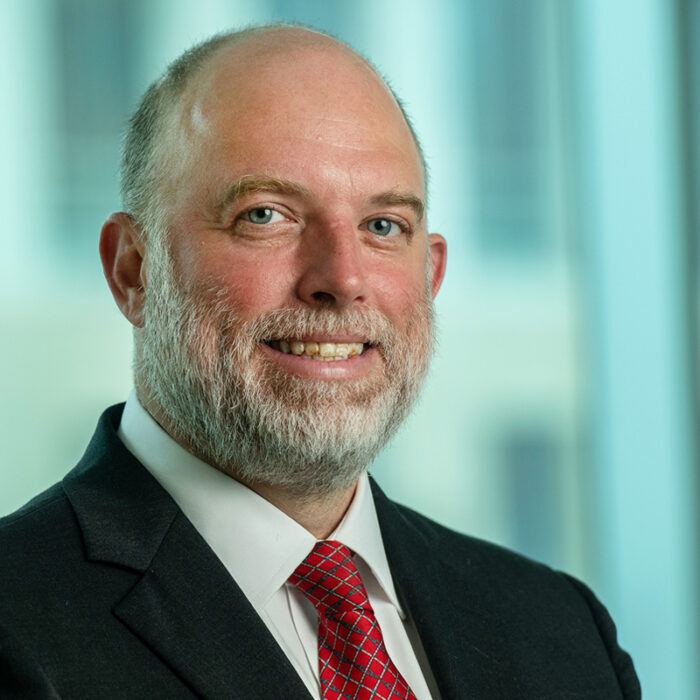
U.S. Department of Justice, Environment and Natural Resources Division
SELC office: Washington, D.C.
Litigation: Appalachian Voices vs. Trump
Ben grew up camping and hiking in the Smoky Mountains, “which hold a dear place in my heart,” he said.
Now he’s inspired by the opportunity to help protect millions of Americans with his work leading our strategy on a groundbreaking federal lawsuit. Ben runs point on challenging the terminations of environmental justice grants that should be revolutionizing climate adaptation and clean energy access.
For 11 years prior to joining us, Ben litigated Clean Water Act and Clean Air Act cases for the U.S. Department of Justice from his role as staff attorney at the Environment and Natural Resources Division.
“I love SELC’s mission – working to advocate on behalf of communities across the South and using my litigation skills to affect change,” he said.
Kevin Lyskowski, Deputy General Counsel

U.S. Department of Justice, Environment and Natural Resources Division
U.S. Department of Labor, Office of the Solicitor
Office: Washington D.C.
Role at SELC: Ensuring legal compliance, minimizing risks, and enabling SELC to execute its mission
For five years prior to coming on staff, Kevin served as general counsel of a federal agency that oversees safety at nuclear defense facilities including the Savannah River Site in South Carolina.
“I have dedicated my career to advancing the public interest – there’s no place I’d rather leverage that experience now than here at SELC,” he said. Known for enjoying the beauty of our region, Kevin’s favorite place to hike is Virginia’s Sky Meadows State Park.
In addition to serving as counsel at a federal agency, Kevin led a division of the Department of Labor’s Office of the Solicitor. He also worked for 15 years as an environmental litigator at the Department of Justice and in the private sector, where he represented non-profit groups such as the Sierra Club.
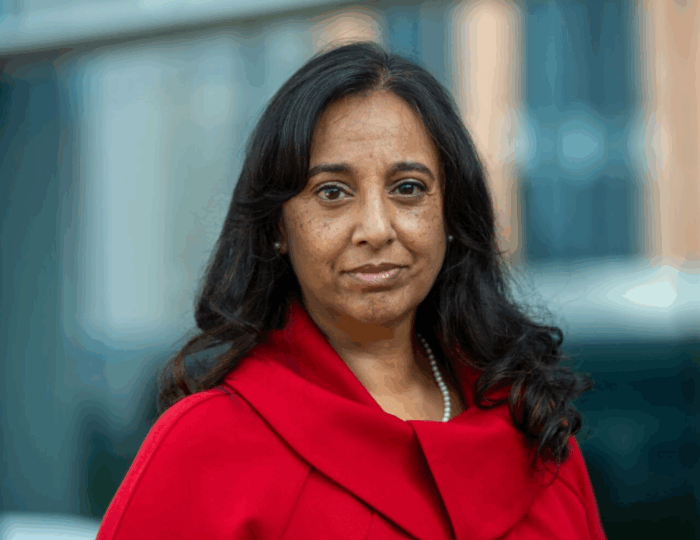
Banu Rangarajan, Senior Attorney
U.S. Department of Justice, Environment and Natural Resources Division
U.S. Attorney’s Office for the Eastern District of North Carolina (Criminal and Appellate Divisions)
Office: Chapel Hill
SELC litigation: Solar for All
Banu brings approximately 25 years of hard work on federal criminal and appellate cases to SELC. On staff at the U.S. Department of Justice through 10 jury trials, more than 80 appeals, and 13 oral arguments, Banu served as lead counsel on multi-agency investigations and prosecutions ranging from environmental offenses and federal fraud to human trafficking.
At SELC, she’s working to restore $7 billion in grant funding for solar projects across the country, with as much as $1 billion concentrated within our region.
The litigation
Today’s federal agencies can’t axe congressionally mandated programs just because the agencies don’t like them.
Our litigation defends not only the rule of law, but also the integrity of environmental partnerships and economic opportunities that communities across the South are relying on.
Sustainability Institute vs. Trump

- In March 2025, SELC and co-counsel Public Rights Project sued the Trump administration on behalf of cities and nonprofits to restore nearly $270 million in funding for programs including energy-efficient affordable housing, food access initiatives, support for local farmers.
- The District Court of Charleston ruled in our favor to restore 32 of the 38 grants amounting to $176 million in June 2025, but the government appealed it to the Fourth Circuit Court of Appeals, which temporarily stayed the district court ruling.
- On October 23, the Fourth Circuit Court heard the government’s appeal and we are waiting for a ruling.
Appalachian Voices vs. Trump
- In June 2025, SELC and co-counsel Earthjustice, Public Rights Project, and Lawyers for Good Government filed a class action suit on behalf of nonprofit groups, tribes, and local governments challenging the termination of the EPA’s Environmental and Climate Justice Block Grant program.
- The suit seeks to restore $3 billion under the Inflation Reduction Act in grants to hundreds of community-based nonprofits, tribes, local governments and higher education institutions to tackle the climate crisis and environmental harms at the local level.
- In August 2025, a U.S. District Court judge granted the government’s motion to dismiss the case, ruling the case should be treated like a contract dispute and should be heard by the U.S. Court of Federal Claims.
- We filed an appeal in the D.C. Circuit Court of Appeals in September 2025 and are waiting for a ruling.
The government’s shifting arguments have forced our cases into an unprecedented procedural maze.
Kym Meyer, SELC Litigation Director
Solar for All
- In October 2025, SELC, Lawyers for Good Government, Conservation Law Foundation, and co-counsel in Rhode Island sued the administration on behalf of nonprofits and businesses harmed by terminating the Solar for All program.
- We filed the lawsuit in U.S. District Court of Rhode Island seeking to restore the $7 billion in grants EPA awarded to organizations nationwide to provide energy bill relief to over 900,000 households. Nearly $1 billion in grants came to SELC’s six-state region.
- All that funding is intended to get affordable solar power to more people through new leasing and power purchase programs, multifamily installations, workforce development and more.
- We will soon file our first brief in the case and hope for a ruling next spring.
National Electric Vehicle Infrastructure
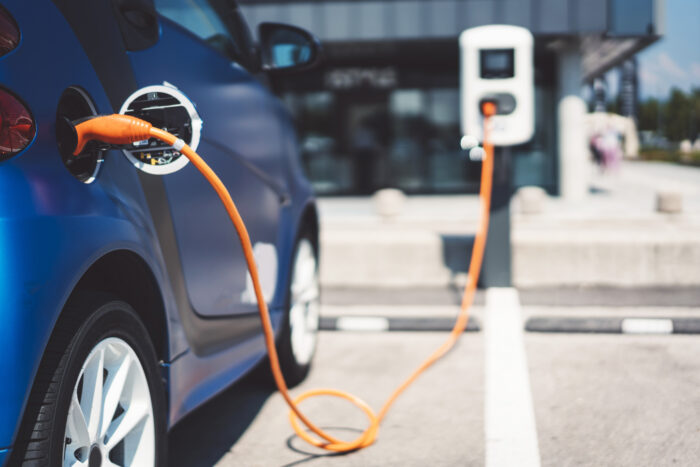
- On May 7, we filed a lawsuit in federal court arguing that the Federal Highway Administration and U.S. Department of Transportation acted unlawfully and unconstitutionally by indefinitely freezing the $5 billion NEVI Formula Program, which funds EV charging infrastructure.
- Environmental groups including SELC, Sierra Club, Earthjustice, and NRDC joined the lawsuit, emphasizing that halting NEVI funding undermines clean transportation progress and disproportionately harms rural and underserved communities that rely on this investment to close infrastructure gaps.
- The lawsuit highlights how the freeze jeopardizes years of planning across Southern states and stalls efforts to build a reliable EV charging network, which is critical for reducing climate pollution and enabling widespread EV adoption.
- We are waiting for a ruling.
Pursuing every legal path
“The government’s shifting arguments have forced our cases into an unprecedented procedural maze,” says Meyer, SELC’s litigation director. “We remain committed to pursuing every available legal path.”
Our federal casework goes to the very heart of the separation of powers between Congress and the Executive branch. We are on the front lines of litigation that will decide how the balance of power between those two branches will be struck for years to come.
When it comes to terminated grant funding, local organizations have been forced to pause or abandon work that directly improves their air quality, clean energy access, and economic opportunity.
Every day of delay compounds harm to the people and places these federal programs were designed to help.