

Broken promises and pollution burdens
Angie Mummaw grew up in the shadow of the Tennessee Valley Authority’s Cumberland Fossil Plant, one of the federal utility’s largest and dirtiest coal plants.
“Living across from the plant my whole life, I’ve watched them pollute the sky,” Mummaw, who is a biology instructor at nearby Austin Peay State University and an organizer for Appalachian Voices, said. “Before they installed pollution controls it would leave this really dark, sooty trail across the horizon and it messed up all of our sunsets.” Those limited pollution controls were installed in response to lawsuits brought decades ago over TVA’s repeated violations of Clean Air Act permitting requirements.
The coal plant has towered over Cumberland City, Tennessee, since it was built in the 1970s – pumping massive amounts of smog-forming nitrogen oxides, particulate matter, sulfur dioxide, and mercury into nearby communities for decades. These harmful pollutants are tied to asthma, heart disease, respiratory illnesses, and even certain types of cancers.
“My mom who passed away about four years ago, she had COPD [Chronic Obstructive Pulmonary Disease] and I have asthma,” Mummaw explained. “My mom never smoked a day in her life and had COPD. So, I’ll always wonder if living near the Cumberland coal plant is why.”
In 2023, TVA announced it would close the coal plant, a long-overdue decision that provided hopes for some relief to people living nearby. Even though Mummaw was frustrated and concerned that the utility planned to swap the old coal plant with a new methane gas plant — another fossil fuel facility that would also pump pollution into the air for decades to come—she was happy that she and her neighbors would soon stop seeing plumes of emissions billowing from the coal plant’s stacks that “dominate the sky.”
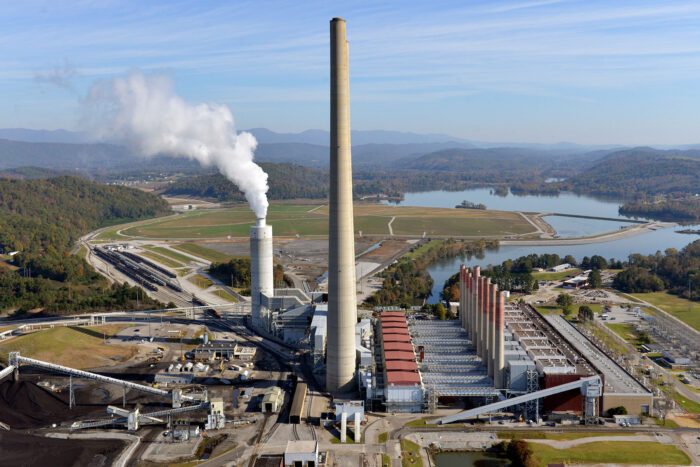
But all that changed in February of this year, when TVA suddenly announced it was reversing course. The nation’s largest federal utility no longer planned to shutter the aging coal plant — instead, it had decided to spend hundreds of millions of dollars to renovate the old plant and continue burning coal, all while also running the newly-built methane gas plant next door. TVA also decided to continue operating the infamous Kingston coal plant in East Tennessee — another dirty, aging coal plant it had committed to retiring — alongside another new methane gas plant that is currently under construction.
The stunning reversal, decided without the public’s involvement, was a broken promise to families in the Tennessee Valley that had waited decades for the closure of these two coal plants, and it meant that nearby communities would soon be saddled with even more pollution from the combined operations of a coal plant and a methane gas plant.
“All along TVA told us that the gas plant and its pipeline were necessary to stop burning coal and reduce air pollution, and now we’re just producing even more. It’s very disappointing,” Mummaw said. “Now I have to worry about the double whammy of them burning methane gas and coal at the same time.”
Saddling communities with pollution and higher bills
TVA’s decision not only means more pollution in our air and water, but it also means higher monthly power bills.

TVA itself has said that these coal plants are nearing the “end of their life cycle,” and that keeping them open could increase costs for customers while creating significant reliability concerns. In its 2023 decision to close the Cumberland coal plant, the utility wrote that “the continued long-term operation of some of TVA’s coal plants is contributing to environmental, economic, and reliability risks.” And in 2024, when TVA decided to retire the Kingston coal plant, the utility said that keeping the aging coal plant running would present “reliability challenges that are difficult to anticipate and expensive to mitigate.”
Keeping these decades-old coal plants operating is expensive. TVA plans to spend hundreds of millions of dollars to attempt to drag these ancient coal plants into the 21st century. The bill for extending the life of the Cumberland coal plant is estimated to be $738 million. For the Kingston coal plant, the total amount is estimated to be around $636 million.
“TVA estimates it will cost more than a billion dollars to continue running the Cumberland and Kingston coal plants, and those costs will end up being paid by families throughout the Tennessee Valley through higher monthly power bills. Instead of wasting taxpayer and ratepayer dollars on propping up dirty and decrepit coal plants that are prone to failure, TVA should follow through with its commitment to retire the facilities and build cleaner and more cost-effective energy sources, like solar power and battery storage,” SELC Senior Attorney Trey Bussey said.
A rash of reversals throughout the South
TVA isn’t the only utility in the region backing down from its commitment to close its coal plants—it’s happening throughout the South. Georgia Power has delayed retiring its Plant Bowen and Plant Scherer coal plants. In North Carolina, Duke Energy delayed its deadline to retire its remaining coal plants by years.
These decisions to delay closing these old, dirty coal plants, along with the South’s ongoing methane gas spending spree, will worsen air and water quality, exacerbate public health risks, lead to higher power bills, and hurt grid reliability across the region. This also threatens to do damage to the South’s most iconic places. The National Park Service has said that continued burning of fossil fuels in the South is “degrading park resources” at Great Smoky Mountains, Mammoth Cave, and Shenandoah National Parks.
TVA made its reckless decision to keep these dirty coal plants open without even telling the communities that would be impacted first, let alone getting their input.
Trey Bussey, Senior Attorney
Decisions driven by politics, not the public
These coal retirement reversals don’t reflect what communities want or need. Instead, in many cases, political calculations and power-hungry data centers drive utilities to rely on dirty, fossil-fueled infrastructure.
On the same day that TVA announced it would be breaking its promise to close the Cumberland and Kingston coal plants, TVA’s decision was touted at the White House at an event hosted by President Trump — a frequent critic of the federal utility who had previously slammed TVA for its decision to shut the coal plants down. The Trump administration followed up by announcing a $46 million handout to the federal utility, using taxpayer dollars to prop up the aging and inefficient coal plants.
TVA has attributed the need to keep running these coal plants due to increasing demand for power across the Tennessee Valley, and the utility has said the growth in data centers in the region is, at least in part, driving the decision to keep its coal plants operating. In a recent earnings report, TVA’s then-CEO said he expects power demand from data centers in the utility’s region to double in the next four years.
Even though the environmental, financial, and health costs of TVA’s move to keep the coal plants operating will be borne by millions of people across the region, the utility made the decision behind closed doors without any public input, silencing communities who have serious concerns about the environmental, economic, and reliability impacts of the decision to keep running the coal plants.
“TVA made its reckless decision to keep these dirty coal plants open without even telling the communities that would be impacted first, let alone getting their input. This was a blatant attempt to take the public out of TVA’s so-called ‘public power’ model,” Bussey said.
Coal reversals lead to federal violations
But TVA’s hasty decision to keep the Cumberland coal plant open also caused the federal utility to violate federal law. Even though the new Cumberland Gas Plant can pump out huge amounts of harmful pollution, TVA avoided many of the Clean Air Act’s most important protections by characterizing the standalone power plant as a “minor modification” to the then-retiring coal plant. The utility did this by claiming the switch from a coal plant to a methane gas plant would not cause a significant increase in total pollution being emitted from the site.
But TVA’s reckless decision to continue running the Cumberland coal plant alongside the new methane gas plant means the utility can no longer subtract its coal plant’s emissions from its new gas plant’semissions, invalidating its “minor” permit. Even so, TVA failed to receive a new, more appropriate “major source” permit before embarking on its plan to operate both plants concurrently. TVA itself has acknowledged that it needs a “major source” permit.
TVA’s construction and operation of the new Cumberland Gas Plant without a “major source” permit violates the Clean Air Act, and in June SELC sent a notice of intent to sue to TVA on behalf of Appalachian Voices, Center for Biological Diversity, and Sierra Club, threatening to bring TVA to court if they don’t fix the violations within 60 days. The notice period is required under the Clean Air Act.