

Private companies look to mine in Virginia’s public waters for profit
The coast of Virginia could soon be a target for commercial seabed mining—a practice that’s never before taken place in public waters in the Atlantic.
Today, the Bureau of Ocean Energy Management announced that it is considering opening federal waters off the Virginia coast to mining. The announcement of the Request for Information, or “RFI,” follows an executive order from the Trump administration that promised to open up offshore resources to extractive industries.
SELC and our partners oppose the exploitation of this beloved public resource for private gain.
What’s at stake?
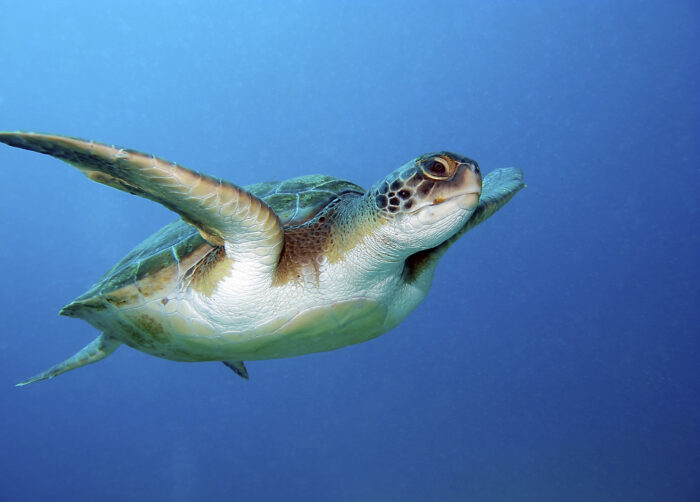
The Virginia coast is among the most biologically productive and economically significant areas on the Eastern Seaboard. The region is home to bottlenose dolphins, sea turtles, migratory whales, and diverse fish and shellfish populations. Its commercial fisheries rank third in U.S. landings, with fishers landing hundreds of millions of pounds of fish, crab, oysters, clams, and scallops each year. The dockside value of those landings exceeds $266 million annually, and the broader seafood supply chain generates over $1 billion in economic activity for the Commonwealth.
These fish, shellfish, and other wildlife depend on clean, healthy waters to survive. Industrial marine mining would place all of these resources at risk for the profit of a private company, threatening Virginia’s wildlife, commercial fisheries, and coastal economy.
The Virginia coast is also home to the largest concentration of naval operations in the world. The coastal waters support military training, submarine operations, air combat training, and missile defense testing. The region is also home to Wallops Flight Facility, a NASA rocket launch site that supports science missions for NASA, NOAA, and other federal agencies.
What is seabed mining?
Seabed mining is the extraction of minerals from the ocean floor. The Virginia proposal targets heavy mineral marine sands in nearshore waters for private, commercial uses.
Mining these deposits would involve industrial-scale dredging of the ocean floor using heavy machinery designed to break up and remove enormous volumes of the sediment and seafloor materials. Not only would these activities destroy habitat and kill wildlife within the mining footprint, they could create plumes of sediment that impact areas far beyond the mine site itself.
Coastal communities in Virginia — and partners up and down the East Coast — successfully opposed the threat of offshore drilling in Virginia’s waters and can do so again.
Megan Huynh, Leader of SELC’s Wetlands and Coasts Program
The noise and light generated by industrial mining machinery risk additional harm, threatening to disrupt feeding, reproduction, and navigation behaviors of marine wildlife. Although the RFI does not provide information about mining depth, duration, or other key details, we also have concerns that changes to seabed topography caused by industrial sand mining could impact storm surge, coastal erosion, and shoreline stability at a time when climate change is already causing rising sea levels and stronger, more destructive storms.
What we know so far and what’s next
In November 2025, Odyssey Marine Exploration requested to lease more than 2,500 square miles—an area larger than the state of Delaware. The proposed lease area sits just north of the mouth of the Chesapeake Bay, the nation’s largest estuary.
The announcement of the RFI is an early but consequential step in the leasing process. The public and other stakeholders will have 30 days to weigh in on the proposal. SELC plans to join with other partners to strongly oppose the exploitation of public resources for private gain.
“While the threat is new, we’re no strangers to fighting together to defend the Atlantic Coast. Coastal communities in Virginia — and partners up and down the East coast — successfully opposed the threat of offshore drilling in Virginia’s waters, and can do so again,” said Megan Huynh, Leader of SELC’s Wetlands and Coasts Program.