
Cleaning up Birmingham’s air
From the expert.
A message from SELC Senior Attorney Sarah Stokes.
With federal safeguards under attack, communities across the South are rising to defend our environment. Stream our latest webinar to see how SELC and partners are taking bold action.
In Birmingham, the fight for clean air is as old as the city’s steel industry. Once known as “Smoke City,” the skies were so polluted in the 1970s that people couldn’t breathe—and the first-ever federal enforcement of the Clean Air Act happened right here.
“The Clean Air Act impacts every single person’s life in Birmingham on a daily basis—whether they know it or not,” says Sarah Stokes, Senior Attorney at SELC.
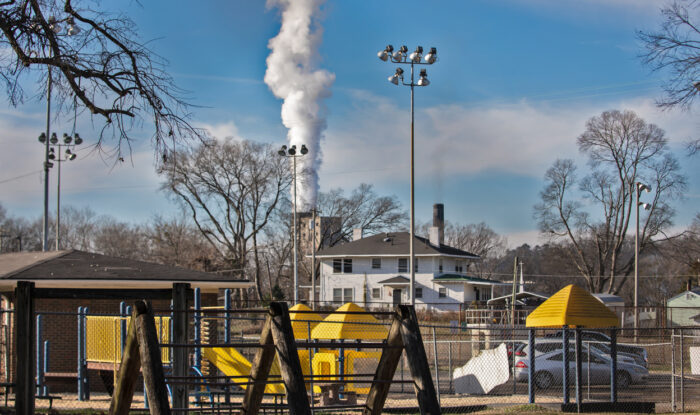
Today, decades later, that fight continues in historically Black neighborhoods still surrounded by heavy industry across the state. In Birmingham, SELC and local partner Greater-Birmingham Alliance to Stop Pollution, or GASP, are helping residents hold polluters accountable—because no one should have to choose between their health and their home.
The fight for clean air in Birmingham is far from over. Because it affects every resident, it’s a fight that’s being met with strong advocacy, legal action, and a growing wave of community leadership.
“This is not just policy. This is people’s lives,” says Stokes.
To understand today’s air quality challenges in Birmingham, it is important to understand the city’s roots. Built upon deposits of iron ore, coal, and limestone, Birmingham’s steel and iron industry exploded into existence in the late 1800s, earning the nickname “Magic City.” But the industrial boom came at a steep cost.
“We were also called ‘Smoke City’ and the ‘Pittsburgh of the South’ because of the pollution from the steel and iron industry,” says Stokes.
By the 1970s, pollution had reached crisis levels. In 1971, a warm fall inversion trapped pollutants over the city, creating a suffocating cloud so dense that people couldn’t breathe. The EPA stepped in, and Birmingham became the first city in the U.S. where the Clean Air Act was enforced in federal court. A judge issued an injunction requiring polluters to stop, marking a turning point in the fight for cleaner air.
Since then, the Clean Air Act has dramatically reduced air pollution—particulate matter and ozone levels have fallen by 78 percent nationwide. But not everyone has benefited equally.
Everybody deserves to breathe clean air no matter what their zip code.
Sarah Stokes, Senior Attorney
A long history of segregation and discriminatory zoning continues to shape where polluting facilities are often sited in Birmingham. “The only areas African Americans were allowed to live were surrounded by industrial zones,” says Stokes. “And the descendants of those people are the same communities we’re working with today.”
Holding polluters accountable
SELC has been working alongside local partner GASP for more than 15 years to fight industrial pollution in Birmingham’s most impacted neighborhoods. GASP’s members serve as “the eyes and the nose” of the community—reporting smells, smoke, and health concerns in real time.
One of the most persistent polluters is ABC Coke, a plant owned by one of Alabama’s wealthiest corporations. Operating 24/7 for over 100 years, the plant emits benzene and sulfur dioxide—pollutants known to cause asthma, heart disease and cancer.
After discovering ABC Coke had been misreporting its benzene emissions, SELC and GASP secured a legal settlement that required:
- A permanent leak detection and repair program
- Full public access to health department inspection records
- Over $380,000 in community-directed funds to support health and environmental programs
“That public database has been a game changer,” says Stokes. “Now anyone can look up a facility’s permits, inspection reports, and violations. That kind of transparency puts power into the hands of the people.”
Another major victory came in the case of Bluestone Coke, a neighboring plant with a decades-long history of pollution and community health concerns. After pressure from SELC, GASP, and affected residents, the Jefferson County Department of Health imposed the highest fine in its 105-year history—and Bluestone Coke shut down.
Training communities to report air pollution
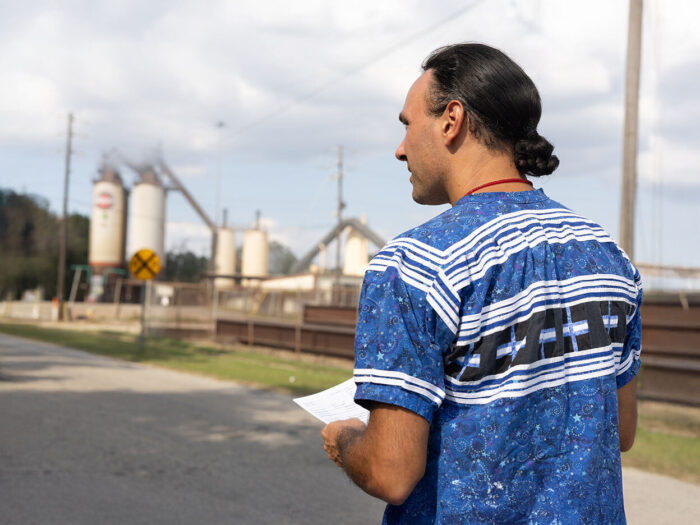
As federal and state regulators face budget cuts and political pressure, community action is stepping in to fill the gap. SELC and GASP partnered to host Smoke School, a training program that teaches residents how to identify certain air quality violations by observing smoke emissions.
“Once you’re certified, you can find violations in your own neighborhood,” says Stokes. “Now, they know what’s a violation—and what to do about it.”
Official Smoke School training is just one way communities can take action and reclaim the right to clean air. SELC is working alongside partners throughout our region to equip residents with the information and tools to identify air pollution violations and make official reports to state and local agencies.
Rolling back protections—and fighting back
Despite these local victories, federal protections are under threat. The Trump administration has granted exemptions to polluters—often via email—with no public input, allowing them to bypass Clean Air Act requirements. ABC Coke has applied for one. Alabama Power’s three coal-fired power plants across the state have already received theirs.
SELC is tracking these rollbacks closely and is ready to fight to keep fundamental clean air protections in place, which serve as the federal backbone for local and state agencies to enforce regulations to better protect communities’ rights to clean air.
“Why would anyone want to breathe dirtier air?” asks Stokes. “The EPA plays a vital role in making sure environmental laws are enforced. But as federal enforcement weakens, community leadership and legal advocacy are more important than ever.”
Watch the full segment to hear directly from Sarah Stokes and learn how SELC and its partners are working to clean up Birmingham’s air—because no one voted for dirty air.