

Reading smoke in Africatown and across the South
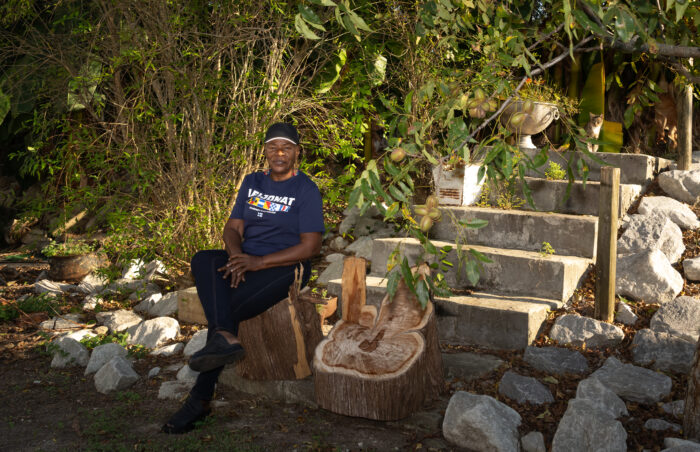
Shirley Edwards Ford looks around her yard full of fruit trees — pomegranate, pecan, pear, plum, lemon, orange, persimmon, elderberry, and banana — with a palpable sense of pride.
“I come out here and sit in the morning and have a cup of coffee and see what’s going on with my trees,” she says smiling.
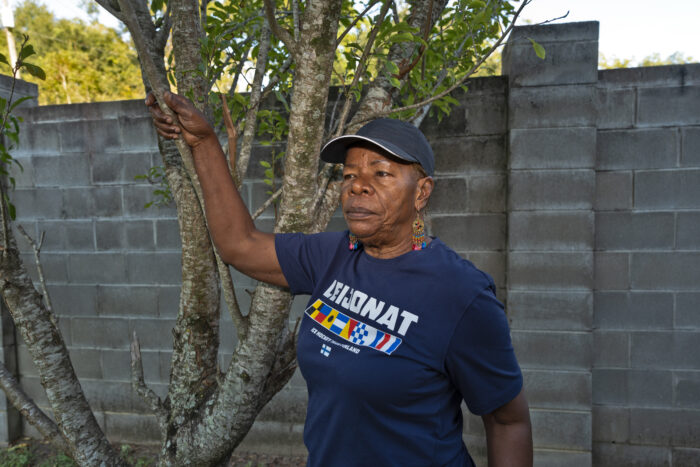
Shirley’s love of gardening began as a child growing up on Chin Street in the Magazine Point neighborhood in Africatown near Mobile, Alabama, just a few blocks from where she currently lives. Before industrial facilities like the H.O. Weaver asphalt plant moved in, she fondly recalls the peace and solitude her garden provided, especially as one of 13 kids.
“I was mostly a homebody, and so I had a garden back there because those companies weren’t back there [yet]. I grew greens, squash, cucumbers, sugar cane, tomatoes, bell peppers — everything you can think of.”
She moved to California as an adult with her two young children to attend college and start her 35-year teaching career, but always knew she wanted to come back home. Shirley returned to Chin Street at 30 years old and bought the land to build the home she still lives in today.
But despite her strong love for spending time in her yard, the overpowering smell of burning tar and dust billowing off the asphalt plant behind her house has impacted the experience significantly since her childhood gardening days.
Then that company up there started and all the noise and the dust come from there. Sometimes at night we wake up and hear these sounds, clicking and booming.
Shirley Edwards Ford, Africatown resident
This type of unjust and unchecked pollution is leading some Southerners to pick up a new skill — “reading smoke” through smoke school trainings across the region to determine whether it’s safe to breathe the air outside.
“Can you imagine having to wear a mask in your own yard? Shameful.”
Weaver plant: Not a good neighbor
Hakim Yisrael, Shirley’s next-door neighbor, grew up on Chin Street, too. He also fondly remembers a much different street than the starkly empty one today.
“There were so many kids, playing in the yards,” he recalls.
He bought the house next door to Shirley Edwards Ford 15 years ago, not realizing how much the H.O. Weaver asphalt plant bordering his backyard would impact his life.
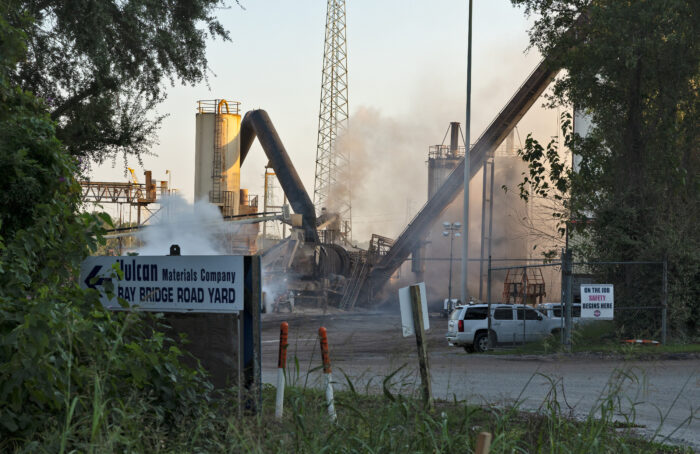
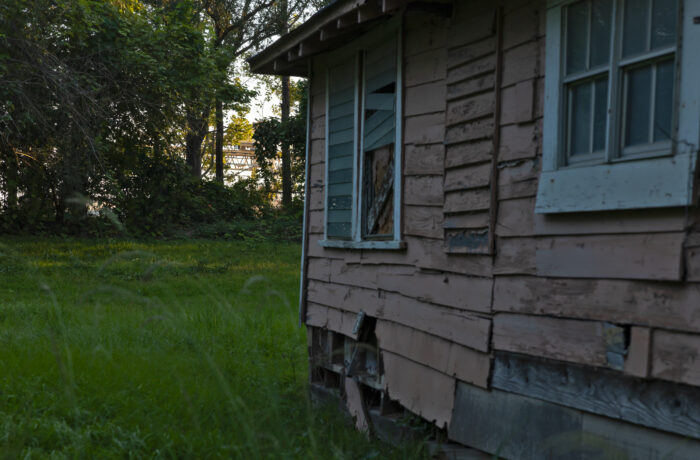
Hakim shares Shirley’s experience with the endless noise and dust, noting the toll it has taken on his property, his cars, and his quality of life. He has replaced multiple HVAC units and car transmissions, and constantly changes his air filters to fight the dust pouring into his home.
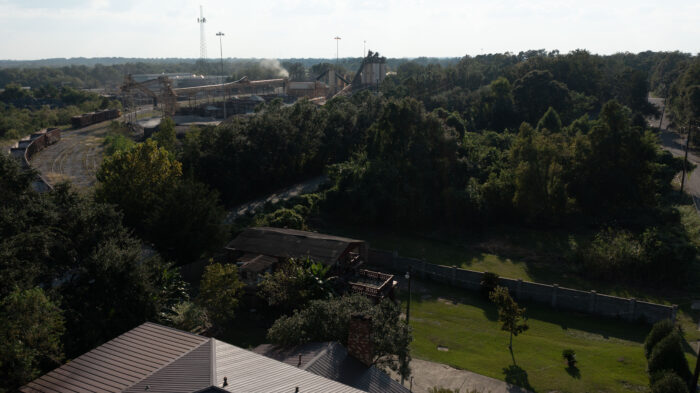
“It’s eating the paint off my vehicles. I have some expensive cars over there and now they just look like junk cars,” he says. “It’s even coming in the house, that dust, settling on stuff. You can actually see it out there like fog some days. You can’t even barbecue out there, you can’t have fun, you can’t leave your children out there to play. It’s like you’re quarantined to your house.”
Hakim has even made the tough decision not to have his children live with him because he worries about the poor air quality and the harm to their wellbeing.
“My children get major headaches sometimes, so I just let them go to Huntsville with their mother,” he explains. “I don’t [normally] get sick — I work out all the time. But now I start coughing on a regular basis, getting major headaches, stress, all of that.”
Inadequate permit, lax enforcement
For years, Africatown residents have submitted formal complaints to state environmental regulators at the Alabama Department of Environmental Management (ADEM) and advocated for them to take the steps needed to ensure that H.O. Weaver controls its air pollution effectively and complies with state and federal limits.
In response to complaints from the community in October and November 2021, a December 2022 test of the facility’s air pollution revealed that the emissions were higher than H.O. Weaver had been reporting. Residents then called on ADEM to require the plant to apply for a more protective “Title V” air pollution permit that would require more testing, monitoring, and public reporting of the facility’s compliance with air pollution limits.
The current permit is inadequate, plain and simple.
Keri Powell, Air Program Leader
Unfortunately, ADEM disregarded the community’s concerns and chose to issue the company a “minor” air pollution permit that fails to account for all the facility’s emission sources and requires no pollution testing and minimal public reporting.
“ADEM’s permit fails to address the H.O. Weaver plant’s pollution or protect the community from future violations,” says Keri Powell, leader of SELC’s Air Program. “It’s inadequate, plain and simple.”
In June 2024, frustrated by ADEM’s lack of effective oversight, SELC, the Mobile Environmental Justice Action Coalition (MEJAC), and other advocacy groups called on the U.S. Environmental Protection Agency to inspect the plant. EPA refused based on ADEM’s contention that it inspects the plant annually and otherwise observes the plant twice each month.
But SELC and our partners then obtained documents from ADEM showing the plant was not operating at the time of the last two annual inspections, and the agency failed to produce any documentation whatsoever of its supposed twice-monthly observations.
In November 2024, our groups joined together with several historic Africatown churches, community organizations, and regional stakeholder groups to present this information to EPA along with a compilation of formal community complaints about H.O. Weaver.
“Given the quantity and quality of formal complaints submitted to ADEM and EPA, it’s clear that something is just not right with Weaver’s asphalt plant,” says Ramsey Sprague, volunteer board president of MEJAC. “An EPA inspection would not only establish the plant’s current compliance status, it could identify the root causes of their problems and ways to correct them.”
“EPA inspectors could also help identify a comprehensive list of emission points that ADEM should include in the plant’s air pollution permit and use to develop a template for consistency in future plant inspections,” he says. “There’s no good reason for EPA not to help ADEM conduct better inspections when their record is so appalling.”
EPA declined our request to reconsider inspecting the plant in December 2024.
Complaints to regulators “fall on deaf ears”
Chin Street residents report daily and nightly disturbances coming from the plant: loud bangs and booms, vibrations shaking homes and shifting foundations, the smell of burnt oil and tar, pervasive dust and smoke.
Magazine Point neighbors and even visitors to Africatown’s historic cemeteries and churches have consistently and continuously made their concerns known to ADEM for years with no real action by the agency or consequences for the plant.
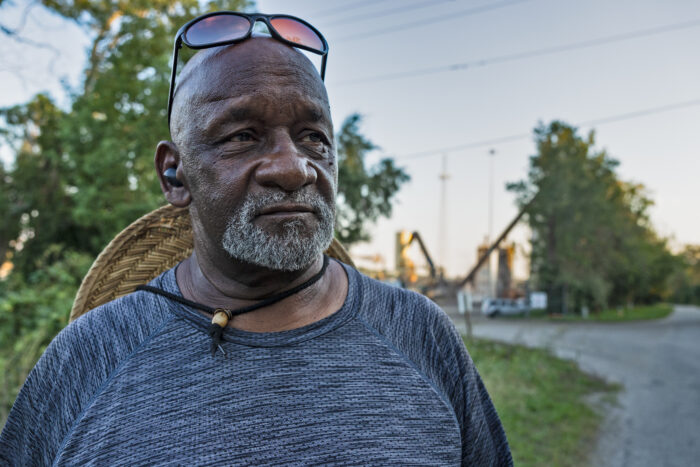
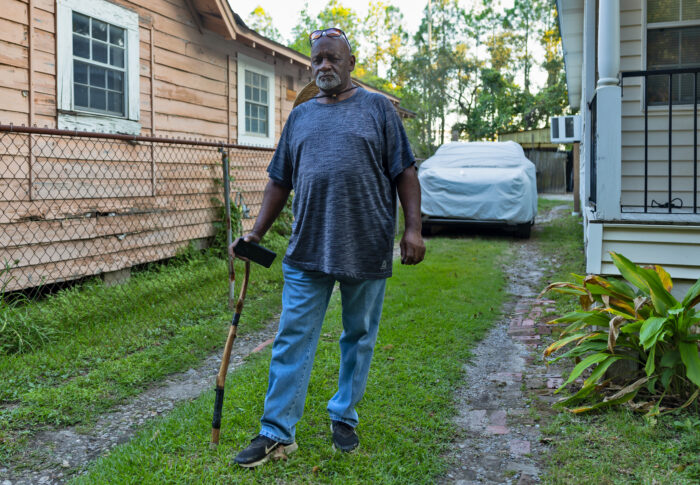
A few doors down from Shirley and Hakim, Walter Moorer’s home has been in his family since 1941. Walter has contacted ADEM, Mobile City Council members, and even EPA countless times over the years to make official reports on what he’s seeing, hearing, and smelling on a regular basis. Complaints, he says, “fall on deaf ears.”
[ADEM] gives you a nice little reply: ‘They’re in compliance, we found no violations.’ I wish I could put it in a jar and just mail it to them, even the odor.
Walter Moorer, Africatown resident
Understandably frustrated and fed up with the lack of real action from leaders at every level, Walter says he sometimes questions why he still attends public meetings or files official reports in hope of changing the status quo.
“They say they’re in compliance, they say they’re out here twice a month,” Walter says, gesturing to billowing dust and smoke coming off the vehicles and the stacks on the plant’s site. “I don’t see how that’s in compliance.”
“Ain’t no telling how many particles we’re breathing in now of this stuff. It’s like death. Believe me, [the plant owners] won’t have this around their family. That’s why it’s out here.”
Reading smoke
In the absence of agency action against deficient air pollution permits and enforcement for facilities that pose significant health risks and environmental justice concerns, advocates and communities are getting trained to identify and report violations themselves.
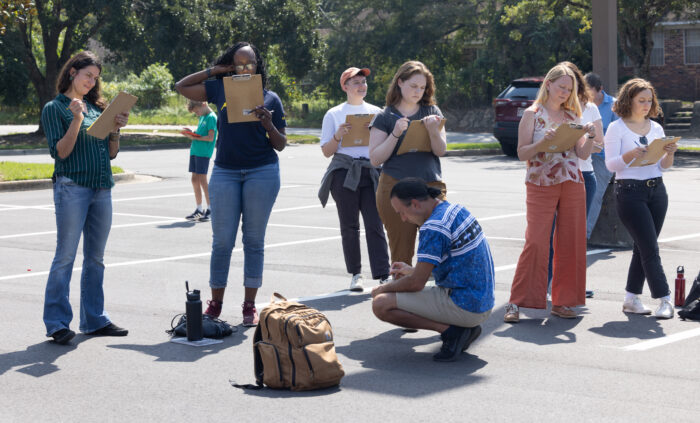
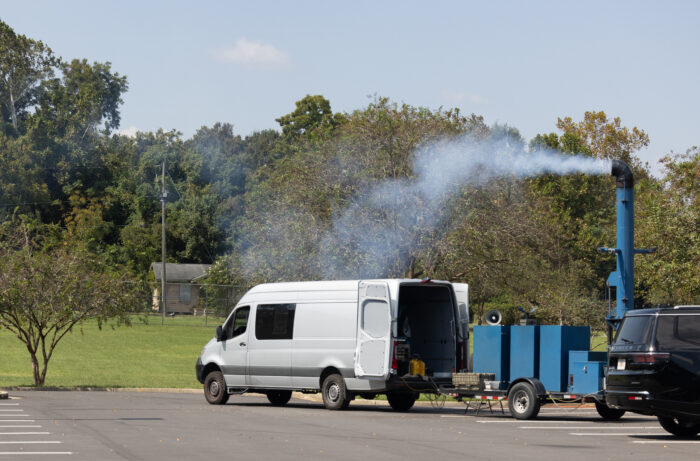
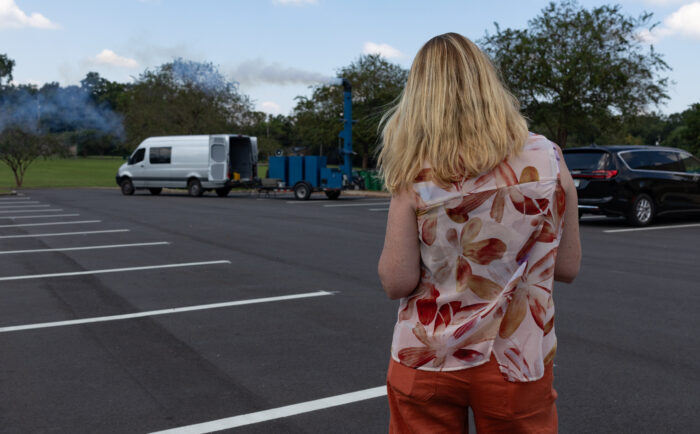
Working with the Singleton Smoke School, SELC and MEJAC hosted a recent training in Africatown to certify volunteers in “reading smoke,” officially known as EPA Method 9 visual opacity observation. Opacity is a way to test the density of potentially harmful particulate matter in smoke, and a trained observer can determine if air emissions are over state or federal standards by how much light is visible through the smoke.
Family owned and operated for 55 years in Cottontown, Tennessee, the Singleton Smoke School is run by Fred Singleton and his son Brad.
The training starts with an overview of the history and importance of air quality laws, plus how to determine opacity in smoke. Following is an outdoor field test in which a smoke generator spews white and black smoke that trainees have to “read” correctly in order to receive the certification, which is valid for six months.
The training lays out a set of factors like humidity, dew point, and temperature that can impact how dense smoke appears.
“Pictures don’t always give us the information we need,” says Brad Singleton. “Video is better if it’s timestamped, but nothing compares to the human eye. You can’t just rely on a photograph itself — a trained observer makes a stronger case.”
Brad says one of the important lessons smoke school attendees come away with is how to discern the difference between pollution versus steam and water vapor. It’s also important that they learn how to recognize low and high levels of air contaminants when reporting violations to state and federal agencies.
We’re all breathing, right?
Brad Singleton, Singleton Smoke School
“You don’t have to go very far to find a place that’s putting out a little smoke or dust, especially in heavy industry areas and high-density-population cities, so I think everybody benefits from the awareness — we’re all breathing, right?” he says. “Everybody has the right to clean air and healthy air and not be exposed just because they live near some sort of large company or business.”
To Ramsey, now a certified smoke reader, this training is particularly important for communities like Africatown, where residents have consistently been forced to take action into their own hands when regulators fail to respond.
“Communities subjected to environmental injustices and the burden of pollution shouldn’t have to bear even more of the brunt fighting tooth and nail for agencies to take their concerns seriously,” he says. “Trainings like smoke school can strengthen the work communities are already doing to make their voices heard.”
For Shirley Edwards Ford, trained smoke readers serving Chin Street can’t act soon enough.
“I honestly expect the smells and the dust now, and I don’t expect no help from EPA or anybody else,” she says.
“If my trees should die, I’m not going to replace them. It’s a waste of time with no help from EPA or the state. It’s like people with money can do whatever they want to without any care for the little people, but I pray for them all and put my trust in God. If this EPA won’t act, what can we expect from the next EPA?”