Methane gas is bad for the South
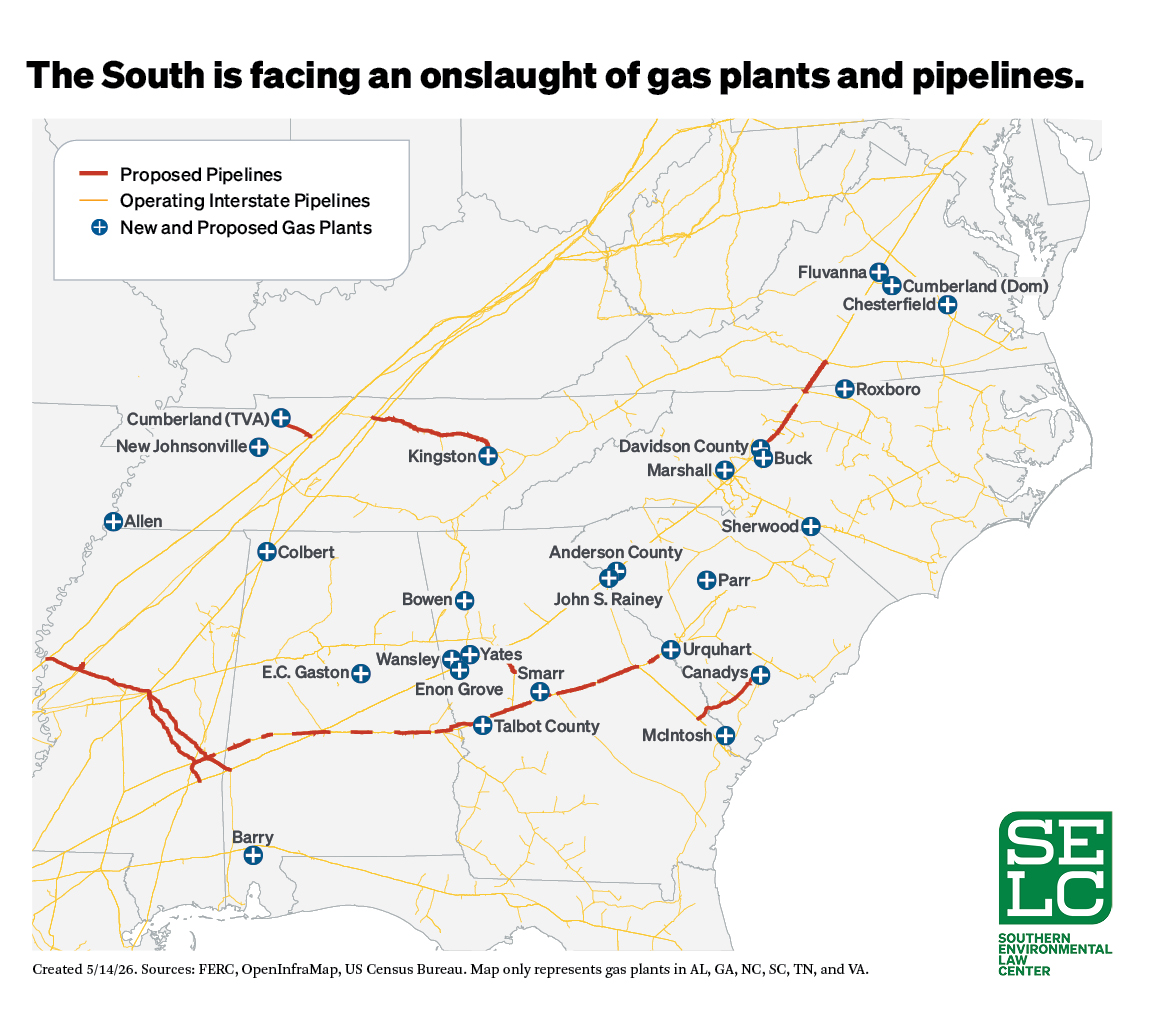
Methane gas, commonly called “natural gas,” is a fossil fuel mostly composed of methane used to generate electricity in the United States. Proposals for new gas-fired power plants are rampant as tech companies seek more and more power for new, energy-intensive AI data centers. Despite widespread uncertainty about where, when, and even if all of these facilities will be built, utility companies in the South are planning dozens of new gas plants in response.
For southern communities, fleets of expensive new gas plants mean higher energy bills, more deadly air pollution, and more climate-induced heat waves, super-charged storms, and drought. But for monopoly utility companies, these plants mean generous long-term profits for their shareholders.
Gas plants are far from the best or only solution for the AI energy race, but utilities are pushing faster, cheaper, and cleaner renewable energy technologies to the sidelines in favor of their own expected windfall from new gas. Unchecked, these choices will lock in long-term consequences for energy bills and public health across the South.
The South is experiencing a data center boom.
Methane gas is expensive
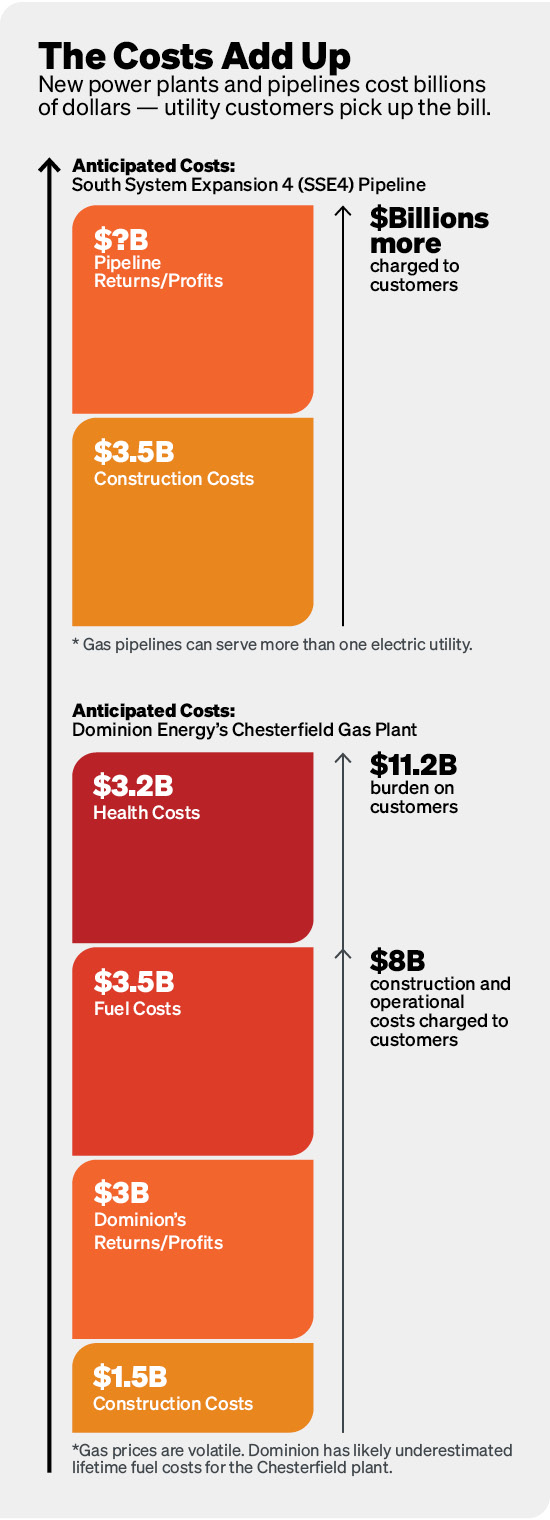
Burning gas to generate electricity requires layers of billion-dollar costs that drive up energy bills for regular customers. For starters, it usually takes more than a billion dollars to build a new gas plant. For example, building Dominion Energy’s proposed gas plant in Chesterfield, Virginia will cost $1.5 billion. And these costs are rising—the cost to build a new gas plant jumped 66% from 2023 to 2025. Layered on top of this, Dominion, like all monopoly utilities, is allowed to collect a return/profit on its expenditures, which adds another $3 billion to the cost of the Chesterfield plant over its lifetime.
New pipelines or pipeline expansions add more costs. The South System Expansion 4, a pipeline expansion proposed through Alabama and Georgia to bring gas to Georgia Power and Dominion Energy power plants, will cost about $3.5 billion to build. And just like power plants, pipeline builders collect a guaranteed return/profit that gets added to the bills paid by utility customers.
On top of all of these is the cost of the fuel itself—the biggest operational expense for any gas-fired power plant. For the Chesterfield plant, Dominion estimates fuel will add another $3.5 billion to customer bills over the plant’s lifetime, a figure that most likely is far too low.
Increasingly high and volatile gas prices are playing a significant role in rising electricity bills in the South and across the country. Gas prices can fluctuate wildly, sometimes in a single day, and are almost impossible to predict. In 2022, a large price spike caused southern utilities to seek billions in additional fuel costs from their customers. Monopoly utilities can ignore high and volatile fuel costs—they’re just another bill paid by their customers
High energy bills affect everyone. They especially hurt low-wealth communities, Black and Brown communities, and rural communities in the South who have some of the highest energy burdens in the country.
Methane gas is dirty energy
Gas-fired power plants are bad for human health. They emit many tons of dangerous air pollutants, including fine particulate matter (called PM2.5), nitrogen oxides, and volatile organic compounds.
There is no safe level of PM2.5 exposure. Because of their extremely small size, these particles penetrate deep into the lungs and enter the bloodstream, contributing to respiratory illnesses, heart attacks, and premature deaths. In addition, the emission of nitrogen oxides and volatile organic compounds leads to the formation of ozone, another deadly air pollutant, and the formation of secondary PM2.5. Air pollution from a gas plant can spread over many miles, harming residents in nearby communities and those much farther away.
Throughout the South, power plants are often located in low-income communities and communities of color, which experience more air pollution and more pollution-related diseases than other places. Black Americans experience the highest rates of PM2.5-related deaths.
New gas plants will commit the South to dangerous air pollution and volatile energy prices for years to come. But communities can demand better choices from their utility companies — renewable energy is cleaner, cheaper, and can come online faster.
Greg Buppert, Senior Attorney
Methane gas is a polluting fossil fuel
Methane gas is a dual threat to the climate. Burning it releases carbon dioxide, the primary driver of climate change, and methane itself is a potent greenhouse gas that leaks into the atmosphere throughout the supply chain. Methane alone is responsible for one-third of the present warming of our planet. Reducing methane emissions from the gas system is one of the most critical near-term things we can do to avert the most catastrophic consequences of climate change.
The joint Dominion Energy and Santee Cooper proposed gas plant in Canadys, South Carolina, would emit 164 tons of PM2.5 every year. Public health researchers from Harvard University estimated that these emissions would affect over two million people in South Carolina, Georgia, and Florida, causing $28 million in yearly disease-related costs, including missed workdays, hospitalizations, and deaths
A near-term commitment to new gas plants is a long-term commitment to climate change, including more intense heat waves, super-charged storms, and drought. Methane is over 80 times more powerful at warming the planet than carbon dioxide, and it leaks throughout the entire gas infrastructure system. Burning methane to generate electricity also emits huge quantities of carbon dioxide, the primary greenhouse gas driving climate change. Just one new gas plant proposed by the Tennessee Valley Authority would emit 2.5 million tons of greenhouse gases every year, the same amount as burning over 1 million tons of coal.
Southern utilities see massive profit potential from data centers
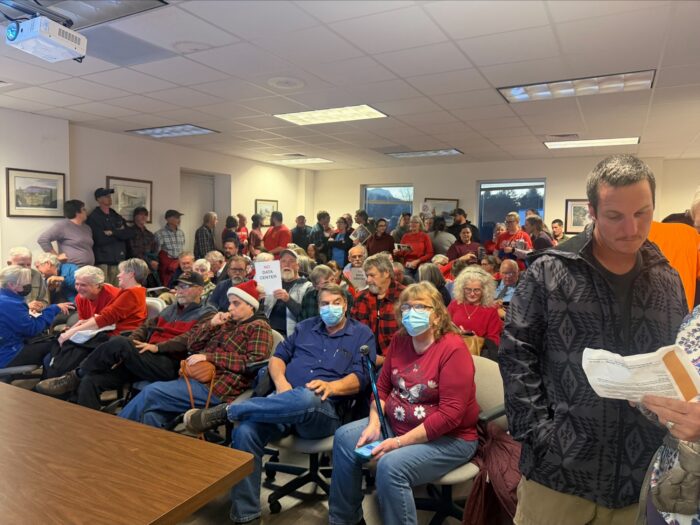
Data centers are driving soaring forecasted demand for new electricity generation in the South. In Virginia, Dominion Energy says that 99% of its new peak demand will come exclusively from data centers by 2030. Georgia Power says data centers account for at least 80% of its load growth over the next five years.
Monopoly utility companies make lavish profits when they build new gas-fired power plants, and they are all too eager to cash in on anticipated data center proliferation. Across six southern states, utilities have proposed adding 45,000 megawatts of new gas generation, dozens of new plants, by 2040. That’s the same amount of electricity that would be needed if the population in those states nearly doubled from 16 million to 30 million households.
The data center frenzy is likely overblown and could be short-lived. For utilities in Alabama, Georgia, North Carolina, and South Carolina, one recent study puts the likelihood that their load growth predictions materialize at roughly 0.2%. Speculative demand doesn’t bother utilities, which are guaranteed profit even if all the data centers never get built. But it could cost ratepayers billions.
Across six southern states, utilities have proposed adding 45,000 megawatts of new gas generation, dozens of new plants, by 2040.
Clean, cost-effective renewable energy is the solution
Renewable energy is already cheaper and cleaner than gas. And the long-term economic trend for renewable technologies is that costs decline by 20% every time technology adoption doubles. Costs for utility-scale battery storage dropped 11% between 2024 and 2025 alone. Solar, wind, and batteries charged by them don’t come with fuel costs, avoiding billions charged to customers over the lifetime of any gas plant.
The South deserves a modern grid that delivers affordable, reliable, and clean energy—not just utility shareholder profits.
Additional Resources