

The role of FEMA, states, and localities in disaster management
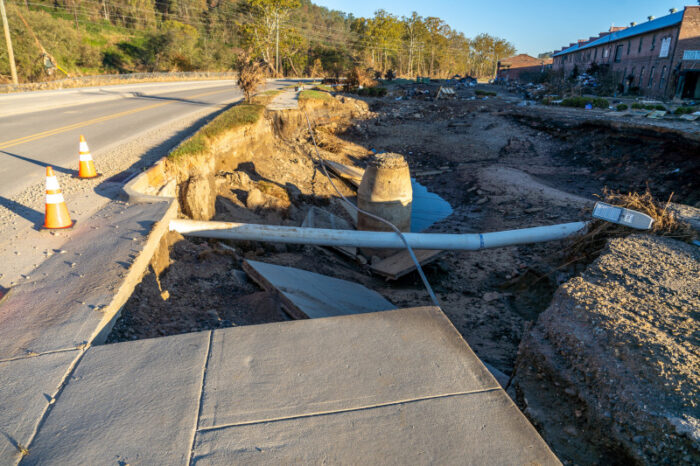
It has been almost two years since Hurricane Helene devastated parts of the southeastern United States and southern Appalachians. The storm brought inland flooding to the public consciousness, reiterating that the impacts of climate change, worsening storms, and the need for resilience funding are not only coastal issues.
To discuss outcomes of that storm and ongoing efforts to help localities better prepare for and recover from disasters, SELC recently convened Peter Muller of the Pew Charitable Trusts; Casey Tingle, former Director of Louisiana Governor’s Office of Homeland Security and Emergency Management and now Senior Vice President of Plexos Group; and Casi Calloway, former Chief Resilience Officer of Mobile, Alabama and now the Principal & Founder of Activate-Build-Connect.
As disaster frequency and costs continue to rise, the conversation underscored a central challenge: the need for federal, state, and local governments to work together more effectively to prepare for and respond to increasingly severe hazards. While FEMA’s capacity and expertise remain indispensable, state and local governments play a critical role in identifying community priorities, implementing resilience strategies, and shaping land use decisions that determine long-term risk.
Against this backdrop, policymakers are actively debating how federal programs can better incentivize forward-looking state leadership and proactive resilience efforts while ensuring that no community is left behind.
Strengthening state capacity through fiscal planning and investment
A consistent theme across the discussion was the importance of stronger state-level planning and sustained investment in resilience.
Peter Muller emphasized that disasters pose a growing and uneven threat to state budgets, with federal disaster aid varying dramatically across states. In some cases, federal disbursements have been relatively small compared to state reserves, while in particularly disaster-prone states they have far exceeded available reserves. This variability makes state long-term fiscal planning essential, especially as policymakers consider changes to federal funding thresholds.
To better prepare, Muller outlined three core principles for “disaster-ready” state budgets:
- Measure disaster costs comprehensively across state agencies to understand historical spending and future risks;
- Manage budgets to ensure adequate funding is available and positioned for rapid use; and
- Mitigate risk through sustained investments in resilience and administrative capacity to support local initiatives.
It’s about putting regular, reliable investment in mitigation at the state level, but also taking steps to maximize the dollars that come from everyone else too. It’s going to take an all-society effort.
Peter Muller, Pew Charitable Trusts
Casey Tingle reinforced this point, noting that states must be ready to absorb increased responsibility if federal reforms shift more management responsibility to the state level. Tingle also explained that comprehensive tracking of state-led investments can help ensure that federal cost-share calculations accurately reflect existing efforts and identify gaps in coordination between agencies.
Casi Calloway’s work in Alabama echoed these findings at the local level. Her research found that many communities lack even basic vulnerability assessments, underscoring the need for states to invest in foundational planning and analysis. Without this baseline understanding, communities cannot effectively prioritize resilience investments.
Together, the speakers highlighted that fiscal preparedness requires robust systems, thorough data, and scalable institutional capacity to deploy relief funds effectively.
WEBINAR: Right-sizing FEMA incentives and requirements
Aligning speed, accountability, and flexibility in funding
Speed alone will not improve disaster recovery. As Congress and the Administration consider policies to increase the efficiency of disaster funding, it is vital to balance faster delivery with accountability and equitable outcomes to achieve better results for impacted areas.
While delays in disaster funding are currently attributed to federal processes, Tingle cautioned that states could become the bottleneck without well-established systems, staffing, and procedures in place.
Block grants are a tool to accelerate pre- and post-disaster funding by providing states with a flexible lump sum rather than requiring project-by-project reimbursements. However, the block grant flexibility must be paired with clear guardrails, such as defined allocation procedures, clear priorities, and data-driven decision-making, to ensure resources are equitably directed to the greatest needs.
We need to have discussions about the guideposts and guardrails that you put around [a block grant approach] so that communities are not getting left out of the process.
Casey Tingle, Plexos Group
Muller added that predictability and clarity in federal funding rules are critical for enabling states to plan responsibly and establish their own allocation procedures. Policies that incentivize long-term fiscal preparedness, provide glide paths for adjustment, and maintain consistent mitigation investments can help states adapt without destabilizing essential services.
Elevating the state role as a hub for local support
The conversation also highlighted the growing importance of states as coordinators and capacity-builders for local governments.
Calloway emphasized that many localities, particularly small and mid-sized communities, lack the technical expertise and funding needed to undertake resilience planning and projects and other critically important pre-disaster investments. States are uniquely positioned to fill these gaps by serving as centralized hubs for training, coordination, and knowledge-sharing.
This can include:
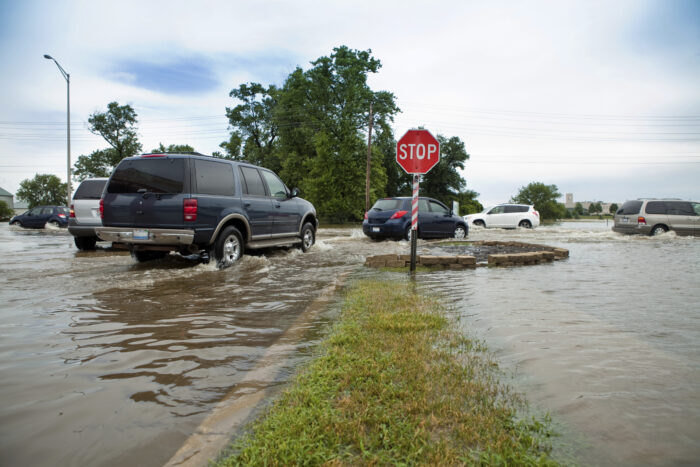
- Providing technical assistance, such as conducting vulnerability assessments or updating floodplain standards to help direct new development away from flood-prone areas;
- Facilitating collaboration across jurisdictions and agencies; and
- Supporting access to and management of funding opportunities.
Her findings from Alabama illustrate how limited local capacity can be: only a small share of communities had conducted vulnerability assessments or evaluated critical risk factors, leaving many without a proper framework for investing wisely.
Recent steps, such as Alabama’s establishment of a statewide Chief Resilience Officer, demonstrate how states can formalize this central role and provide more consistent support. These efforts can help communities better understand risks, prioritize investments, and implement projects that strengthen long-term resilience—all of which also help reduce recovery expenditures at the state and federal levels.
Designing federal policy to support, not strain, state and local systems
Underlying all of these themes was a shared message: federal reforms must be designed with careful attention to how they will affect state and local capacity.
While there is strong interest in encouraging more proactive state leadership, speakers cautioned that shifting responsibilities without adequate support could place undue strain on lower-resourced regions. Effective policy design should:
- Provide clear and predictable funding structures;
- Allow time for states to adjust through phased implementation;
- Incentivize long-term planning and pre-disaster mitigation; and
- Maintain robust federal support, particularly for high-risk and low-capacity communities.
As Muller noted, building resilience will require sustained, coordinated investment across all levels of government, and across society as a whole.
Taken together, the discussion made clear that FEMA reform is not simply about changing federal programs, but about strengthening the entire system of disaster governance. Federal, state, and local governments have critical roles in driving pre-disaster mitigation projects, supporting robust floodplain management practices, and helping communities recover better after a disaster. Congress must prioritize policy reforms that strengthen intergovernmental collaboration and support proactive leadership toward these goals.