

Virginia is so back
Virginia’s landmark return to a regional carbon cutting program promises to protect more people across the state from pollution and the worst effects of climate change, but this victory didn’t come without some major bumps along the way.
When former state leaders withdrew the Commonwealth from the climate program, SELC brought the legal muscle needed to hold the line in courts and the legislature. Virginia’s rejoining of the Regional Greenhouse Gas Initiative is now well on its way thanks to the swift action of leaders in the General Assembly like Senator Mamie Locke, Majority Leader Charnelle Herring, Governor Abigail Spanberger, and Attorney General Jay Jones.
For decades, utilities didn’t have to factor in the harms of carbon dioxide pollution in their operations. The Regional Greenhouse Gas Initiative changes that.
Better known as RGGI, this program is a successful cooperative effort among states to reduce power plant pollution.
Reaping the RGGI benefits
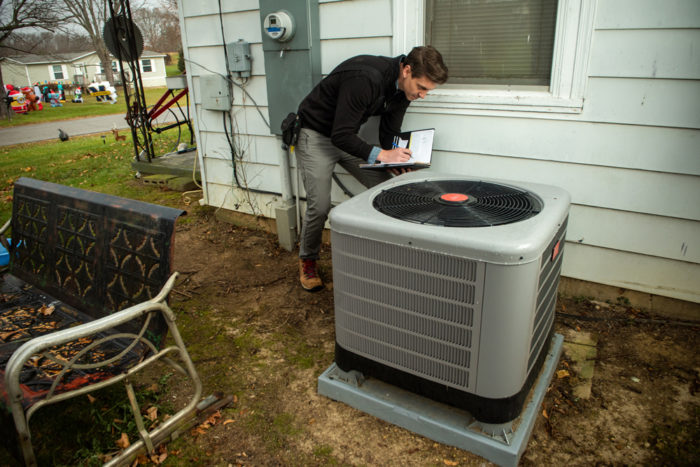
Under RGGI, power plant owners have to purchase allowances when they pollute our air. The supply of these allowances declines every year, meaning power plant owners have to figure out how to transition to less harmful power sources over time — like solar, wind, and battery storage.
After the General Assembly passed a law in 2020 that required expediting Virginia’s participation in RGGI, Virginia became the first Southern state to join the popular climate initiative. It didn’t take long for Virginians to start reaping the benefits.
Power plant pollution started to drop and communities facing the most severe effects of climate change started receiving grants and critical energy efficiency upgrades.
Weathered roofs got replaced, appliances were updated, insulation was added to drafty homes, new highly efficient affordable housing was constructed, and localities were given tools to prepare for increased flooding and storms.
In three years of participation (2021-2023):
-
- Virginia power plant emissions fell 22%
-
- $827 million was generated to help struggling families slash energy bills and to fund community resilience projects
“RGGI was working great for Virginians and helping us get off gas and coal, which have been a major driver of bill increases,” says Nate Benforado, a senior attorney at SELC who has specialized on energy issues in Virginia since 2018. “But all of this progress came crashing down when former Governor Glenn Youngkin took office and unlawfully yanked the state out of the program.”
Climate program in peril
Virginia’s participation in RGGI became a test of whether the South can sustain long-term climate commitments through changing administrations and political landscapes.
Then-governor Youngkin targeted the climate program immediately upon taking office in January 2022.
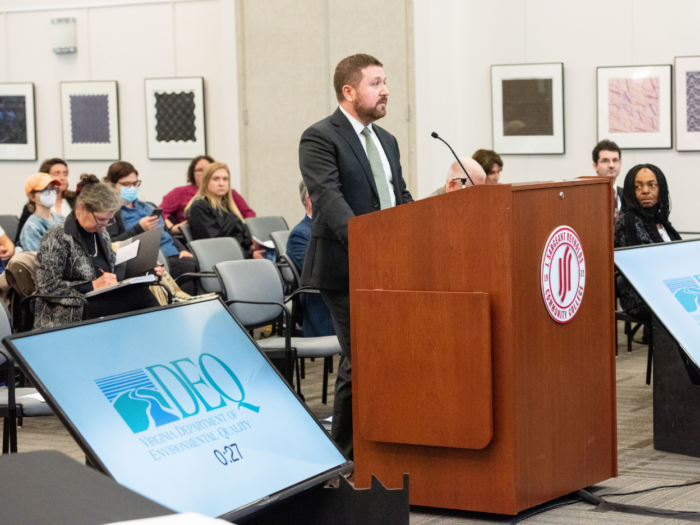
“He claimed RGGI wasn’t working in Virginia, but the facts clearly showed it was working great and exactly as designed,” says Benforado.
Thanks to the work of SELC and numerous partners, Youngkin did not follow through with his unlawful plan to pull Virginia out of RGGI on the first day of his term. Our strong advocacy forced several retreats by the Youngkin administration, which allowed Virginia to remain in RGGI for three full years.
Eventually, however, the Youngkin administration went through a full regulatory process to repeal the program, during which thousands of Virginians objected and urged the state to stay in RGGI. But the state’s Air Pollution Control Board put Youngkin’s agenda over the desires of Virginians, and in June 2023, on a 4-3 vote, removed Virginia from the climate program.
SELC had been preparing for court since Youngkin had announced his intentions, and immediately filed a lawsuit challenging the legality of the withdrawal in August 2023. We represented the Association of Energy Conservation Professionals, Virginia Interfaith Power and Light, Appalachian Voices, and Faith Alliance for Climate Solutions in the case.
But while the lawsuit proceeded, the state officially stopped participating in RGGI on the last day of 2023.
Virginia gets good news
“The state threw everything it could at the case,” says lead attorney Benforado, including filing numerous preliminary motions, litigating the same issues multiple times, and even asking that a judge be recused.
And while three initial clients were dismissed, in February 2024, Circuit Court of Floyd County denied the state’s attempt to get the case tossed and determined the Association of Energy Conservation Professionals had standing to challenge the state’s withdrawal from RGGI.
After months of briefing and oral argument in September, SELC and our partners celebrated in November 2024 as a circuit court judge ruled the withdrawal from RGGI was “unlawful.”
The Commonwealth is building the blueprint for a more resilient and sustainable South.
Nate Benforado, Senior Attorney
This legal win made it clear that the governor could not undo a law by a board vote. Only the General Assembly had the power to pull Virginia out of RGGI, which they had refused to do.
The State Air Pollution Control Board and Department of Environmental Quality appealed the judge’s ruling and were permitted to suspend its enforcement while the appeal was ongoing — meaning Virginia remained out of RGGI.
Climate and affordability became major themes of the 2025 gubernatorial race, with Virginia’s participation in RGGI even becoming a campaign issue. Abigail Spanberger, who had supported Virginia rejoining RGGI during her campaign, won the election in November 2025 and was sworn into office January 18, 2026.
The General Assembly wasted no time and passed a caboose budget in February 2026 that included language that dictates the exact steps state officials must take to get back into RGGI as quickly as possible. Governor Spanberger signed it into law the same day and now Virginia is on track to rejoin RGGI in the second half of 2026.
Attorney General Jay Jones also decided to withdraw the appeal initiated by his predecessor.
Success stories from Virginia
Want to see RGGI in action? These stories from 2022 highlight the real impacts the program was having on Virginians before Youngkin unlawfully withdrew the Commonwealth.
RGGI goals
Virginia’s success with RGGI proves that Southern states can lead the way on climate action by turning carbon reductions into tangible community investments and economic growth.
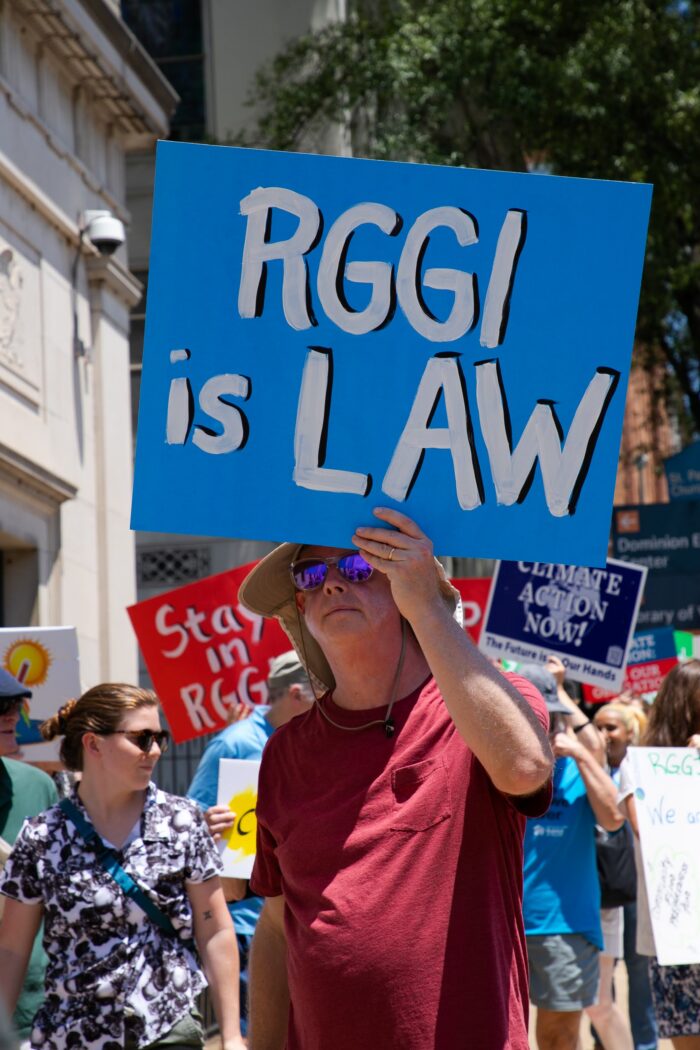
The premier goals of the program are as follows:
- Reduce greenhouse gas emissions from the power sector: The program lowers carbon dioxide levels by setting a strict, declining cap on power plant emissions.
- Improve public health: Burning less fossil fuels also means better local air quality for participating states — fewer cases of asthma, respiratory illnesses, and even premature death.
- Reduce reliance on fossil fuels and spur investment in clean energy technologies: By pricing carbon, the initiative drives utilities to swap fossil fuels for solar, wind, and battery storage. This is not only good for our health and climate, it’s also good for consumers. Fossil fuel costs have been a major driver of bill increases, which continue to skyrocket due to global conflicts like the Ukraine war and Iran war.
- Grow the economy while helping people: Auction revenues are reinvested locally, helping families slash energy bills and communities protect themselves from flooding events. Not only does this help the people on the front lines of climate change, it also sparks job growth and boosts the economy.
RGGI works
The nine original states participating in RGGI saw their fossil fuel emissions drop 90% faster than anywhere else in the country through the first decade of the program.
These states have seen carbon dioxide emissions from the power sector drop over 50% between 2008 and 2020, as well as fewer premature deaths, hospital visits, and lost work or school days associated with asthma and other respiratory illnesses, strokes, and heart attacks.
Virginia as a model for the South
By participating in the cooperative program, Virginia demonstrates its role as a leader in the South and proves that, in our region, a clean environment and a strong economy can go hand-in-hand.
“The Commonwealth is building the blueprint for a more resilient and sustainable South,” says Benforado.
As the first Southern state to turn carbon auctions into hundreds of millions of dollars for flood-prone neighborhoods and energy-burdened families, Virginia isn’t just lowering its emissions — it is laying a roadmap for a resilient, clean-energy economy that other Southern states can no longer afford to ignore.