

Everything you need to know about RGGI
The only way to tackle climate change is to reduce carbon pollution. The Regional Greenhouse Gas Initiative, also known as RGGI, is a successful effort by multiple states to fight together against harmful climate change. By requiring utilities to pay for their carbon dioxide from burning polluting fossil fuels, RGGI creates a financial incentive for utilities to invest in clean energy, including energy efficiency, solar, and wind. It also generates real money for states to tackle the impacts of climate change being felt at home.
What is the Regional Greenhouse Gas Initiative?
The Regional Greenhouse Gas Initiative is a cooperative effort to reduce heat-trapping gas emissions. RGGI has been benefiting the states that participate for over a decade. Current members are Connecticut, Delaware, Maine, Maryland, Massachusetts, New Hampshire, New Jersey, New York, Rhode Island, and Vermont. Virginia was the only Southern state in RGGI until its then-governor pulled the state out—an action that is the subject of litigation.
RGGI’s goals
- Reduce greenhouse gas emissions from the power sector
- Spur investment in clean energy technologies
- Create jobs and economic growth
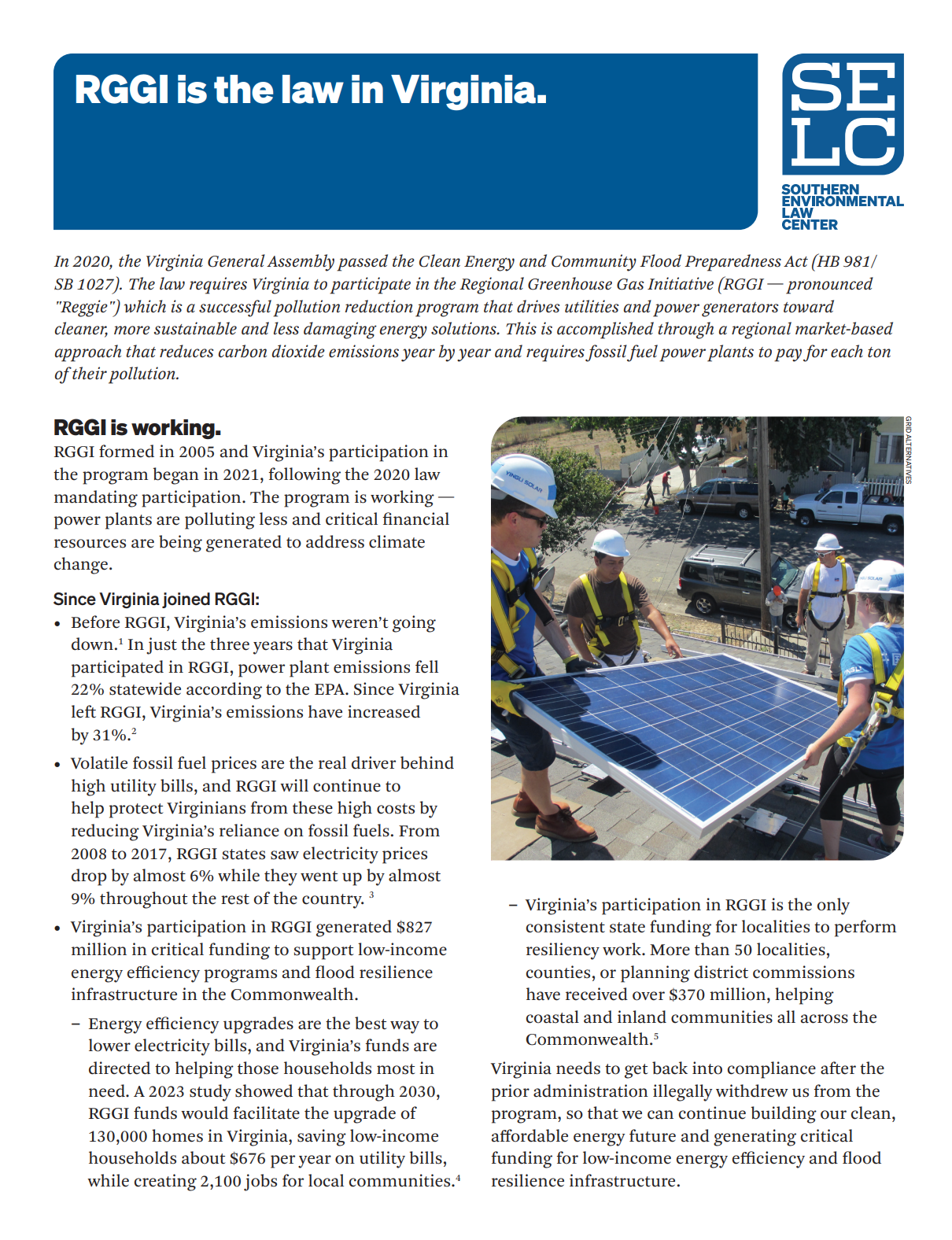
RGGI is the Law in Virginia
How does RGGI work?
RGGI gets at the root cause of climate change, heat-trapping air pollution. When a state joins the regional effort and a power plant emits carbon dioxide, the plant’s owner has to pay for each ton of carbon dioxide pollution it produces. Allowances can be bought and sold in a regional auction, which helps to keep costs down. The number of available allowances is reduced over time to reduce pollution.
Every state that participates in RGGI may decide, in accordance with its laws, how to use the money it raises through RGGI auctions. Some states like Virginia invest the money that utilities pay when they burn carbon dioxide back into energy efficiency and renewable energy programs, creating jobs, spurring economic growth, and helping utility customers lower their bills.
RGGI in the South
Currently, there are no Southern states participating in RGGI. Virginia joined RGGI in 2020 and was part of the program until then-Gov. Glenn Youngkin’s administration withdrew the state in 2023. By participating in the cooperative program, Virginia proved that a clean environment and a strong economy go hand-in-hand, and demonstrated its role as a leader in the South.
RGGI is open to other states and jurisdictions interested in joining, and as climate change continues to harm our region, it’s critical that states in the South consider programs like RGGI that cut carbon pollution.
North Carolina took important first steps towards tackling climate change when its legislature enacted bipartisan legislation that requires steep cuts in heat-trapping carbon pollution from fossil-fueled power plants and a state environmental commission voted to develop a rule that will achieve those reductions and join RGGI. However, the North Carolina Senate since approved legislation that would prohibit the state from participating in RGGI.
Virginia and RGGI
Virginia joined RGGI in 2020 and withdrew from the program in 2023. Virginians were already seeing the benefits. In just the first two years, Virginia’s power plant emissions dropped by more than 22%, and the state received $872 million through its participation in RGGI. That’s money for communities on the frontlines of climate change to solve real problems that too often they can’t afford to tackle alone.

In November 2024, a court ruled that the regulatory action removing Virginia from RGGI was unlawful and without legal effect. The Court also confirmed that the Association of Energy Conservation Professionals (AECP), SELC’s client in the case, had standing. After the ruling, the Attorney General’s office was granted a request to suspend the judgment while the state appeals the ruling. This means that Virginia will remain out of RGGI while the case is appealed.
Virginia devoted about half the proceeds of RGGI auctions to communities along the coasts and rivers that are in danger of flooding. The other half was going to new energy-efficient, affordable housing, reducing pollution and cutting families’ utility bills at the same time. More than 60 percent of RGGI funds go to Virginians earning a lower or fixed income who have historically borne the brunt of climate change in the state.
What impact has the Regional Greenhouse Gas Initiative had?
RGGI has been successful in reducing emissions and boosting investments in clean energy. The 9 original states participating in RGGI have seen their fossil fuel emissions drop 90 percent faster than anywhere else in the country through the first decade of the program. From 2009 to 2014, participating states reduced their power sector emissions by 40 percent. Utilities’ customer costs dropped with it, and their public health has improved by an estimated $5.7 billion.
The original RGGI states have seen carbon dioxide emissions from the power sector drop over 50% between 2008 and 2020 as well as fewer premature deaths, hospital visits, and lost work or school days, associated with asthma and other respiratory illnesses, strokes, and heart attacks.
RGGI will no doubt continue to play an important role in addressing climate change. By working together, the participating states can make significant progress in reducing emissions, protecting the environment, boosting jobs and improving people’s lives.