

What you need to know about Cainhoy Peninsula
What is Cainhoy Peninsula?
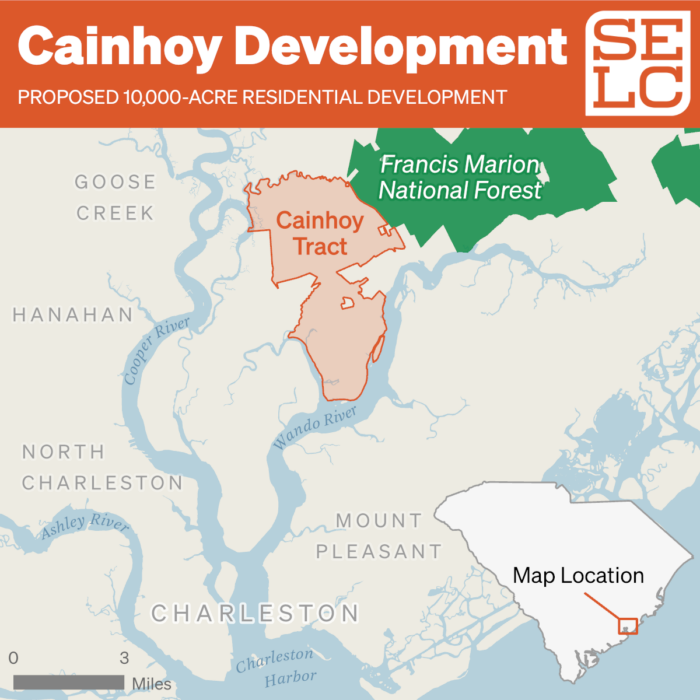
About 20 miles outside of Charleston, developers are proposing a more than 9,000-acre residential and commercial development on a low-lying and flood-prone peninsula along the Wando River known as Cainhoy. Nearly half of the development would be built on flood-prone portions of the property at a time when Charleston is struggling to address the threats of sea level rise and flooding elsewhere.
Adjacent to the Francis Marion National Forest, the Cainhoy project would also destroy nearly 200 acres of wetlands, which provide critical flooding protection. An acre of wetlands holds about 330,000 gallons of water, so the loss of wetlands will likely result in increased flooding for current homeowners in the area, but also for the thousands of people who may ultimately move there.
The Charleston area is already seeing the most dramatic impacts of sea level rise; sunny-day flooding on downtown streets is a common encounter. Officials are considering drastic solutions to protect against climate change-related flooding — such as a proposed billion-dollar seawall for downtown Charleston yet allowing developments in wetlands like the Cainhoy project to proceed. The Southern Environmental Law Center and its partners are fighting back against this irrational and risky development approach for Charleston’s future.
Tell Charleston leaders to stop harmful development of Cainhoy.
Why Cainhoy? Why now?
Many are drawn to South Carolina’s coast by the high quality of living, easy proximity to the ocean, and favorable tax rate. But as demand goes up, the need for housing increases. And the question of where to build in a changing climate becomes more pressing.
“There are responsible ways to invest in new development for Charleston, including on Cainhoy, but this is not one of them,” said Chris DeScherer, director of SELC’s Charleston office. “You’re talking about putting a small city in a floodplain a few feet above sea level.”
Visit Cainhoy with SELC
Watch the video now.
The developer’s plans would place almost half of the new homes and infrastructure on the southern end of the Cainhoy peninsula, which is already vulnerable to flooding and will be at an even greater risk as seas continue rising and as storms continue to become more powerful.
For example, at the southern section of the peninsula — where thousands of houses are slated to be built in the floodplain — storm surge from a Category 1 hurricane could swamp much of the land. And in a future with just one foot of sea level rise, that southern half of the peninsula will be inundated more and more frequently.
With more sea level rise, the land, infrastructure such as streets, and homes slated for this area will be inundated.
Want to learn more?
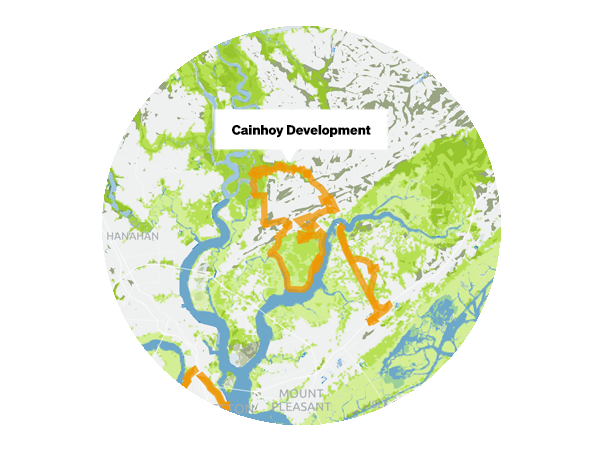
Following the U.S. Army Corps of Engineer’s 2023 decision to approve the permit for the development to fill wetlands, SELC filed suit in federal court on behalf of the Coastal Conservation League, Charleston Waterkeeper, and the South Carolina Wildlife Federation aruging that the developers and Corps failed to consider less damaging development plans. The case is currently on appeal to the U.S. Court of Appeals for the Fourth Circuit.
To see the impacts of sea level rise and the loss of wetlands in the area slated for this reckless proposal, visit TheChangingCoast.org to explore the interactive map.