We need our neighbors: Community as a climate solution
Climate disasters in the South are striking beyond the coasts and coastal plains where they haven’t before, and in their wake, the Trump administration is slashing critical funding communities need to recover. As people far from the centers of power feel increasingly on their own, Southerners are taking matters into their own hands.
In two North Carolina regions, residents who have always had to rely on their neighbors lead by example. North Carolina’s coast is no stranger to Atlantic hurricanes, and climate change is warming our seas, which fuels massive storms that lumber further inland. On one hurricane-licked barrier island, connections grow as locals work to preserve their historic Black neighborhood threatened by climate change and gentrification. Through music and food, they are also building a community ready to respond to the supercharged storms and flooding ahead.
Two hundred miles west in Appalachia, a group of tinkerers, bike mechanics, anarchists, and grandmas good at repairing nearly anything realized their skills were essential to recovery after Hurricane Helene slogged in from the Gulf of Mexico, felled hundreds of trees and knocked out power and water for months. Their lives are forever altered by the storm and, in the year-plus since, they have found healing in each other.
From the coast to the mountain hollers, communities in the South are organizing coalitions that build healthier communities and can create lasting systemic change. The lesson: building a climate-resistant community means putting aside our differences and working together.
Ocean City Beach: Cookouts and Jazz on the Coast
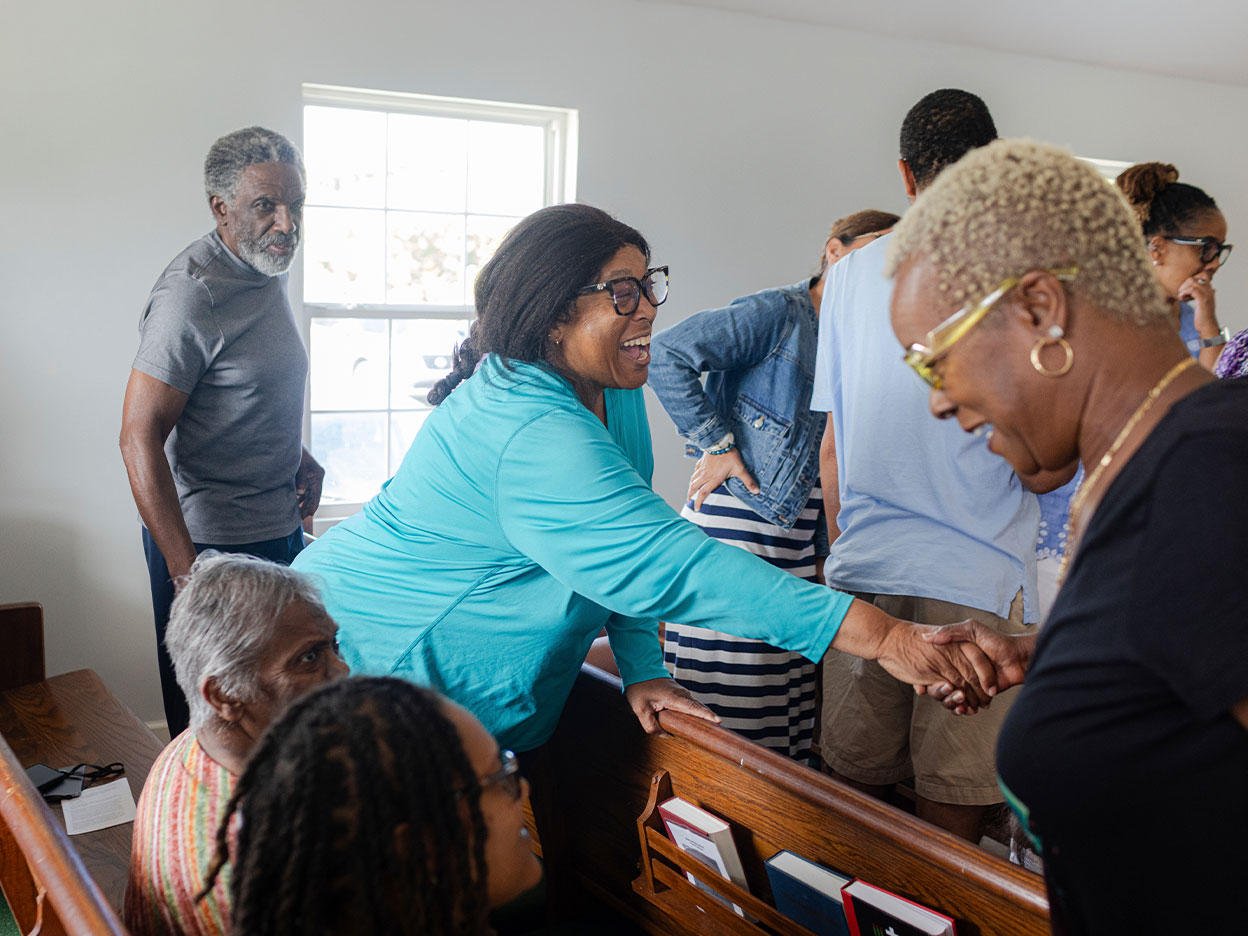
Climate resilience starts with knowing your neighbors the way Carla Torrey and her husband, Craig, in Ocean City Beach, North Carolina know all of theirs. Every time they go to the store here on North Topsail Island, they will ask around: “Do you need anything? Can we pick up anything for you?” When they leave town, their neighbor across the street offers to water their flowers.
And when times are tough, like after a hurricane, all the neighbors band together. Just like the community’s founders did in the 1950s, the Torreys will walk the neighborhood and report on the storm damage to their out-of-town neighbors.
These little gestures may not seem like much, but for thriving in a climate-changed world, they add up.
Fostering connections
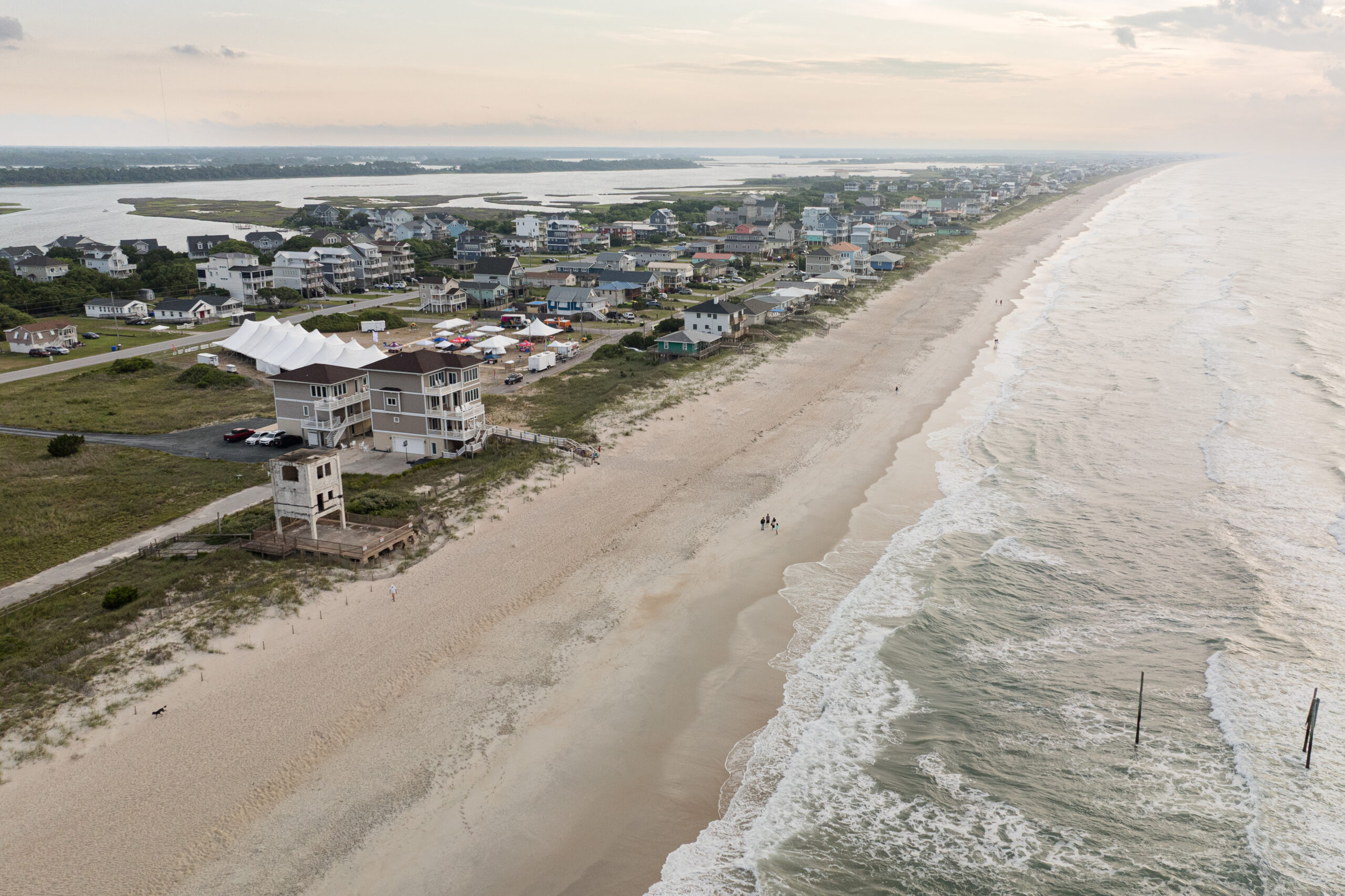
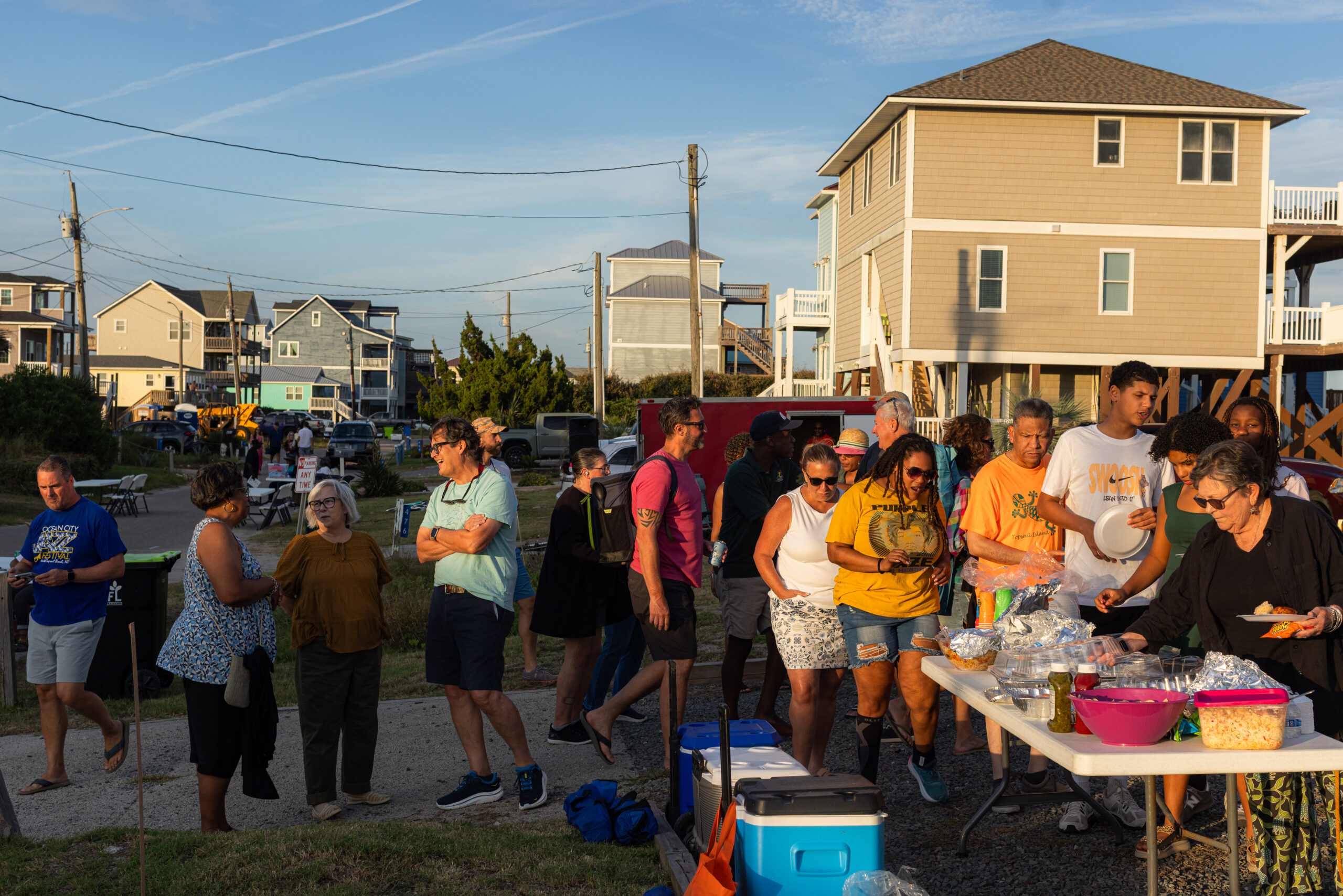
Born out of segregation, Ocean City Beach became North Carolina’s oldest Black beach community. In this village of fishers, crabbers, and elders with legendary recipes, decades of shared meals and neighborliness wove a social fabric resistant to white supremacy and hurricanes. These potlucks and cookouts have evolved into community events preserving Ocean City Beach’s history, and its future, in the face of increasingly destructive storms and the Trump administration’s massive cuts to federal disaster recovery funding.

At the height of legalized segregation under Jim Crow laws, when Black people were not allowed at many beaches, an uncommon racial alliance led to the incorporation of Ocean City Beach. In 1949, Edgar Yow, a prominent white attorney and former mayor of Wilmington purchased a large tract of land on North Topsail Island. He formed a multiracial corporation with Wade H. Chestnut, a Black man, and his siblings, along with other successful Black professionals — many of whom were civil rights pioneers — and secured a swath of oceanfront land.
From the beginning, seafood was a social glue in Ocean City Beach. In the summer months, women would gather under the moonlight and hunt for crabs at the inlet north of the island. Kenneth Chestnut, Wade’s son, remembers when he and some friends joined, with swim trunks under their jeans. They caught so many crabs they took off their pants, tied off the legs, and stuffed them full. Back home, families gathered to feast on crab casseroles and shrimp. Those recipes are collected in a community cookbook, and the neighborhood meals live on.
Experts, and evidence, say that communal events and meals like the ones held regularly in Ocean City Beach foster social networks that can strengthen social and emotional support and build cultural identity — the foundation for climate resilience.
Human and environmental threats
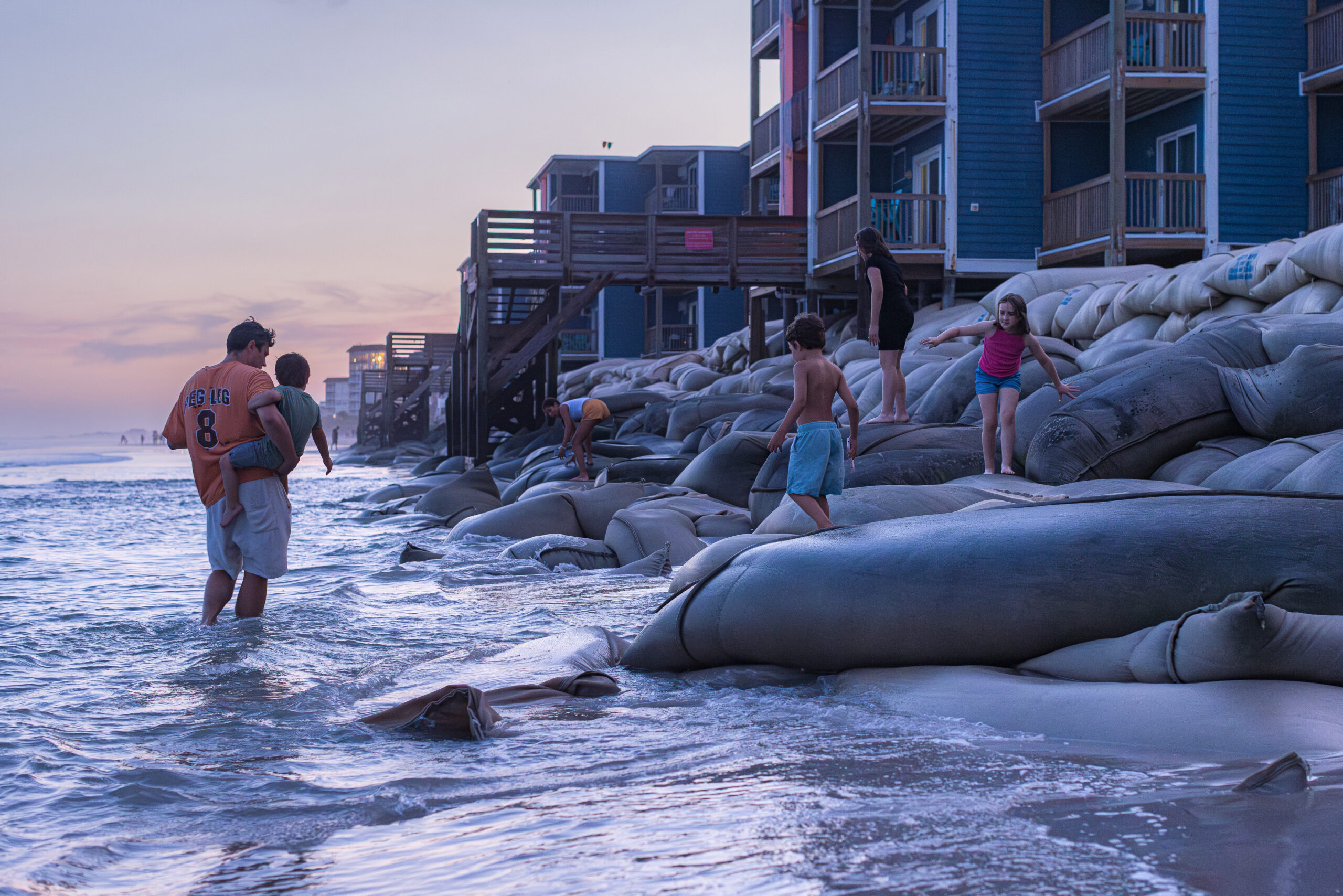
Ocean City Beach faces twin threats: overdevelopment and the effects of climate change. Hurricanes have always menaced the island; in 1954 Hazel swept the Torreys’ house across the island and into the sound. But her father, William Eaton, who built most of the original homes, the church, and other buildings, built it back stronger. In 1996, Fran took out houses along the main road, Ocean Drive, and flooded the Torreys. They renovated, and as a reminder, left a wood-paneled wall in the living room with the faint water line from 2.5 feet of flooding.
Greg Williams, an erosion expert, professor and a founder of the University of North Carolina at Wilmington’s Coastal Engineering program, says the bigger, wetter hurricanes fueled by warmer oceans are the most imminent threat to Ocean City Beach, where he and his wife own a rental home.
Last year, the Trump administration slashed nearly $200 million in Federal Emergency Management Agency (FEMA) funding slated to help North Carolina towns adapt to climate change and respond to storms. Those funds were reinstated by a federal judge after 20 states, including North Carolina, sued FEMA, and won. Now, the focus is on making sure FEMA follows through.
Cuts like these dramatically shift the burden for storm prediction, preparation, and recovery to the states. In response, SELC has been working closely with federal lawmakers to secure a bipartisan FEMA reform bill that incentivizes states to invest in projects that help reduce damage when storms strike, pushes for more equitable distribution of pre-disaster funding, and streamlines pre- and post-disaster public assistance. The goal is to fix some of the barriers delaying the flow of funding after a disaster while preserving the much-needed support systems that help communities in times of need.
SELC also sued the Trump administration for canceling the U.S. Environmental Protection Agency’s environmental and climate justice block grants program, which supported community-based projects similar to those needed in Ocean City Beach and across the South.
People are grieving the fact that at some point, Ocean City won’t be here anymore.
Willa-Jo Greene Dawkins
Until federal and state funding comes through, locals do what they can. Torrey built a rain garden in her front yard with plants that suck up floodwater. She hopes it inspires others to do the same. Kenneth Chestnut says the community has piled dead Christmas trees to buttress the sand dunes. They’ve paid out of their own pockets for native seagrasses to hold the dunes in place. They paid again to push them back when the sea washed them across Ocean Drive and into their yards.
Every bit helps, but Kenneth Chestnut knows it’s all temporary.
“Mother Nature will come and take her sand back,” he says.
Jazz with a higher purpose
The “mini hotel or mansion” rentals, as Chestnut calls them, dilute the beach town’s sense of community. People don’t know their neighbors and the history gets lost, he says. Airbnb proliferation can erode neighborhood social capital—the trust, information, and cooperation social networks afford—studies show, making a place like Ocean City Beach less resilient, including to climate change.
The original Ocean City Beach generation has passed on and their children are aging. “We’re in our 70s, so we’re running out of people who can tell the story who were here and actually experienced it,” Torrey says.
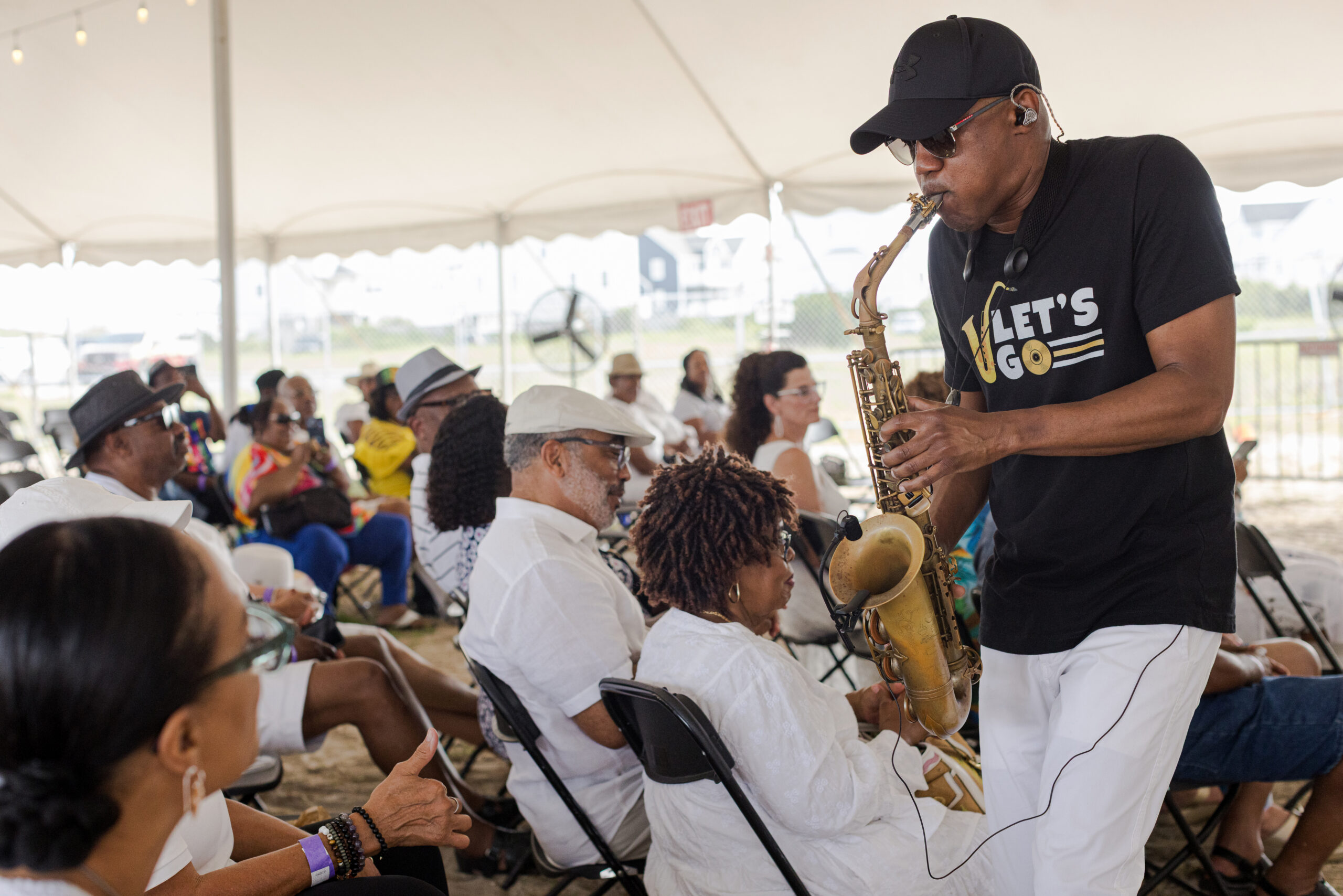
So the community founded the annual Ocean City Jazz Festival to gather homeowners and summer tourists under one tent. The festival celebrated its 16th year on Independence Day 2025, during the hottest July ever recorded in North Carolina. Guests from as far as California and Michigan wore all white, danced in the muggy heat, and ate from local food trucks. Torrey’s husband, Craig, calls it “jazz with a higher purpose”: to raise money for the community and keep the story of Ocean City Beach alive.
On Memorial Day and Labor Day, they hold block parties, offering anyone in the neighborhood a plate. And everyone is invited to the Wade H. Chestnut Memorial Chapel each Sunday, where tithes go to a fund to maintain and repair community buildings. The church also hosts homeowners’ meetings to discuss budgets, community concerns, and what’s needed for next year’s jazz fest.
Good ancestors and future stewards
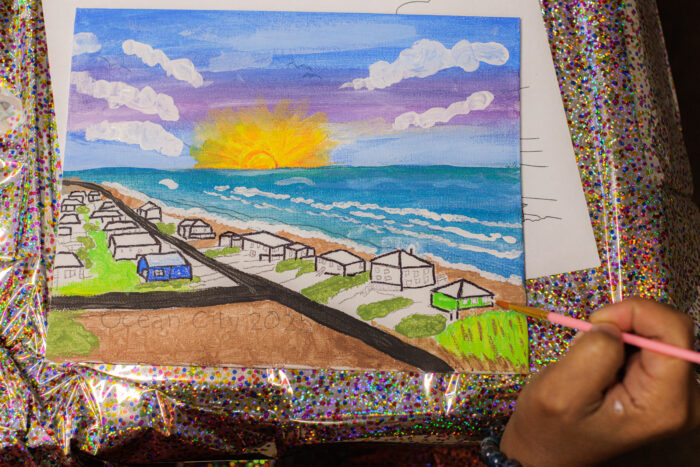
At a sip and paint night, the women drink wine in the church annex. Sam Cooke’s “A Change Is Gonna Come” plays on the stereo. Outside the men smoke cigars, drink bourbon, and watch football. Willa-Jo Greene Dawkins paints a sunrise vista of the green cottage on Ocean Drive that has been in her family for 63 years. It belonged to her father, George Greene, the first elected Black district court judge in Wake County. Every summer, she and her siblings, Ava and George Jr., vacationed here. Ava calls it “her happy place.” But their emotions are mixed.
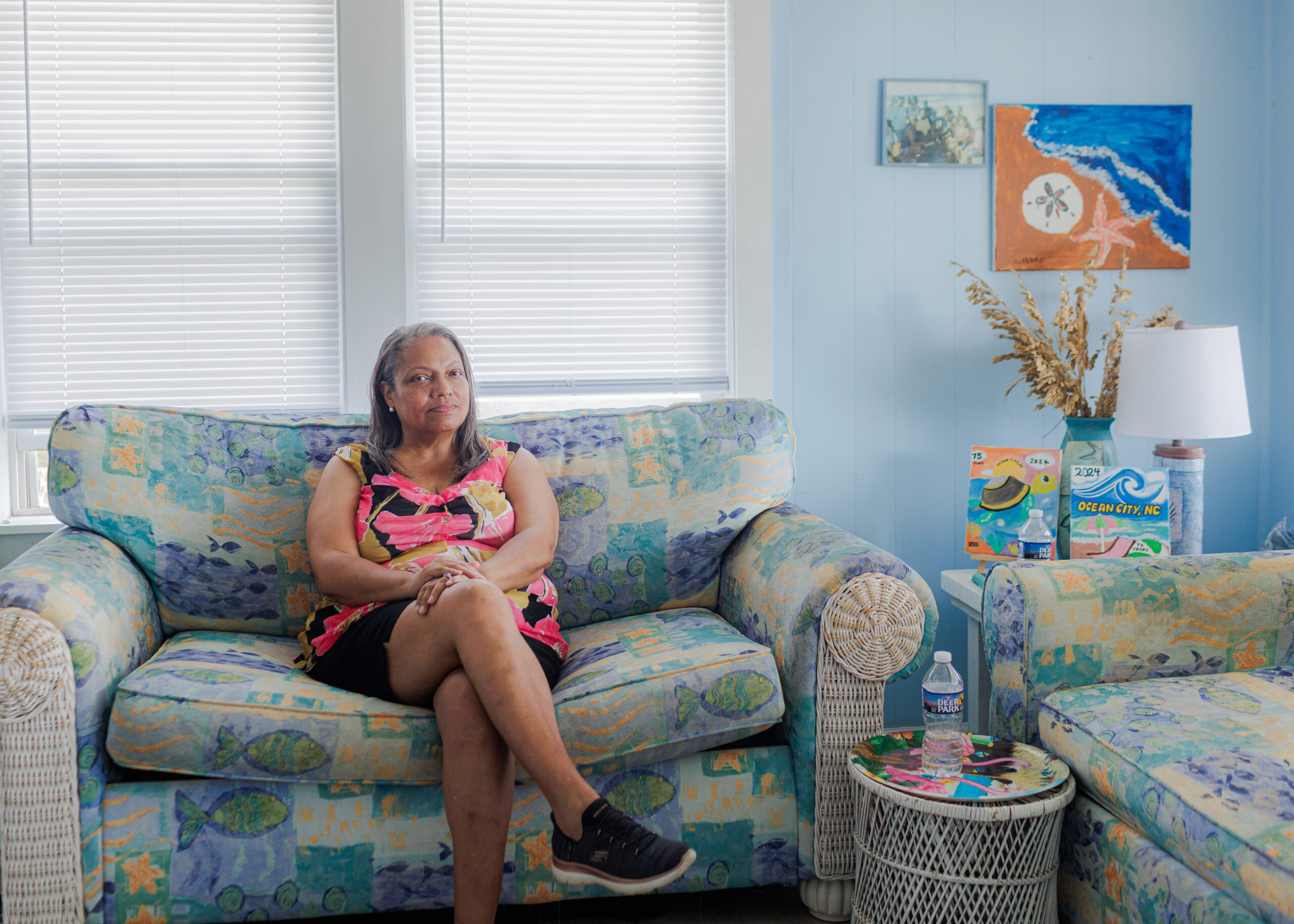
“People are grieving the fact that at some point, Ocean City won’t be here anymore,” Dawkins tells me later.
She and her siblings want buyers to understand they are buying into a Black community worth celebrating and preserving.
For Williams, the coastal engineering professor, Ocean City Beach’s cozy single-family cottages made him nostalgic for when the coast was less developed, for the beaches of his youth. He and his wife are a white couple aware of the local history, and want to be part of the community, so he gets to know his neighbors at all the local meetings and events. He meets all his renters, so they will respect his home. Any chance he gets, he talks to them about the history of Ocean City Beach. He encourages them to go to the jazz fest and the church services so they participate in the community.
“It’s not just a money maker. It’s personal,” he says.
Torrey says the jazz fest made much less money in 2025 and lost grant funding. To be sustainable, she says it needs more committed sponsors, volunteers, and a strategic plan. Torrey’s plan is to set up a land trust that can ensure long-term housing affordability, and she says she needs expert help to get the trust started. But if a hurricane levels the community, none of it could matter. Torrey isn’t sure they’d be able to rebuild. Even if that happens tomorrow, she and her community will fight to keep Ocean City Beach’s story alive.
“I hope we never have to find out,” Torrey says.
Asheville: Repair, Rebuilding and Healing in the Mountains
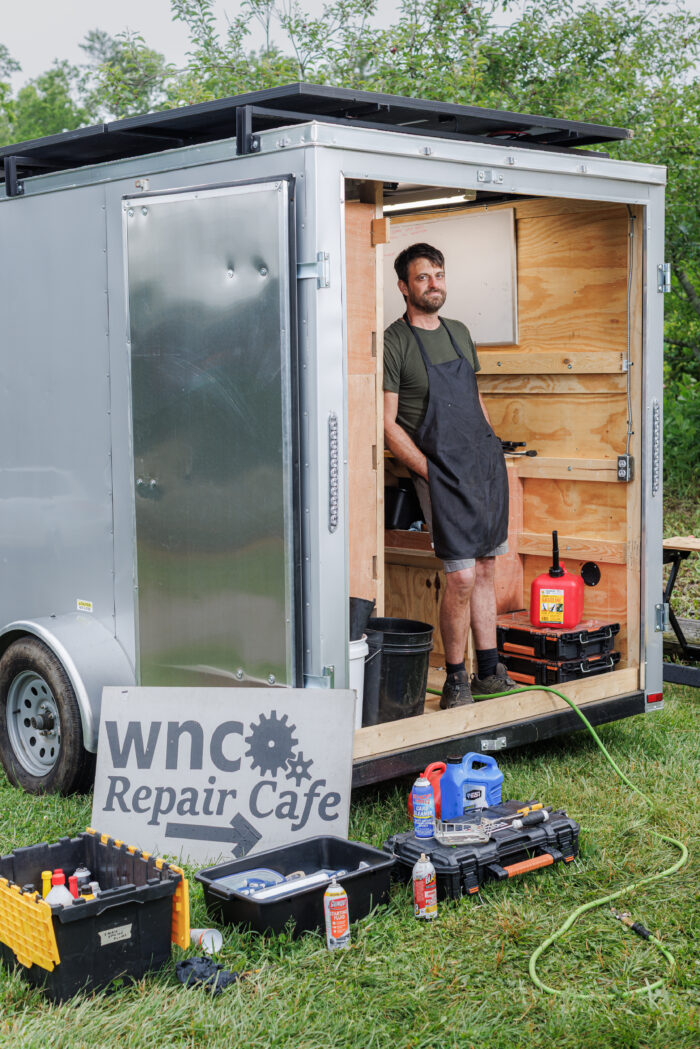
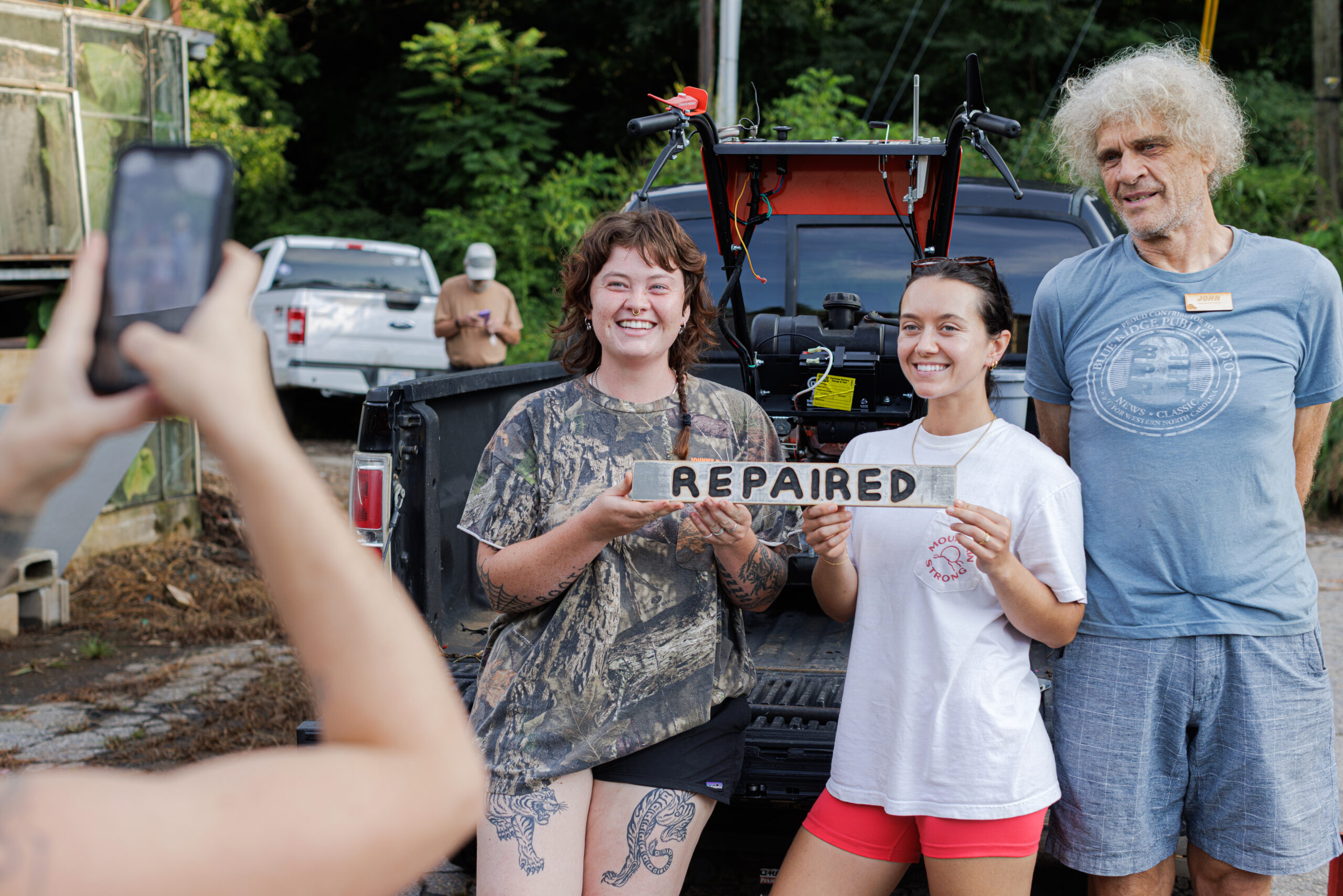
The mountains of western North Carolina were considered safe from climate chaos. Before Hurricane Helene dumped months’ worth of rain overnight, washing away entire towns and hollers and killing at least 108 people, resilience was just a word to Dan Hettinger. But the end of September 2024 changed everything. Little did Hettinger know that he and the Western North Carolina (WNC) Repair Cafe — a group of volunteer mechanics, stitchers, tinkerers, and fixers — could show up with just the skills they have and help with recovery.
Hettinger bought a house near Asheville in 2012 and it had a broken gas stove. An internal control board was damaged, a $200 repair. But Hettinger learned to fix things by trial-and-error working on a farm and with solar panels. He is handy. So, he fixed it in an hour with a soldering gun.
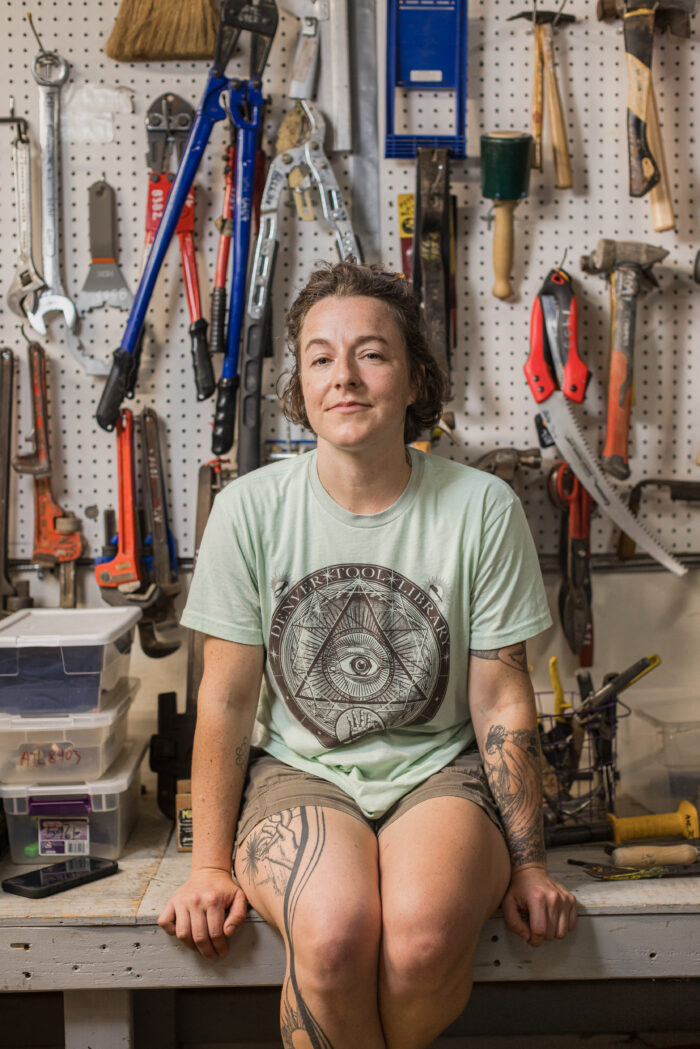
There was something so satisfying about fixing things himself. Hettinger was hooked. He was working at Living Web Farms, and started the WNC Repair Cafe there in 2018. But then the COVID-19 pandemic hit and the farm closed down. So he and some volunteers started meeting at the West Asheville Public Library, where sewing groups took root. He connected with the Asheville Tool Library (imagine: a library, but for tools) and things began to take off.
“We showed up with stuff from our garage, like spark plugs, and we built something that resembled activism,” he says.
Today volunteers will repair any household items you can fit into your car. In 2025, they fixed about 87 percent of items brought in, and helped 636 people fix 838 items across four counties, according to Hettinger.
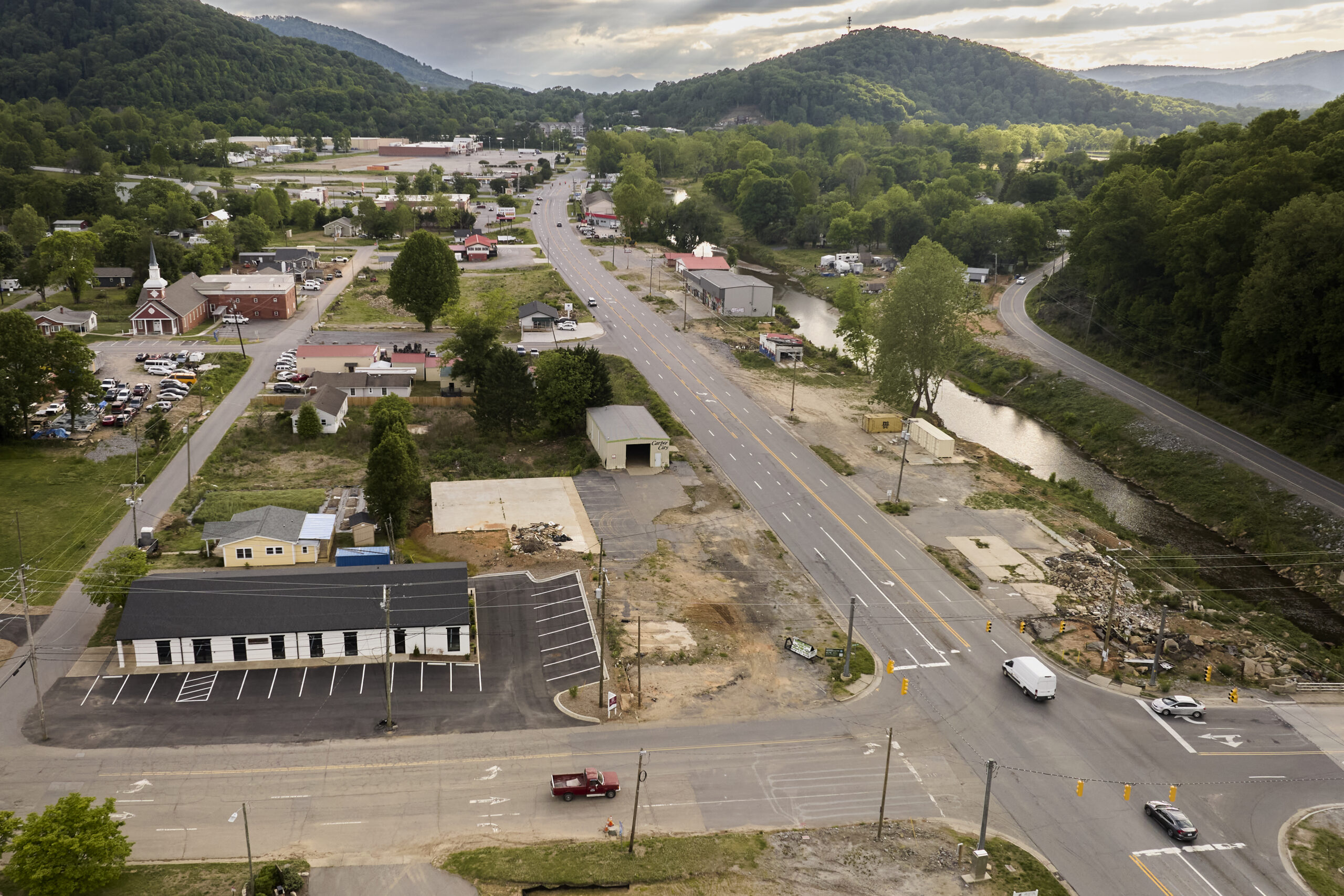
Helene and everything after
Hettinger’s home was relatively unscathed by Helene, so when he finally got cell service a few days after the storm, he called Shelby Treichler, the operations coordinator at the Asheville Tool Library, who runs social media for the library and helps with the repair cafe socials. She was organizing volunteers to sharpen chainsaws. So many trees were down and people were running their chainsaws into the ground.
They met at Firestorm Books, a collectively-owned radical bookstore and well-known community space in Asheville, to make a plan. Firestorm was a central organizing hub after Helene, so Hettinger and five volunteers set up a repair cafe in the parking lot. Five more volunteers just showed up. He noticed right away that people with different political ideas “who wouldn’t normally be in the same space” were working together. In about four hours they fixed around 20 chainsaws and 10 generators.
“Appalachians don’t want free stuff, they want to participate in the process. If we just put the idea out there, people will show up to help,” Hettinger thought.
So, they assembled a mobile repair crew, and in October 2024, hosted 11 repair events around western North Carolina. On social media, Treichler was connected with a vast network of community-minded people who supported mutual aid—from gathering needed supplies, to sharing money and other resources. Though cell service was spotty, she got the word out with simple text screenshots posted on Instagram to let folks know what they were repairing and where. Word spread fast. Everywhere they went, volunteers with different skills and backgrounds appeared and worked together. In a month, Hettinger estimates they fixed between 500 and 600 chainsaws and 50 or 60 generators.
That’s when it all clicked for Hettinger.
“This is what we’ve been working toward. It was just these small incremental steps that added up to preparedness that we didn’t realize at the time,” he says.
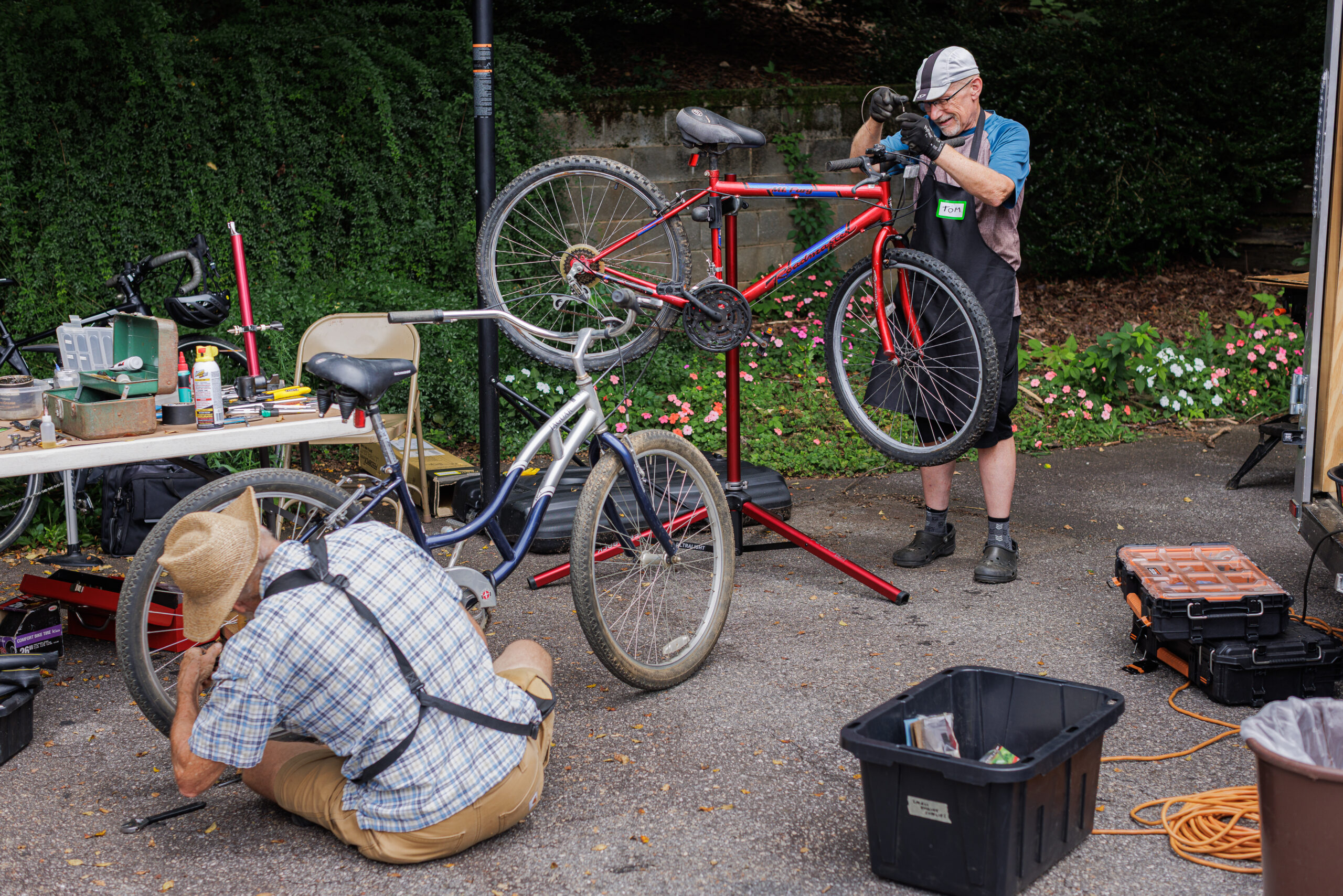
Then donations from other mutual aid groups came in — enough for him to overhaul a small trailer, attach solar panels, and fill it with supplies and tools. Now the cafe is mobile, offering pop-up repairs at libraries, community colleges, and farms.
Resilience, for Hettinger, is no longer abstract; it looks like neighbors, despite their differences, working together.
Repairing and healing together
At a repair event at Root Cause Farm in Fairview, North Carolina, Hurricane Helene survivors arrived in droves. Saiid Rabiipour brought in his expensive yard trimmer. Seven months after Helene, its engine wouldn’t start because it was still full of floodwater and mud. A few weeks later at a repair cafe in the Weaverville Public Library basement, Katherine Scott had an heirloom pillowcase that needed a new zipper. It once belonged to her grandmother.
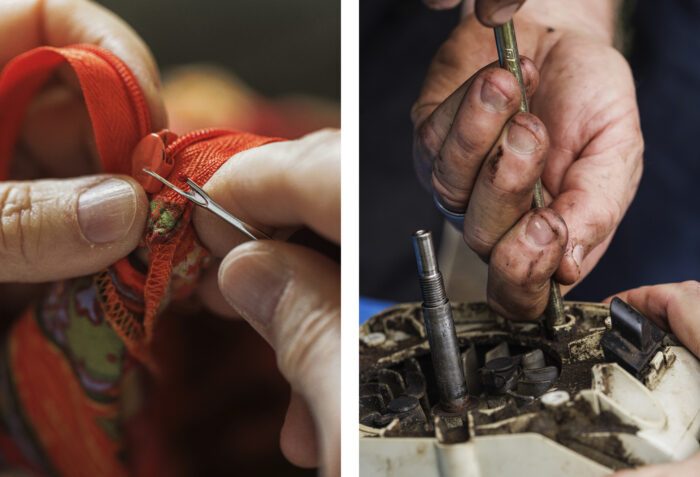
“I’ve slept with it every night since birth,” she says.
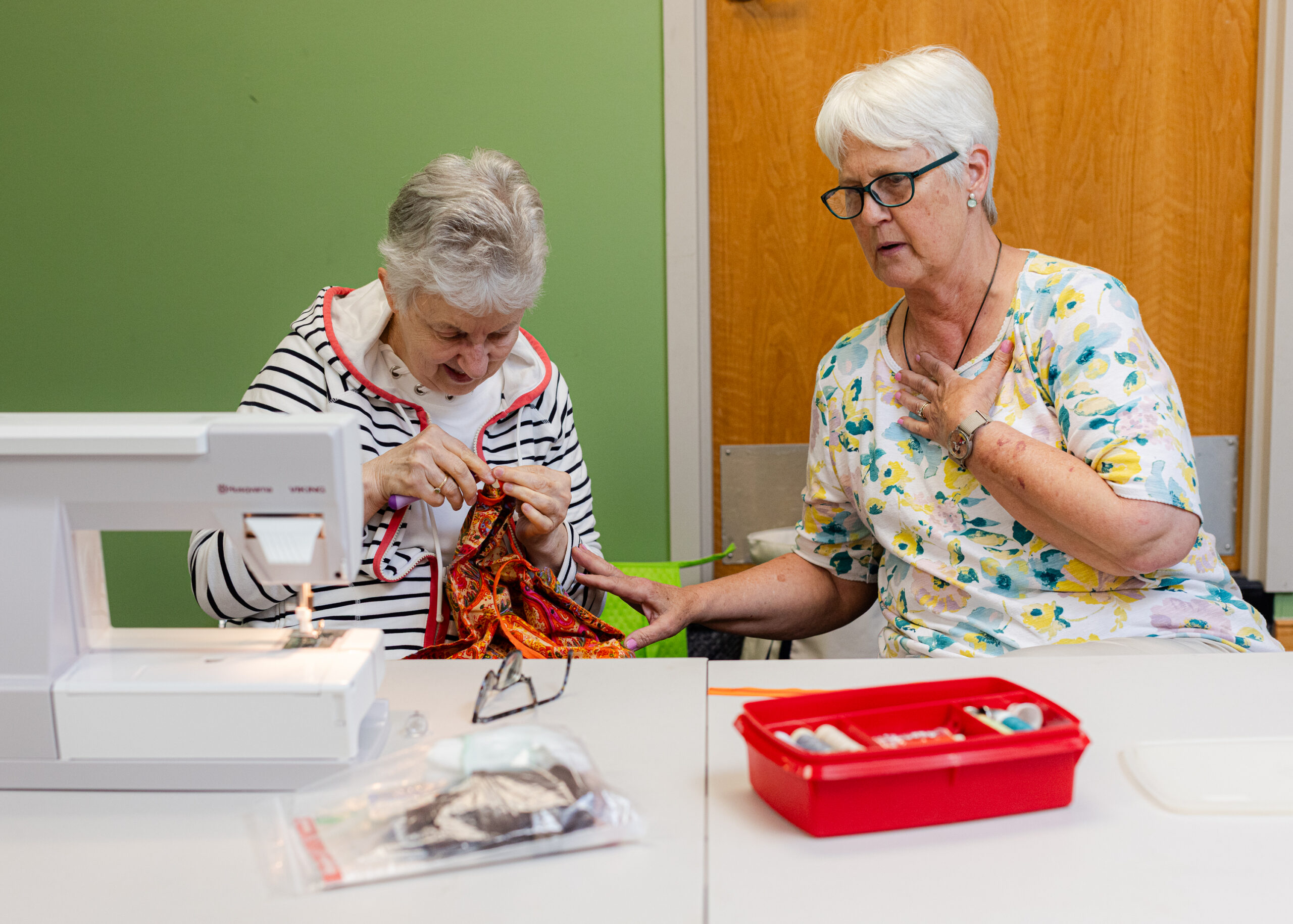
These storm-damaged or sentimental repairs are typical. Often folks need a lawnmower fixed, but there is a six-week wait at a pro shop. Others need clothing hemmed. Ellen Schon, a sewing volunteer from west Asheville, has patched and repaired zippers on a lot of jeans.
People come because they want to learn, or to share their repair knowledge. Others just want conversation.
More than a year after the storm, the communities around Asheville are still stitching their lives back together. In May 2025, during the first spring since Helene, mountain laurel and rhododendron bloomed along the scars of landslides. Crushed cars were being pulled from creeks. Roads still needed to be patched. Everyone has lost something they love. Some places will never be the same. People want comfort.
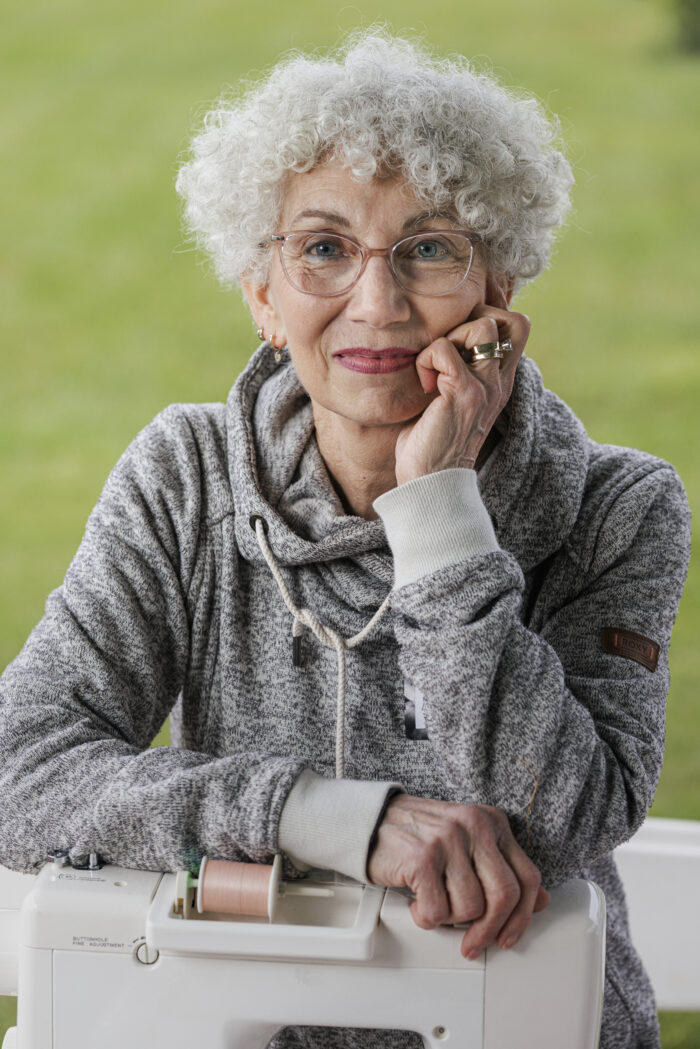
Listen closely and the repair cafe feels like a therapy session.
At the Weaverville Public Library, Pat MacFarland helps Deborah Wadhams replace a zipper on her skirt, and they talk about the things that Helene took. With a tiny seam ripper, MacFarland carefully removes stitch after stitch. She wants to teach Wadhams how to attach the new zipper herself.
MacFarland and her husband slept through the storm until it set off the burglar alarm in their Fairview home. They shot awake and turned it off. Then a huge tree crashed through the bedroom where they had just been sleeping.
She says she and her family were lucky in the big picture. So many people lost everything to Helene. Her garden was ruined by falling trees and five years of nurturing was gone in seconds. She loved that garden. She downplays her loss, but says she felt depressed and didn’t leave the house for months.
A friend told her about a sewing group at the repair cafe at the Fairview Public Library. “I’ve been sewing for 50 years, since I was a kid,” she thought. She needed to “get out of herself” and go do something for someone else. So, she went.
At the sewing cafe, MacFarland laughed for the first time in a while. She met people who had similar experiences and skills. She felt like she could learn and even pass down her knowledge, just as it was passed to her.
“I came back home on such a high. It’s like a drug now!”
Movements born in the mountains
Repair cafes are not a substitute for government interventions and the systemic changes needed to solve the climate crisis, but practicing sustainable living and taking climate action together can influence your friends, family, and neighbors to do the same. Like stitches, these individual actions add up to movements that challenge the status quo, prepare us to withstand a worsening climate, and build a more sustainable world.
The WNC Repair Cafe is inexpensive to run and replicable, but as a grassroots organization it has its challenges. Hettinger says there is high demand beyond the repair cafe format, particularly in teaching repair skills at local public schools and replicating self-sufficient cafes in other towns. He wonders if it is time to move beyond the grassroots structure. This would free him to get to know the volunteers better, and build community, which is what he loves most about the work.
“I think that would make a richer experience for everybody,” he says.
Hurricane Helene caused nearly $60 billion in damage in North Carolina, and over a year later, FEMA still hasn’t fully reimbursed counties for millions of dollars spent on cleanup and recovery. The scale of Helene’s multi-state destruction and other disasters like it require an umbrella response when disaster strikes, and also to build and update sustainable infrastructure before it does. But storm after storm has revealed that governments often fail to protect our most vulnerable communities from climate chaos or help them rebuild.
Treichler believes governments will always play a role in recovery, but her experience tells her she can’t trust them enough to solely rely on them. So, she’d rather invest in local interconnected mutual aid groups now — before the next Helene — that can grow and shrink to community needs. That requires sacrifice and inconvenience: giving up weekends to volunteer, donating money to aid groups instead of eating takeout, or forgiving and working with people who you may not agree with, she says.