

Tracing the South’s unbroken line from plantations to pollution: A conversation with Tasha Durrett
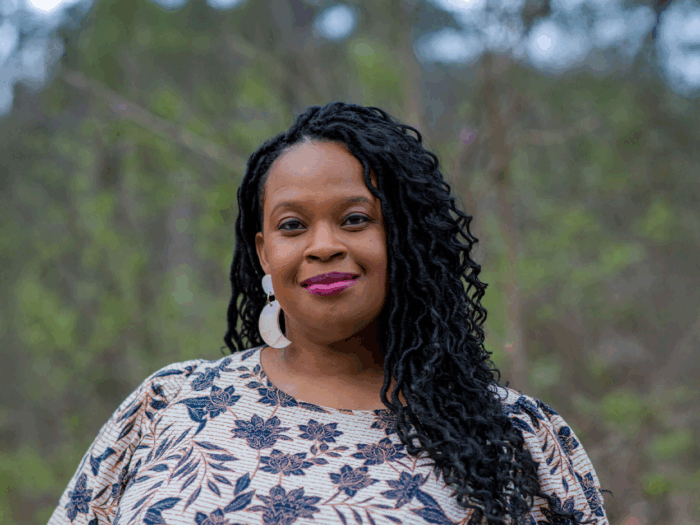
As Senior Communications Manager at the Southern Environmental Law Center, Tasha Durrett brought Plantations to Pollution from concept to reality. In this conversation, she shares how a simple observation about SELC’s work grew into a rich multimedia project connecting the South’s plantation past to its present environmental injustices—and the communities charting a better path forward.
What first sparked the idea for Plantations to Pollution?
The idea came from noticing a pattern in SELC’s work. I lead communications for our Environmental Justice Initiative, and it didn’t take long to see that many environmental justice cases were connected to places with deep, often unacknowledged histories. It began with work in Charleston, South Carolina, where highway projects cut through historically Black neighborhoods built on or near former plantations. The idea was also inspired by SELC’s work with Union Hill in Buckingham County, Virginia, who pushed back on the Atlantic Coast Pipeline and were next facing the threat of gold mining in Union Hill, which was founded by formerly enslaved people on plantation land.
I started to see a throughline: Much of our work takes place on land tied to the legacy of slavery. That observation became the foundation for this project.
How does this series build on SELC’s broader mission — and why is storytelling important now?
Plantations to Pollution helps people understand why things are the way they are. SELC has long presented the legal and factual side of cases, but this project reveals how systemic racism shaped where people live and why certain communities still face disproportionate environmental burdens.
When I joined SELC, the organization was already doing people-centered storytelling. The Environmental Justice Initiative, by nature, is about outreach and connection. So, it made sense that this project be people-driven—told through the voices of those living these realities.
How does Plantations to Pollution connect the dots between history and present-day realities?
We often talk about how Black communities bear the brunt of pollution—but we rarely discuss why those communities are where they are.
After emancipation, freed people were often pushed to the lowest, least desirable land—floodplains, low-lying areas, or places near industry. That pattern began on plantations, where enslaved people’s cabins sat on flood-prone ground far from the main house. Over generations, those sites became home to freed communities, and many descendants still live there today.
The geography of slavery became the geography of pollution. By exposing that connection, we show that displacement and pollution aren’t coincidences—they’re rooted in centuries of extraction and inequity.
Why is multimedia storytelling a powerful tool?
People absorb information in different ways. Stories told through multiple senses—audio, video, photography, and writing—invite more people in. The way we process stories is shaped by culture and heritage. Combining formats lets us reach audiences on emotional, intellectual, and visual levels. For this project, that mix helps more people feel the connection between past injustices and present realities.
What was the process like pulling together such a multi-layered storytelling series?
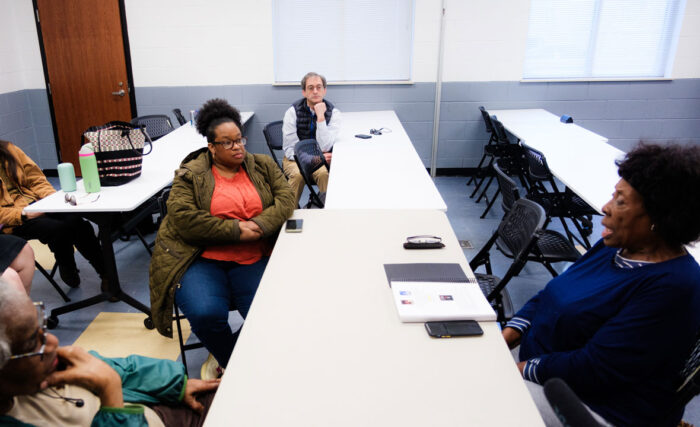
It was a huge and thoughtful effort. We wanted to represent all six SELC states, then we narrowed down which communities and issues to feature.
I also asked that our storytellers reflect the communities they documented. Representation matters. We assembled a team with many Black writers, photographers, and videographers who brought care and cultural understanding to every interaction.
We spent time with people—not just interviewing them, but sharing meals, touring hometowns, and meeting neighbors. That trust led to new introductions and unexpected perspectives that deepened the stories.
How did you decide which stories to feature?
We wanted a diverse mix of issues—air, water, land, and energy—and stories that represented SELC’s range of work. Each state office helped identify communities where environmental injustice and historical context intersected powerfully.
Ultimately, we chose stories that not only showed the exploitation but also mobilization for justice—communities organizing, advocating, and protecting what’s theirs.
Were there any surprising insights or challenges that shifted your perspective?
Most of the people we interviewed were elders— and it was often older Black women who have carried these stories for decades. It made me think about generational continuity: How do we inspire younger people to care about these places if they no longer live there or feel connected to them?
Many shared that their children and grandchildren have moved away and may never return. That raises questions about preservation and legacy—how do we honor history while creating spaces future generations want to come back to? That tension between past and future runs through every story.
This work isn’t just about storytelling — it’s about dignity, representation, and honoring the people who make these places what they are.
Tasha Durrett, senior communications manager
What do you hope people take away after engaging with the series?
That these communities are home—and they belong to the people who’ve loved and cared for them for generations. The South belongs to them, too. There’s been so much debate about who “belongs” in the South. The people in these stories are saying: This is my home, and I’m fighting to protect it.
I want conservationists and environmentalists to see that our fights are intertwined. Whether you’re protecting a national forest or a Black neighborhood next to a factory, it’s the same fight—to protect home, health, and legacy.
How are you measuring success for Plantations to Pollution?
SELC has been planting seeds of environmental justice for years. This series is about watering them—deepening awareness and broadening reach. For some audiences, success means discovering SELC for the first time; for others, it’s connecting our legal work to the human stories behind it. Ultimately, success is expanding the understanding of environmental justice in the South and drawing new allies into the work.
On a personal level, what has been the most meaningful part of leading this project?
Seeing a bold idea embraced by the entire organization. When I first proposed Plantations to Pollution, some thought it might be too ambitious or risky—but everyone rallied behind it. It’s also been meaningful to create something so comprehensive. For the first time, SELC is launching a unified story across every platform—web, podcast, video, and social. It’s exciting to see our collective work come together in one narrative.
I’m deeply proud of what this team has accomplished with this project.
If you could share one behind-the-scenes moment that stayed with you, what would it be?
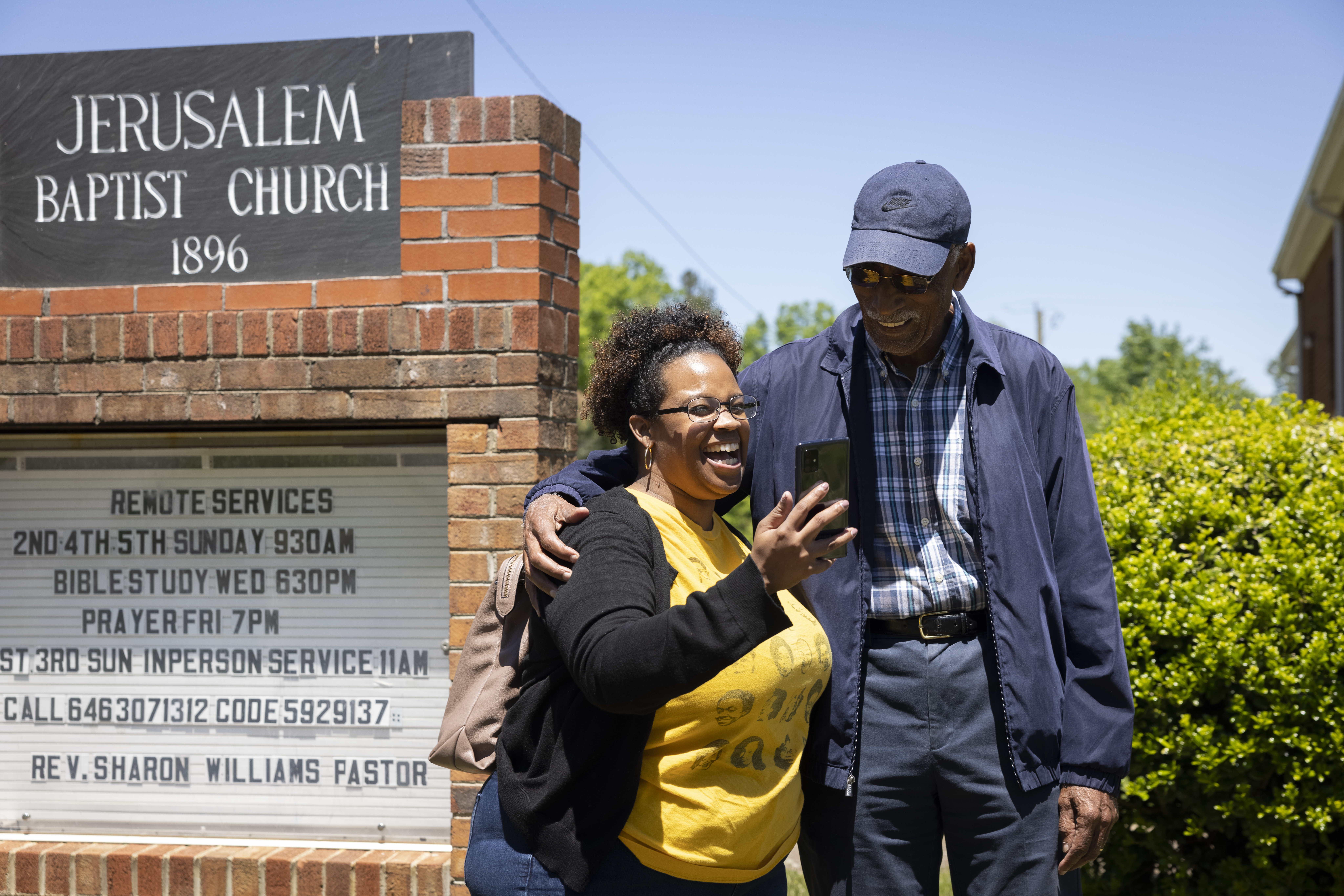
Two moments stand out. In Charleston, a woman who didn’t want to be photographed eventually agreed— and even took a selfie with me. The same thing happened in Alabama with another woman who initially refused but later posed privately.
Both were older, darker-skinned Southern women who, I sensed, hadn’t always been made to feel seen. Their willingness to share that moment meant a lot. It reminded me that this work isn’t just about storytelling—it’s about dignity, representation, and honoring the people who make these places what they are.