

Some of the South’s best whitewater is found in roadless areas
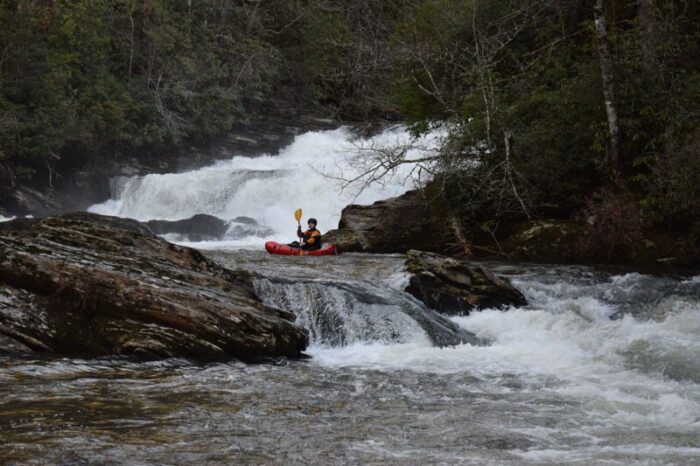
As the Upper Chattooga River tumbles down from the Southern Appalachian Mountains along the Georgia and South Carolina border, it creates some of the best whitewater paddling conditions in the region.
“It’s a really classic piece of white water,” Kevin Colburn, the National Stewardship Director for American Whitewater said. “The rapids are amazing and it’s definitely a great experience.”
And Colburn says part of what makes the experience so special is that it winds through the Big Mountain and Ellicott Rock Addition Roadless Areas.
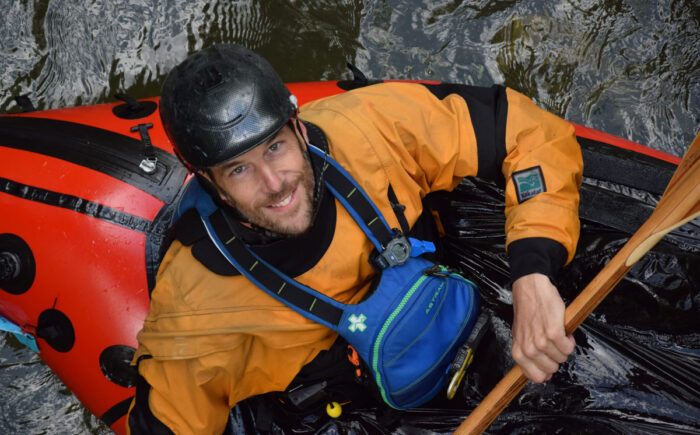
“As soon as you round the first bend, you’re just in a wild place and that’s not a very common thing anymore,” he explained. “It’s quiet and peaceful and a little bit raw. There’s a feeling of exposure to the natural elements that is good for the soul.”
Roadless areas are parts of our national forests that are protected by the Roadless Rule, which safeguards the least-developed parts of our national forests from reckless roadbuilding and destructive development like logging or drilling. The Rule promises that our least-developed public lands can be enjoyed by all of us for generations to come, without the threat of harmful projects.
But now the U.S. Forest Service is planning to go back on that promise. The agency is in the process of getting rid of the Roadless Rule—a move that put some of our wildest public lands on the chopping block, hurt Southern communities, and put world-famous recreation destinations like the Upper Chattooga River at risk.
Stand up for the South’s wildest forests.
A massive conservation success
The creation of the Roadless Rule is one of the biggest conservation wins of the modern era. Roadless areas protect drinking water sources for downstream communities and support local recreation economies throughout the South. In the 25 years since it was enacted, places protected by the Roadless Rule have become destinations for hikers, mountain bikers, hunters, anglers, birders, paddlers, and other visitors looking to get away from the noise and commotion of roads and development.
“You know you’re always guaranteed an experience of nature there. Roadless areas are these places where you can go and be you can just relax knowing that you’re going to experience nature on a simpler level without the intrusions of humans,” Colburn explained.
That guarantee has made the Roadless Rule incredibly popular. The 2001 rule was the produce of more than 600 public meetings across the country. The result was 1.6 million comments—more than any other proposed rule in history at the time—with roughly 95 percent in favor of the rule.
“I went to the one of the hearings for the Roadless Rule before it was created in 2001, and there were several hundred people there. Just an unbelievable upwelling of support for that policy.”
The Roadless Rule’s popularity continues today. Last fall, more than 600,000 people commented on the Forest Service’s proposal to get rid of the rule, with an estimated 99 percent of comments opposing the Forest Service’s reckless plan.
“Roadless areas protect so much of what people care deeply about and can’t replace—clean water, remote forest, wild rivers, iconic wildlife, and a place where adventure is still possible. It’s no wonder that people across the country, in urban and rural areas, and across the political spectrum are such strong supporters of the Roadless Rule,” SELC Senior Attorney Kristin Gendzier said.
“Georgia’s roadless areas are exceptional, whether you head to the Mountaintown Roadless Area to mountain bike or the Kelly Ridge Roadless Area to hunt and fish among the old growth forest. And South Carolina has fewer than 8,000 acres of roadless areas, making every acre incredibly important,” Gendzier added. “The Forest Service’s plan to throw out the Roadless Rule would rob us and future generations of these natural wonders.”
Gutting the Roadless Rule is a ‘gut punch’ to paddlers
Despite the rule’s massive popularity, the Forest Service began the process of rolling back the Roadless Rule in July 2025—a move that Colburn described as a “gut punch.” Road construction and destructive logging projects dump huge amounts of dirt, debris, and other pollution into clear mountain streams, and Colburn says revoking roadless protections would have an outsized impact on the South’s large paddling industry.
“In the South, we have to wait for a rain to come for our rivers to have enough water to float our boats and make fun rapids and all that. In developed areas, the rivers are always very brown, very murky after rains,” Colburn explained. “But then in these protected areas like roadless areas, the water is often crystal clear. You can see the rocks that make the rapids. You can see the fish, you can roll without cringing. It’s a very different experience.”
According to Colburn, you don’t have to go very far to see what the Upper Chattooga would look like without roadless protections. As paddlers exit the Big Mountain Roadless Area after their river trip, they pass through an area that’s been recently logged.
“As soon as you leave the protected corridors, you’re confronted with shelterwood cuts and clear cuts at a pretty large scale,” he said. “It’s a jarring experience to come out of a place that is more protected and doesn’t have roads, where it’s quiet and you see more wildlife and you see intact Southern forest and then you leave that roadless area and you see the value of those protections immediately because all the trees are gone.”
Fighting for our wildest forests
But conservation groups like SELC and American Whitewater are pushing back on the Forest Service’s misguided proposal to get rid of the Roadless Rule, fighting to ensure that future generations can enjoy—and paddle in—these wild forests like we do today.
“I’ve basically had most of my adult life now enjoying the peace of mind that comes with knowing those places will be the same the next time I go see them,” Colburn said. “Future generations deserve that same peace of mind.”