

Legal victories improve life for threatened shorebirds, horseshoe crabs
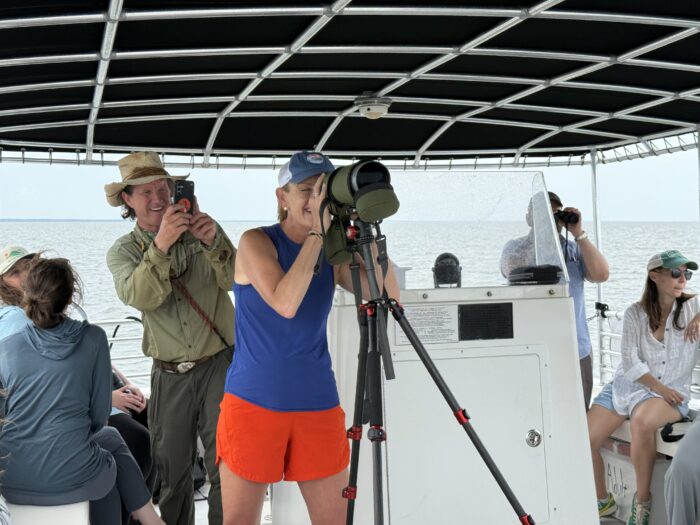
On a May boat trip, Chris Crolley from Coastal Expeditions guided staff from SELC and the Coastal Conservation League through Cape Romain National Wildlife Refuge to witness the remarkable seasonal meeting between horseshoe crabs and federally threatened Rufa red knots that has been occurring for millennia.
During their short visit to South Carolina each spring, red knots feed on horseshoe crab eggs to fuel their transpolar pilgrimage from Patagonia to the Arctic.
After years of advocating for restrictions on commercial horseshoe crab harvesting and multiple legal wins, the environmental groups were eager to see how the two species were faring. For years, Crolley has escorted guests on the coast’s waterways to catch a glimpse of the unique and beloved wildlife affected by the commercial harvesting industry.
On this trip, however, there was a stark difference from recent years when the refuge was heavily harvested. Horseshoe crabs and red knots seemed to be thriving again in Cape Romain.
I could not be happier.
Chris Crolley, Coastal Expeditions
“After years of heavy crab harvesting, the crabs and red knots became harder and harder to find in Cape Romain. But since SELC secured the closure of the refuge to harvesting, both species seem to be making a comeback,” said Crolley.
The annual gathering
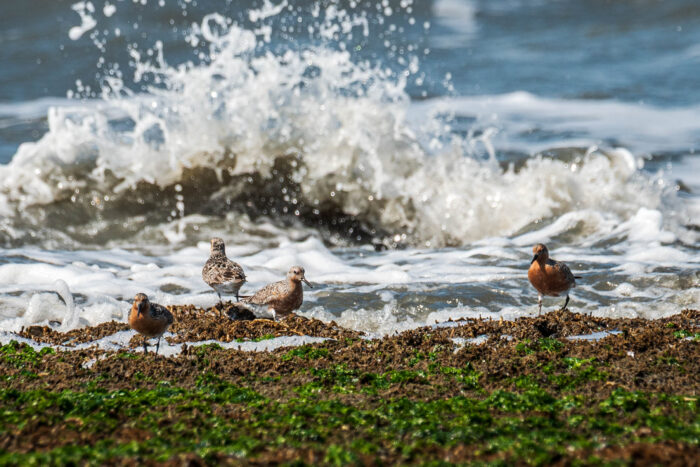
Cape Romain National Wildlife Refuge spans 22 miles of pristine barrier islands, marshes, and waterways north of Charleston where visitors can see wildlife flourish. Priceless habitat for loggerhead sea turtles, horseshoe crabs, and over 293 bird species, the refuge is a popular spot for outdoor recreators, birders, and other wildlife enthusiasts.
One notable temporary resident, the Rufa red knot, stops on South Carolina beaches each spring to feed on horseshoe crab eggs along its 9,000-mile journey to the Arctic to breed. To survive the trip, red knots must almost double their bodyweight with horseshoe crab eggs in a short time window. Due to the loss of essential habitat and food supply, the red knot was listed as threatened under the Endangered Species Act in 2014.
“We are living in a time where new and persistent threats to our wildlife and the habitats they rely on emerge daily,” says Riley Egger, Land, Water & Wildlife Program Director at the Coastal Conservation League. “With that reality, watching red knots feast on horseshoe crab eggs in Cape Romain is an especially beautiful and hopeful experience.”
Protecting the integrity of our federal lands and public beaches is more important now than ever.
Riley Egger, Coastal Conservation League
At the same time as the birds’ arrival, a Massachusetts-based pharmaceutical company, Charles River Laboratories, harvests and holds spawning horseshoe crabs to use their blood in biomedical testing.
This harvest – which takes up to half of each crab’s blood – continues despite the existence of a synthetic alternative used by companies like Eli Lilly. The use of holding ponds, which kept the red knot’s main food source away from their stopover beaches, is only permitted in South Carolina.
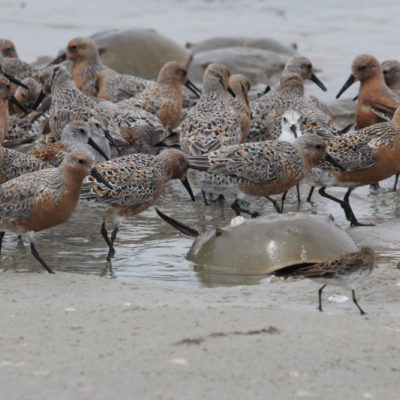
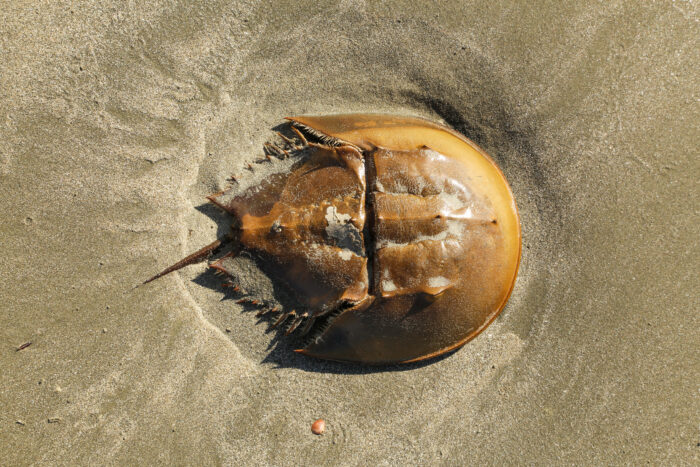
Thanks to over five years of hard legal and advocacy work, these horseshoe crabs now enjoy significant protections from commercial harvesting and the use of holding ponds, helping the red knots that rely on their eggs.
“It’s been quite a journey to advocate for these animals, and it brought tears to some of our eyes to see them in action this year,” said Catherine Wannamaker, SELC Senior Attorney, who joined the boat trip last month. “We’re proud to have contributed to the red knots’ recovery and protections for horseshoe crabs.”
Legal advocacy timeline
Years of work yield strong wildlife protections
Take a look back at some of the most important moments of our legal battle to protect horseshoe crabs and red knots from the impacts of harvesting in South Carolina.
May 2021
- A federal judge temporarily blocked commercial horseshoe crab harvesting in Cape Romain National Wildlife Refuge while SELC, representing Defenders of Wildlife, argued its case.
May – August 2023
- A preliminary and then final order from a federal judge in another of SELC’s cases stopped horseshoe crab harvesting on all South Carolina beaches used by red knots to feed – covering over 30 islands across the state coast.
- SELC’s case, which challenged the use of the holding ponds that take spawning crabs away from these critical beaches, also established a requirement that the harvesting company stop holding female crabs in the ponds, ensuring that more of the crabs’ eggs are laid on beaches for red knots to eat.
August 2023
- A landmark decision by the U.S. Fish and Wildlife Service as a result of SELC’s 2021 case shut down the harvest of horseshoe crabs in Cape Romain.
September 2024
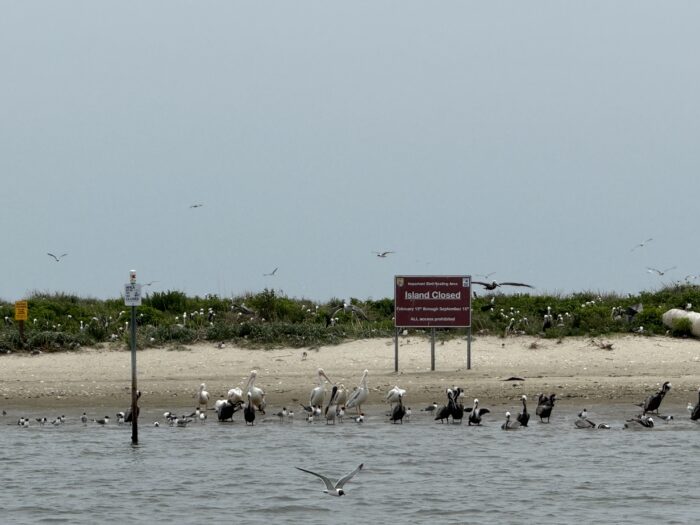
- The South Carolina Attorney General’s Office filed a lawsuit challenging the U.S. Fish and Wildlife Service’s jurisdiction over Cape Romain and sought to re-open the Refuge to commercial horseshoe crab harvesting. The State claimed the federal agency had no authority to protect the refuge’s wildlife, including horseshoe crabs and red knots, from harmful harvesting activities.
- SELC, representing Defenders of Wildlife and the South Carolina Coastal Conservation League, intervened in the case and filed a motion to dismiss the state’s case.
- The Court granted SELC’s motion, dismissing the State’s case and affirming the Service’s duty to protect refuge wildlife from horseshoe crab harvesting. As a result, the protections in Cape Romain hold firm.
These victories provide South Carolina with some of the strongest protections for horseshoe crabs and red knots in the country.
From the courtroom to the beach
Last month, Cape Romain’s beaches were crawling with horseshoe crabs and red knots. The importance of years of work was made evident: without commercial harvesters combing the wildlife refuge for crabs, both species could enjoy their seasonal encounter, undisturbed.
After years of litigation to protect these amazing animals, going out and actually seeing the birds and crabs flourish together on protected beaches left me speechless.
SELC Staff Attorney Carl Brzorad