

Hope for red wolves
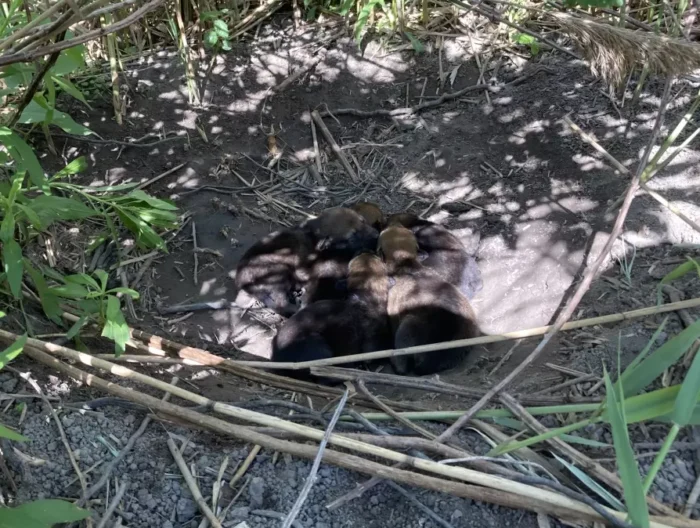
Full tree canopies and blooming goldenrod. Shifting bird sightings with migrating flocks. The thrum of cicadas, late sunsets, and lightning bugs. The final remnants of summer are all around — and in Eastern North Carolina they include the welcome yips and yaps of growing red wolf pups.
On August 8, the U.S. Fish and Wildlife Service (FWS) shared the good news that the world’s only wild population of red wolves has grown by as many as 16 pups. These births are a critical step forward for a population that numbered as few as 7 known wolves in the wild just five years ago. In fact, with 18 known adult red wolves, the population has increased by more than 150% since that low in 2020, and this year marks the most breeding pairs, most litters, and most pups in the wild in at least the last five years.
Every red wolf pup born or fostered into the wild brings us closer to a future where this iconic species can thrive again in its native home.
Ramona McGee, Wildlife Program Leader
SELC’s advocacy on behalf of our partners has been instrumental in ensuring that the federal government renew conservation and recovery efforts for this iconic species.
Life in the pack
Like many wolves, red wolves typically bond with a mate for life. They are highly social creatures, living in close-knit family packs that typically consist of the breeding pair, offspring from a previous year, and any pups of the year. They are very shy and secretive creatures, unlike their coyote counterparts. Breeding usually happens in the winter around February, with litters usually born in April and May. This year, the wild population had five breeding pairs and four litters.
The first few weeks of a red wolf pup’s life are challenging, and often not all pups in a litter survive a full year. Fish and Wildlife Service staff carefully balance the pros and cons of disturbing a wild den to administer potentially life-saving vaccines and collect data.
Boosting numbers through captive releases and pup fostering
In addition to wild births, the release of red wolves from the SAFE (Saving Animals From Extinction) population — a coordinated network of zoos and conservation centers — continues to play a key role in recovery.
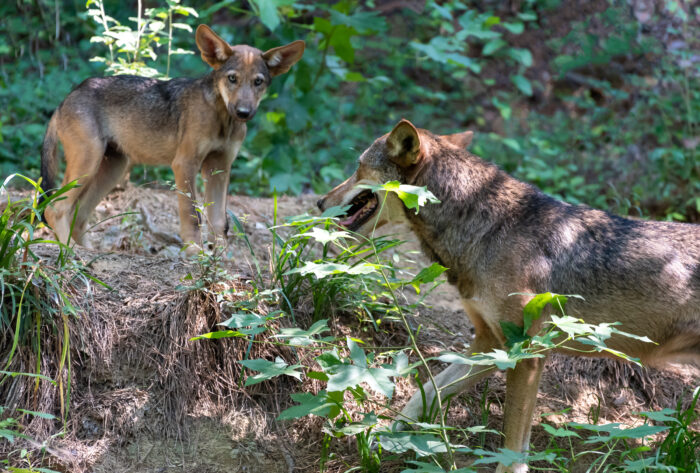
Carefully selected wolves from this population are released into the wild, including through pup fostering, which is an effective and less disruptive way to bolster the wild population when everything aligns so that a SAFE litter and wild litter are similarly timed and otherwise meet criteria to be candidates for this practice. This year, the Service and SAFE staff conducted the first ever red wolf cross-foster to bolster the genetic diversity of both the wild red wolf population and the SAFE population.
Under the Service’s annual Red Wolf Release Plans, the Service has also been working with SAFE facilities to select adult wolves with appropriate genetics and rearing to be paired with wolves in the wild population. Many of this year’s successful breeding pairs include wolves released from the SAFE population this year or in previous years.
Coyote management helps safeguard red wolves’ genetic integrity
Another critical piece of the recovery puzzle is preventing hybridization between red wolves and coyotes. Using adaptive management techniques, including sterilizing coyotes, the FWS has reduced the risk of crossbreeding, preserving the genetic identity of the red wolf.
There are currently more than 50 sterilized coyotes in the five-county area where the wild red wolf population roams, and no hybrid litters have been found for the past three years. And a robust, healthy population of red wolves can help push out and reduce the number of coyotes in an area.
A legacy of loss, a future of resilience
Once roaming across the entire southeastern United States, red wolves were driven to the edge of extinction by the 1970s largely due to hunting and habitat destruction, despite being smaller than gray wolves out West. When the FWS decided to launch, a captive breeding program to save the species, the agency was only able to capture 14 wild red wolves. In 1980, the species was declared extinct in the wild.
In 1987, red wolves were reintroduced into the wild in North Carolina — the first time a large carnivore had ever been brought back after extinction in the wild and the only wolf that is unique to the United States of America. The program was a resounding success: the wild population reached around 100 animals by the early 2000s and maintained that size for over a decade. But, beginning in the 2010s, government agency decisions and shrinking protections led to steep declines.
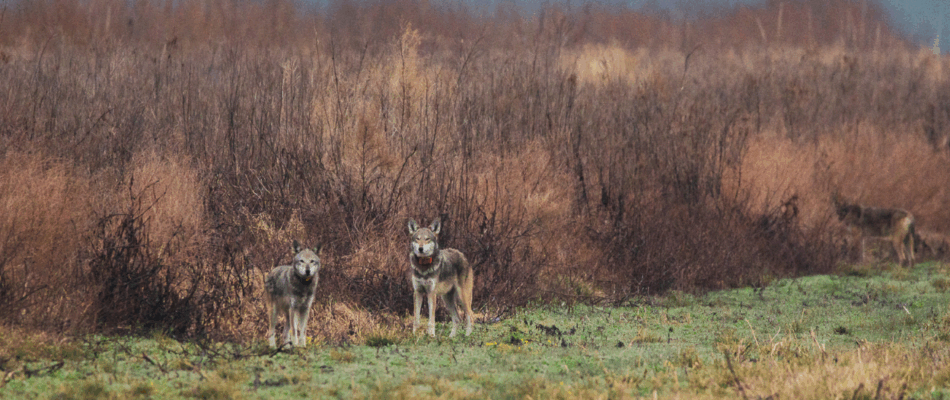
The Albemarle Peninsula is the only place on earth where wild red wolves can be found.
A turning point for America’s red wolves
With SELC’s and our partners’ historic settlement with FWS in 2023, the agency has reinvigorated its conservation efforts for America’s wild red wolves. By implementing proven management methods and emphasizing collaboration with all stakeholders, the dedicated staff at FWS is giving new hope to this majestic species. And at the end of 2024, the N.C. Wildlife Resources Commission also took an important step forward by adopting a new resolution that reflects a renewed commitment to work with FWS to recover the red wolf.
We celebrate this moment of progress and enhanced partnership — and we remain focused on the urgent need to grow and protect this fragile wild population.
Ramona McGee, Wildlife Program Leader
This year’s growing pups are more than a heartwarming sign of changing seasons — they’re a symbol that recovery is still possible.