

From the Outer Banks into the ocean
Visitors to North Carolina’s Outer Banks expect to see a glistening ocean, wild horses, and the beautiful wide beaches of Cape Hatteras National Seashore stretching 50 miles long. With over two million people visiting yearly, the thin barrier island has long been a popular vacation destination. But escalating erosion from rising sea levels means there’s trouble in paradise for many coastal property owners even beyond storms.
This fall marked one of the most worrying seasons for Hatteras Island. In six weeks, 16 oceanfront houses collapsed, bringing the total houses collapsed in recent years in the area to 27. Across the region, sea levels are rising, coasts are eroding, and beachfront houses are more vulnerable to collapse than ever before. With more houses on the brink of falling, looking at the past can help us understand how we navigate erosion issues today and protect our coasts in the future.
A coast in crisis
For nearly 40 years, the dynamic, narrow barrier islands of the Outer Banks have felt the harsh impacts of climate change. Across the island, a rapid uptick in shoreline loss is hitting the villages of Rodanthe and Buxton hard. In 2023, a Dare County study determined Rodanthe is losing around 15 feet of coastline per year as the shoreline erodes inland. High tide waves can swallow houses and wash out the main highway.
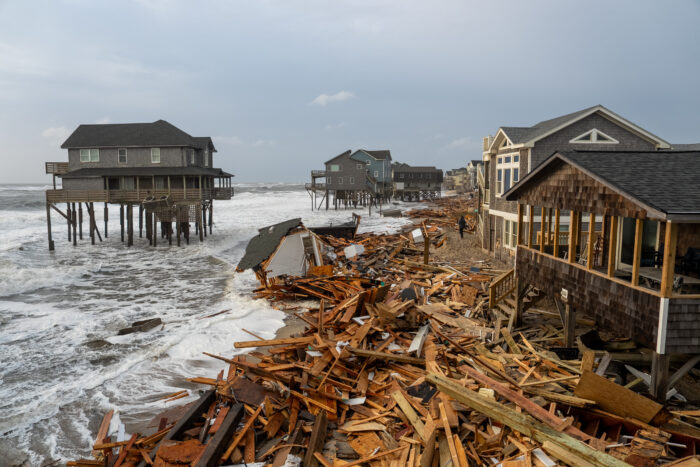
On September 30, 2025, the unthinkable happened. Six houses in Buxton collapsed, many of them happening minutes apart. Shortly after, more houses collapsed in Buxton and Rodanthe, culminating in five more collapsing in Buxton on another single day, October 28. As the problem escalates, the need for innovative approaches to combat the ongoing erosion is dire.
University of North Carolina at Chapel Hill professor Laura Moore has been modeling the future of the Outer Banks to demonstrate how current strategies like using sandbags to stabilize the roadbed or creating dunes are impeding the survival of the islands, which would naturally migrate as waves wash over the island and move sand to the sound side.
“The heart of the challenge is that the storm events we need to protect roads and buildings from would actually otherwise provide a lifeline for barrier islands in the face of rising sea levels,” said Professor Moore. “If we want them to persist, we need to find a way to allow them to shift underneath us or accept that we may lose the ability to live on them at all.”
Safety hazards and septic waste
Houses collapsing in the Outer Banks is a health and safety concern. As one of North Carolina’s most popular tourist destinations, the Outer Banks relies heavily on vacationers enjoying the ocean and exploring the beaches.
Many of the collapsed and at-risk houses are second homes or investment properties. Local government inspectors and the National Park Service send notices to property owners, warning them of the risks and urging them to move the houses out of harm’s way; the county sometimes even declares houses uninhabitable and cuts off electricity to prevent their use as vacation rentals.
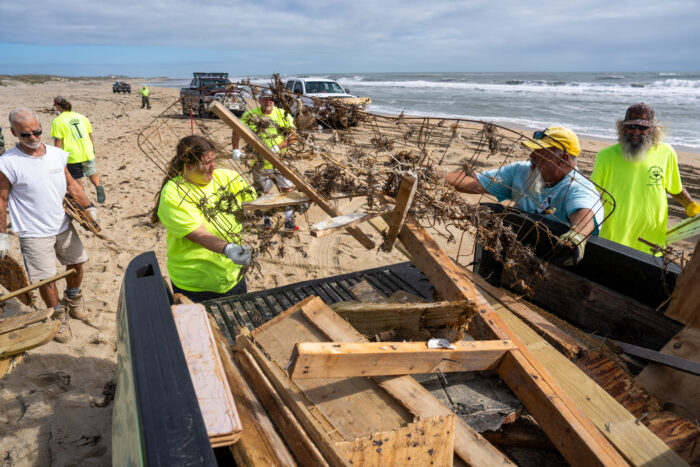
Yet often, property owners do not move them or demolish them in time, resulting in beach closures as entire house and contents fall into the ocean surf and cover the beaches of the national seashore — broken glass shards, boards with nails, insulation, appliances, roofing, broken septic tanks, raw sewage, wiring, etc.
Even before a house collapses, the septic drain field is often already located on the beach and inundated by daily tides. Sometimes, the septic tank itself is broken and leaking, allowing raw sewage to leach from houses on the beach, where it poses a threat to public health and safety, in addition to spoiling North Carolina’s beaches. Debris cleanup costs are legally the responsibility of the property owner. But, if left unpaid, the National Park Service and taxpayers end up covering the costs to clean the beaches.
In 2023, SELC on behalf of the North Carolina Coastal Federation wrote letters urging the National Park Service and the North Carolina Department of Health and Human Services to address imminent threats to public health and safety created by collapsing houses. Now as almost 30 total houses have collapsed in the area, community members are urging officials to do something – and do it fast.
What’s next?
With sea levels rising higher and coastline erosion accelerating more each year, lasting solutions are needed now more than ever. The response to the crisis unfolding in the Outer Banks will serve as an example for coastal communities nationwide.
SELC encourages decision-makers in North Carolina and across the country to explore solutions that are long-term, site-specific, cost-effective, and account for climate change impacts.
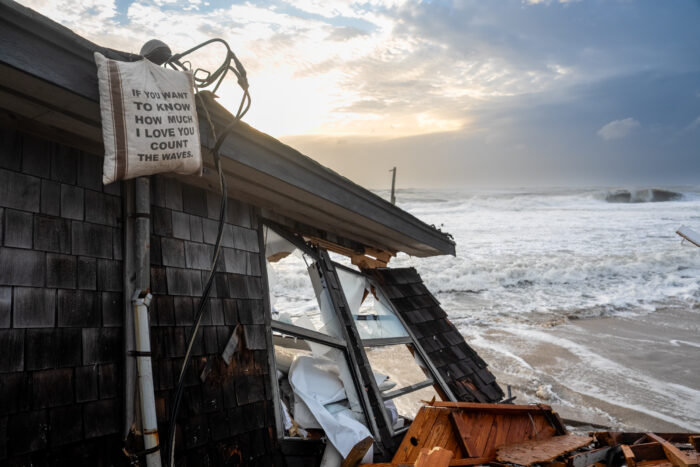
The legislature must ensure that state agencies and local governments have the necessary authority, resources, and funding to address all facets of the debris problem. And state agencies and local governments must use their authority and resources to protect people from public health hazards like failed septic systems, raw sewage on the beaches, hazardous debris from collapsed houses, and derelict buildings that could fall and hurt people.
“Government officials at every level have a responsibility to prevent dangerous hazards for the safety of locals and tourists alike on North Carolina’s coast,” said Julie Youngman, senior attorney at the Southern Environmental Law Center. “Specifically, state agencies and local governments should be using the authorities granted to them by the legislature to address the hazards created by these threatened structures.”