
Virginia faces busy and hopeful legislative session
Table of contents
Virginia has established itself in recent years as an environmental leader in the South. This is due largely to the adoption of policies that champion clean energy.
From the passage and implementation of the Virginia Clean Economy Act (VCEA) to becoming the first Southern state to join the Regional Greenhouse Gas Initiative (RGGI) and to adopt the Clean Cars Standards, the state’s progress was admirable. And then Governor Glenn Youngkin unlawfully pulled the state out of RGGI and refused to implement the Clean Cars law.
“We saw a period of great progress followed by one of walking back laws and policies already in place,” said Trip Pollard, senior attorney and leader of SELC’s Land and Community program. “Virginia to return to being an environmental leader with smart execution of existing laws, rejoining RGGI, and adopting policies that capitalize on new opportunities for progress while addressing growing problems such as data centers.”
Pollard—as well as SELC attorneys Josephus Allmond, Nate Benforado, and Morgan Butler—has been part of governor-elect Abigail Spanberger’s policy transition committee process.
Heading into the 2026 legislative session, environmental advocates, policy experts, and communities across Virginia have high hopes that a new governor will work with the legislature to establish a renewed commitment to clean energy, clean transportation, and policies benefiting Virginia residents, not just big tech and monopoly utilities.
Keep reading to learn more about SELC’s top priorities for this session.
Transportation: Moving forward with cleaner options
Each legislative session SELC supports transportation policies that will ensure Virginians benefit from and have access to cleaner transportation options, including alternatives to driving and electric vehicles (EVs). This will make our transportation system cleaner and more accessible for everyone.

“This year our top transportation priority is funding for public transit and passenger rail,” Pollard said. “This is something we’re always fighting for, and we have made significant progress, which has led to record levels of ridership. We need to see increased funding to provide the cleaner transportation choices people want.”
This is especially true now that the federal government has reduced its support for clean transportation.
SELC also continues to support electric vehicle adoption and more equitable access to charging. This session, there will bills to improve utility rates for EV owners, to increase the availability of charging in rural areas and new buildings, and to help more people realize the cost savings of switching to an EV.
“While the federal government is trying to undermine the transition to EVs, the technology continues to improve by leaps and bounds. This session, Virginia has the opportunity to step up by addressing issues like utility rates and charging infrastructure. I’m especially excited about efforts to make it easier to charge in apartment buildings and condos, meaning even more Virginians can take advantage of the long term savings of ditching gas,” said Senior Attorney Garrett Gee.
Energy: Batteries and solar can power the grid and help your wallet
Heading into this legislative session, it must be made clear that clean energy is a viable, affordable solution to power the state and no longer just an “alternative.”
“Our language must evolve. Solar, wind, and storage are not alternatives; they’re proven, they’re reliable, and they don’t saddle customers with extra charges for fuel. They already help power the grid. And it is abundantly clear that they are healthier and often cheaper alternatives to dirty, polluting methane gas,” said Josephus Allmond, staff attorney at SELC.
In and out of the legislative session, supporting policy that increases battery storage is at the top of Allmond’s priorities.
Reducing reliance on fuel and so-called natural gas
Josephus Allmond, Staff Attorneyis the most important step the state can take to reduce costs for customers.
Grid-scale batteries provide big savings to customers by charging when there is cheap, excess electricity, and then discharging when energy is more expensive.
“Reducing reliance on fuel and so-called natural gas is the most important step the state can take to reduce costs for customers,” Allmond said.
One bill that SELC is supporting this session seeks to increase the storage requirements for Virginia utilities and create a new requirement for long-duration energy storage. It also asks the SCC to update storage regulations regularly.
Separately, another bill seeks to expand the role that distributed generation, or small scale solar, plays in Virginia’s clean energy transition. This bill would make it easier for small businesses and individuals to access solar and increase the number of projects built on previously disturbed lands.
“More third-party distributed solar means lower costs and lower risks for ratepayers associated with these projects,” said Allmond. “And building more projects on the built environment can help avoid impacts to the Commonwealth’s important natural resources.”
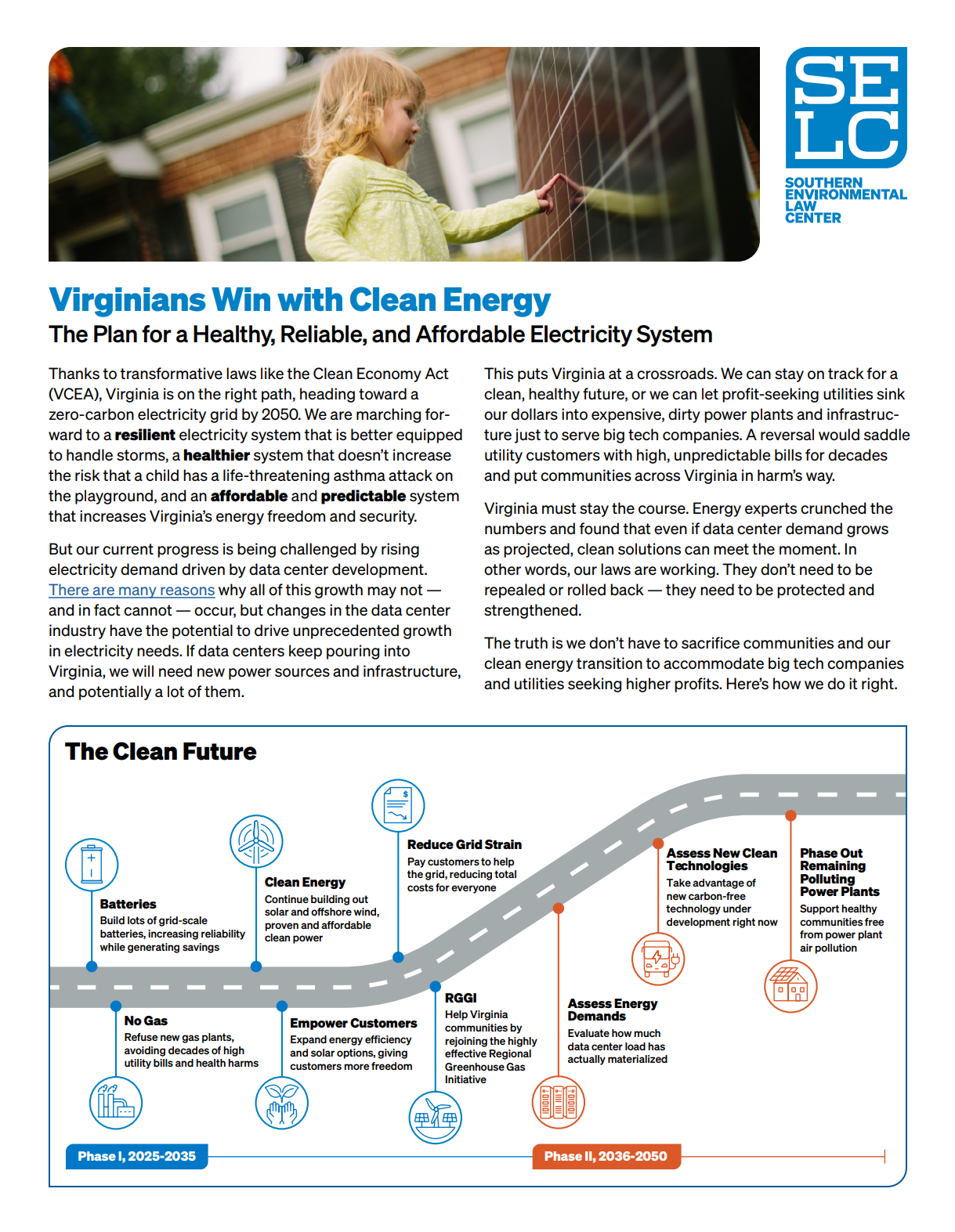
The continued push for solar and battery storage comes as Dominion has doubled down on its claimed need for new gas projects to meet energy needs catapulted by projected—but highly uncertain—data center growth.
Virginians Win with Clean Energy
Data centers: Building guardrails for a better future
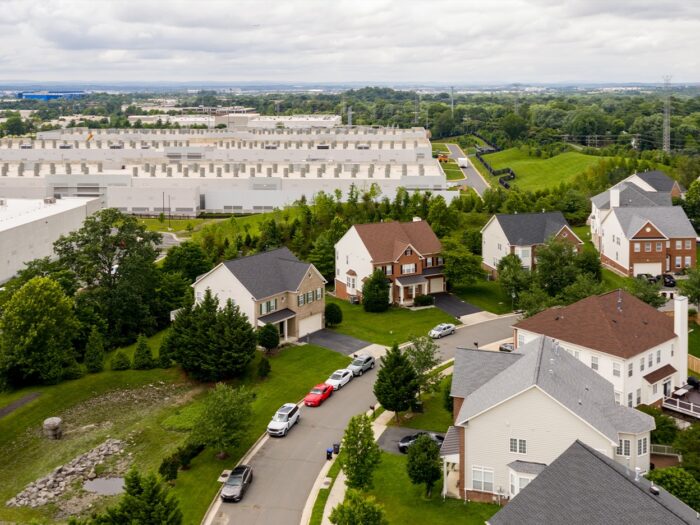
Data center growth in Virginia continues to dominate conversations across the state. In November, the SCC approved a new rate class for large energy users with much stronger financial requirements and also required Dominion to shift away from its current cost allocation methodology, which places a high burden on residential customers.
We’re already seeing utility bills rise due to data center growth and communities deserve to know the details of what’s happening as data centers move into their neighborhoods.
Nate Benforado, Senior Attorney
A huge draw for data centers in the state is its tax incentive. Last General Assembly session, bills aimed at reforming the incentive were unsuccessful. Many of these will be picked up again, and new ones are also expected.
“The state has been very friendly to big tech and data centers, allowing Virginia to remain the data center capital of the world. Last year we handed out about a billion dollars in tax breaks to these companies without attaching strong conditions, and we’re letting these facilities keep many of their impacts hidden from the public. This needs to change. We’re already seeing utility bills rise due to data center growth and communities deserve to know the details of what’s happening as data centers move into their neighborhoods,” said Senior Attorney Nate Benforado.
A full agenda for Virginia legislatures
Legislators in Richmond are guaranteed to have a full agenda this session, which starts on January 14. The regular session will adjourn on March 16.
Other policy proposals we’re watching closely and support include a bill to address the impacts multiple pollution points and other factors have on communities. And we will support legislation to require greater state agencies to consult with Virginia’s seven federally-recognized tribes on certain proposed policies or actions affecting the tribes.
Also on everyone’s mind? Getting the state back into RGGI. In 2024, the Circuit Court of Floyd County ruled that the regulatory action removing Virginia from RGGI was “unlawful and without effect.” However, that ruling was suspended, and the state remains out of the program during the appeal.
“We’re hopeful that this is going to be a productive session that really moves the needle on very important issues, including RGGI,” Benforado said.