

VICTORY: Okefenokee Swamp is safe from controversial mine
After six years of pressure from local partners, advocates, and SELC, a major threat to the Okefenokee Swamp has been defeated.
Twin Pines Minerals LLC is selling its property on Trail Ridge — halting its push to mine on the doorstep of one of the world’s most important wetlands. This deal, made possible by the incredible work of the Conservation Fund, marks a major win for the Okefenokee.
Over 250,000 people raised their voices for the swamp. And together, we proved that when citizens, advocates, and conservationists unite, we can achieve the extraordinary.
This mine could have caused irreparable damage to the Okefenokee National Wildlife Refuge — the largest east of the Mississippi River — threatened some of the South’s iconic wildlife, increased wildfire risks, and harmed the local economy.
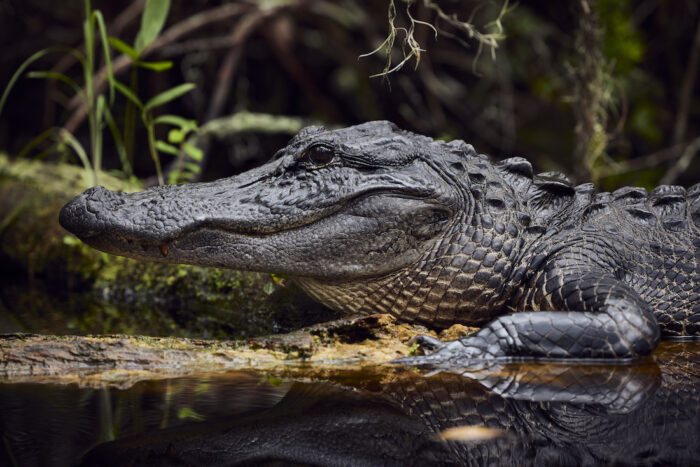
Now this ancient and irreplaceable landscape — home to 400-year-old cypress trees, rare indigo snakes, bobcats, and more than 15,000 alligators — is safe from this proposed mine.
Over 250,000 people raised their voices for the swamp. And together, we proved that when citizens, advocates, and conservationists unite, we can achieve the extraordinary.
This mine could have caused irreparable damage to the Okefenokee National Wildlife Refuge — the largest east of the Mississippi River — threatened some of the South’s iconic wildlife, increased wildfire risks, and harmed the local economy.
Now, future generations will have the opportunity to experience this magical and inspiring place.
No one voted for dirty air and water.
“When citizens, advocates, and the conservation community work together, really extraordinary things are possible,” said Bill Sapp, a senior attorney in SELC’s Georgia office and chairman of the Okefenokee Protection Alliance’s executive committee. “The Okefenokee is unlike any place on Earth. Conserving this special place is an important step towards protecting Trail Ridge and the Okefenokee for the next generation of Georgians.”
Known as the “wild heart” of Georgia, a long history of the Okefenokee – still one of America’s most ecologically intact freshwater systems – has been documented from before it gained federal status as a wildlife refuge.
For thousands of years prior to colonization, the swamp was the Indigenous homeland of the Deptford, Swift Creek, Weeden Island, Cord-Marked, Timucan, and Seminole tribes and cultures. Its name is said to be derived from the native Creek word for, “land of the trembling earth.”
Hear from Megan Huynh, leader of SELC’s Wetlands and Coasts Program, before the mine site was sold.
A chronological look at protecting the South’s iconic Okefenokee National Wildlife Refuge:
June 20, 2025
- The Conservation Fund announces purchase of Trail Ridge, protecting the Okefenokee Swamp from proposed mine.
January 3, 2025
- U.S. Fish and Wildlife Service finalzes plan to expand the Okefenokee National Wildlife Refuge’s acquisition boundary.
December 9, 2024
- The public comment period closes regarding the proposed expansion of the Okefenokee National Wildlife Refuge acquisition boundary.
November 12, 2024
- A public meeting will be held in Folkston, Georgia, regarding the proposed expansion of the Okefenokee National Wildlife Refuge acquisition boundary.
October 18, 2024
- The U.S. Fish and Wildlife Service proposes to expand the Okefenokee National Wildlife Refuge acquisition boundary — a move that would enable the service to work with willing landowners to explore voluntary conservation actions, including potential acquisition, that would protect the refuge’s sensitive hydrology and reduce wildfire risk.
February 9, 2024 – April 8, 2024
- The U.S. Fish and Wildlife Service formally asserts its federal reserved water rights for the Okefenokee National Wildlife Refuge and expresses concerns that Twin Pines Minerals’ proposed groundwater withdraws would impact water levels in the Refuge.
January 31, 2024
- The U.S. Fish and Wildlife Service formally asserts its federal reserved water rights for the Okefenokee National Wildlife Refuge and expresses concerns that Twin Pines Minerals’ proposed groundwater withdraws would impact water levels in the Refuge.
May 25, 2023
- The Supreme Court issues Sackett v. Environmental Protection Agency, which has the effect of definitively eliminating federal Clean Water Act protections on the proposed mine site — meaning that the mining company no longer needs any federal permits to mine.
January 19, 2023 – March 20, 2023
- Georgia Environmental Protection Division issues a public notice inviting comment on a draft Mining Land Use Plan submitted by Twin Pines Minerals. More than 100,000 individuals, along with local, regional, and national organizations, submit comments opposing the proposed mining project. More than 1,000 people register for two public hearings, with individuals from across Georgia and the country speaking out to share their stories and concerns.
July 14, 2020
- The coalition of groups fighting to protect the Okefenokee — now more than thirty groups strong — announces the official launch of the Okefenokee Protection Alliance.
April 21, 2020
- The Corps and the U.S. Environmental Protection Agency publish a rule rolling back federal Clean Water Act protections across the country, including those on the proposed mine site. Between April 2020 and May 2023, federal agencies, stakeholders, and courts go back and forth about the applicability of the Clean Water Act protections on the site.
March 13, 2020 – May 28, 2020
- More than 44,000 individuals from all fifty states and more than thirty countries submit comments opposing the March 2020 application. The Corps holds a virtual public hearing and is forced to open additional telephone conference options after the number of preregistered participants exceeds the Corps’ video-conferencing capacity.
February – March 2020
- Twin Pines Minerals withdraws its permit application after learning that the Corps would likely require the preparation of an EIS. Twin Pines Minerals then submits a new application, slightly reducing the initial mining footprint and calling the initial phase a “demonstration mine.” The March 2020 application for phase one of the project seeks to mine approximately 898 acres and fill over 475 acres of jurisdictional wetlands.
December 2019 – January 2020
- The Corps alerts Twin Pines Minerals that its July 2019 application would likely trigger the need to prepare an Environmental Impact Statement under NEPA. Twin Pines Minerals tells the Corps that preparing an EIS would be “unacceptable for [its] business.”
July 12, 2019 – September 12, 2019
- The Corps issues a public notice inviting comment on the Clean Water Act permit application submitted by Twin Pines Minerals. More than 20,000 individuals, along with local, regional, and national organizations, submit comments opposing the mine and calling for heightened environmental review.
July 11, 2019
- SELC organizes a small coalition of groups, including Georgia Wildlife Federation, Georgia River Network, and One Hundred Miles, to meet at the refuge to share information and discuss the proposed mining project. This group eventually grows into the Okefenokee Protection Alliance, which officially launches the following year.
July 3, 2019
- Twin Pines Minerals submits its initial state and federal permit applications for “Phase One” of the proposed 12,000-acre mine, requesting permission to fill nearly six hundred acres of jurisdictional wetlands and more than 4,500 linear feet of jurisdictional streams.
Spring 1997
- First mining attempt begins/stops
- “In the spring 1997, Secretary of the Interior Bruce Babbitt opposed the strip mining in advance of hearing DuPont’s arguments for it.” When the DuPont mine was proposed, a loose coalition of conservation organizations rallied around the refuge. In late 1997, DuPont backed off from a proposed mine due to pressure from shareholders.
- In 2003, DuPont donated all 16,000 acres to The Conservation Fund, which in 2005, transferred nearly 7,000 acres to the US FWS.
December 1986
- It’s designated as a Wetland of International Importance because of the Ramsar Convention, a special international treaty to conserve and sustainably use wetlands.
October 1974
- Nearly 344,00 acres of the Okefenokee are provided permanent protection as a National Wilderness Area.
1937
- The Okefenokee National Wildlife Refuge is established, covering nearly 400,000 acres of the swamp.