
Protecting the Okefenokee Swamp
After a major victory, Georgia’s ‘wild heart’ is still vulnerable to future mining attempts
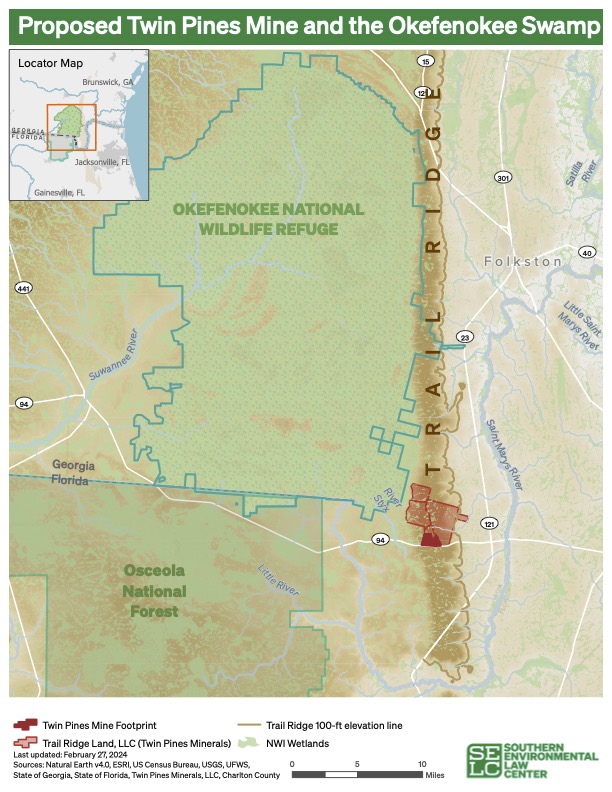
After years of advocacy, the Okefenokee National Wildlife Refuge is now safe from an Alabama-based mining company’s plan to mine 8,000 acres on Trail Ridge, the eastern edge of the Swamp. Twin Pines Minerals’ proposed mining project threatened the water levels and health of one of the most wild, pristine, and ecologically intact places in America. Thanks to the incredible work of The Conservation Fund, the mine site is now permanently protected.
The Okefenokee National Wildlife Refuge is home to a stunning array of biodiversity including bald eagles, bobcats, black bears, and 15,000 alligators. Several endangered and threatened species reside in and rely on the Okefenokee, including wood storks, indigo snakes, and red-cockaded woodpeckers. More than 850 plant species are found in the Okefenokee, from giant 400-year-old cypress trees to carnivorous pitcher plants and water lilies.
The Okefenokee attracts nearly 725,000 visits a year, supports more than 750 jobs, and generates an estimated $64.7 million in economic activity in the four counties surrounding the Refuge.
While the former Twin Pines Minerals site, and an additional portion of Trail Ridge that DuPont attempted to mine in the 1990s are protected, most of this landscape is still vulnerable to new mining proposals that could threaten the Okefenokee.
Working together to save the swamp.
Hear the compelling case from Reverend Antwon Nixon and Codi Norred on the past mining threat. Learn more about our partners One Hundred Miles and Georgia Interfaith Power & Light at OurGeorgiaCoast.org.
Wildfires and other climate risks
Twin Pines Minerals’ mine was the second time a company proposed mining Trail Ridge for titanium dioxide, a common mineral primarily used in common household items like toothpaste and paint. Even a perfectly operated mine on Trail Ridge would pose an unacceptable for the refuge, threatening the swamp’s water levels and creating a real danger for this drought prone region.
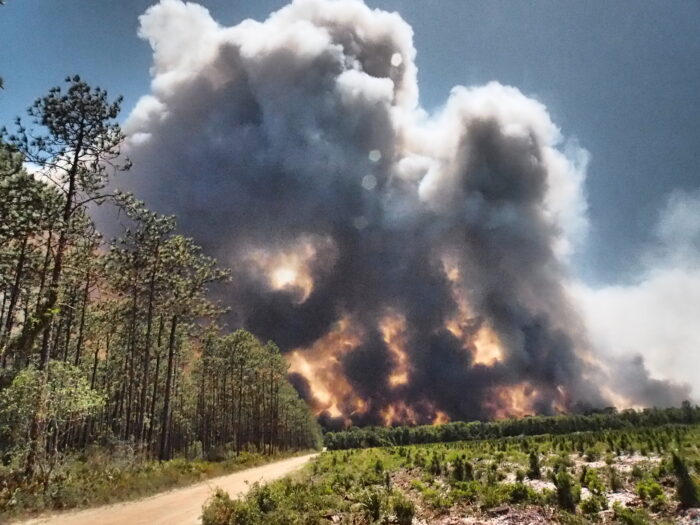
The Okefenokee is a large and important carbon sink, storing the equivalent of 145 million tons of carbon dioxide in forests, aquatic plants, soils, and peat. Peatlands account for 65% of the carbon stored in the Okefenokee. When peatlands are dewatered, they release vast quantities of carbon-laden greenhouse gases, exacerbating climate change. Given the peat-rich, fire-prone landscape of the swamp, even a small change in water level would increase the risk of catastrophic wildfires and could have other significant adverse impacts on the swamp’s ecosystem and surrounding communities.
The area surrounding the Okefenokee has a history of large and destructive wildfires during times of drought. Water loss from mining near the Okefenokee would exacerbate this risk. In 2017, the West Mims fire started in the Okefenokee National Wildlife Refuge, and consumed more than 145,000 acres, including more than 32,000 acres of industry and privately owned land. The effects of long-term drought were blamed for size and severity of the fire. The estimated loss on industrial and private land was more than $38.1 million.
Georgians and local, state and federal decision makers played a key role in stopping this mine
The Twin Pines Minerals’ mine was one of the most controversial projects in Georgia’s history. Concerned citizens from across Georgia and the country expressed their opposition to the mine by filing more than 250,000 comments with the Corps of Engineers and the state of Georgia.
A 2024 survey of Georgia voters revealed more than nine out of ten feel it’s important to protect the Okefenokee Swamp and National Wildlife Refuge, and there is widespread opposition to developing a mine near it. Support for protecting the Okefenokee and backing for federal action to protect it spans all demographics and political affiliations.
At least 19 local governments across Georgia passed resolutions calling for protection of the Okefenokee. A bipartisan majority of Georgia’s House Members — 94 out of 180— supported a bill that would outlaw mining on Trail Ridge. Federal leaders, including former Secretary of the Interior Deb Haaland and U.S. Sen. Jon Ossoff, wrote letters asking Georgia regulators to reject Twin Pines Minerals’ permit application for the mine. Twin Pines Minerals sold the property before a mining permit was ever issued.
In January 2025 the U.S. Fish and Wildlife Service (FWS) expanded the Okefenokee Wildlife Refuge’s acquisitionboundary – the zone in which FWS is authorized to acquire land or conservation easements from willing sellers – to protect hydrological integrity, conserve wetlands and key wildlife habitat, and create a fuel reduction zone to help protect neighboring properties. The expansion includes the former Twin Pines Minerals’ property. The expansion enables FWS to work with willing landowners to explore voluntary conservation actions, including easements or potential acquisition, that would further protect the refuge’s globally significant freshwater wetland system and wildlife habitat.
Additional Resources