
Tackling the South’s energy burden
Washing clothes, using WiFi for a job or to do homework, powering a home medical device, keeping our homes at comfortable, safe temperatures through cold winters and hot summer days: modern life depends on access to energy.
But despite how crucial energy is for our everyday health and well-being, too many families struggle to afford their bills. In 2020, one in four U.S. households reported sacrificing essentials like food or medicine – or leaving the thermostat at unsafe temperatures – to cover their energy costs. And high energy bills don’t just impact your wallet, they have been directly linked to increased mortality, decreased physical and mental health, and increased isolation.
The term “energy burden” describes the percentage of a family’s income spent on electricity and gas. Families with high energy burdens spend more than 6 percent of their income on their energy utility bills, and those with severe energy burdens spend more than 10 percent.
Southerners experience some of the highest rates of energy burden in the country. Between 2015 and 2020, energy burden increased nationwide – but there was a particularly sharp spike in our region.
What’s driving energy burden in the South – and what can we do to address it?
Why energy burden hits the South harder

“There are a lot of reasons why the South struggles with energy burden,” says SELC Senior Attorney Jennifer Whitfield, who advocates for an equitable clean energy transition in Georgia. “One of the most obvious is that it’s hot.”
As climate change intensifies the need for air conditioning, our bills have climbed.
The rising cost of keeping comfortable hasn’t impacted everyone equally. Communities of color, people with lower incomes, and families with very young children or older adults often face higher bills.
A legacy of discriminatory housing policy in the South has put communities of color at higher risk for living in “heat islands” – that is, neighborhoods with fewer trees and green spaces to absorb excess heat – and in housing with older, substandard insulation and cooling systems.
Communities of color experience higher energy burdens
Native American households spend 45%
more of their income on energy costs compared to white households.
Black households spend 43%
more of their income on energy costs compared to white households.
Hispanic household spend 20%
more of their income on energy costs compared to white households.
The kind of home a family lives in plays a major role in determining the size of their energy bill. For instance, manufactured (or mobile) homes typically use 50% more electricity per square foot than other kinds of housing.
As a result, those with lower incomes often face the highest energy costs – not only as a percentage of their income, but in the amount of money it takes to cool or heat each part of their homes.
Compounding the challenge many families face, Whitfield says, is the fact that Southern utilities have fallen far behind the rest of the country in implementing programs to help customers reduce their energy bills.
There are a number of policies that can empower households to control their electricity usage and bills. In the South, we are not using those policies as aggressively as we could be.
Jennifer Whitfield, Senior Attorney
Energy efficiency lowers bills
Energy efficiency and weatherization – which includes home improvements like installing insulation, sealing leaky air ducts, and upgrading appliances – is one of the easiest, cleanest ways to keep bills down.
By reducing the energy we use at home, efficiency not only immediately cuts costs for an individual family but can minimize the need for new energy infrastructure, including the massive buildout of costly, polluting gas-fired power plants many Southern utilities have planned.
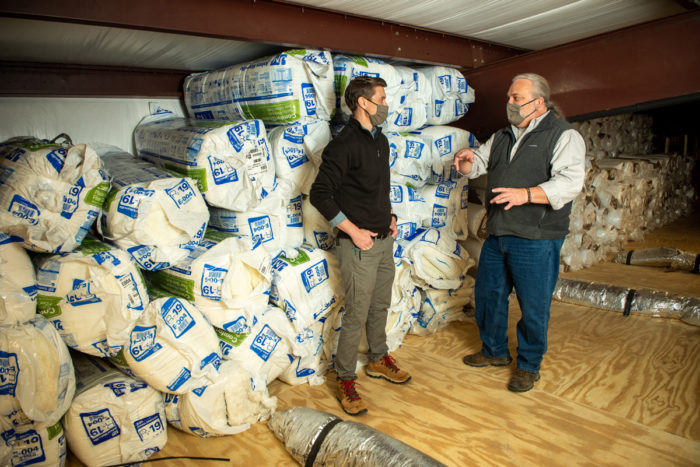
Rather than rely on building more expensive, harmful power plants, which can subject customers to volatile fuel spikes, utilities can meet a significant chunk of our energy needs through efficiency programs – reducing climate pollution, directly benefitting their most burdened customers, and saving all customers money.
“The cheapest electron is the one that isn’t used,” Whitfield notes.
But when it comes to embracing energy efficiency, our utilities have lagged. The Southern Alliance for Clean Energy reports that the Southeast’s annual efficiency savings are less than half the national average. States like Alabama – where the average resident spends more than 11 percent of their income on electric bills – achieve savings that are 25 times lower than the national benchmark.
Outdated utility models slow progress
We can chalk up a large part of our low efficiency savings to monopoly utilities’ outdated profit-making structure, says Whitfield, in which utilities earn by building more infrastructure and passing costs onto their customers.
“By definition,” she explains, “energy efficiency means that customers are using less of a utility’s product, and that means less profit.”
For the same reason, Southern utilities have been slow to pursue cost-cutting options like community solar, which allows renters or those who want to avoid the upfront cost of installing rooftop panels to benefit from the bill savings solar power offers.
“These are the kinds of programs that are popping up all over the place,” says Whitfield. “But they’re still illegal in Georgia, in part because companies like Georgia Power are fighting them.”
In the South, solutions to customers’ high bills are often most prevalent in states where utilities’ profit incentives have changed to prioritize savings. In North and South Carolina, where Duke Energy consistently outperforms other Southern utilities in energy efficiency opportunities, the company earns an incentive based on a percentage of the money it helps customers save. While Duke can still do more, clean energy and customer advocates say regulators in the rest of the South could follow the Carolinas’ example by requiring monopoly utilities to achieve real efficiency savings.
In 2020, families making $10,000 a year were billed an average of $0.35 more per square foot than those making $100,000 or more.
Rural electric cooperatives, which are member-owned, can also offer promising options for customers to save money. In northeastern North Carolina, for instance, the Roanoke Electric Cooperative offers member-owners free energy assessments and targeted upgrades through its “Upgrade to $ave” program.
Grassroots partners lead the way
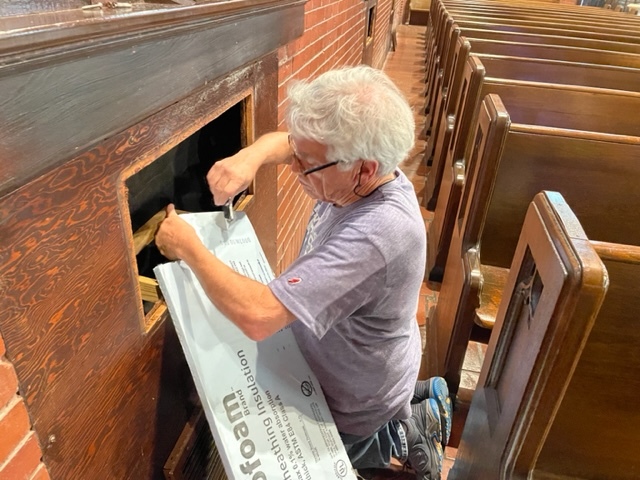
While utilities have been slow to embrace energy efficiency, grassroots organizations have been filling in the gaps – in some cases, literally.
An organization that kicked off in Alabama, WERiSE (Weatherizing Every Residence in the Southeast) teaches homeowners how to air seal, using low-cost materials like caulk and foam to close the spaces that allow heat or air conditioning to escape their homes.
In South Carolina, a coalition of energy equity advocates successfully pushed for a pause on utility shutoffs during the pandemic, protecting the state’s most vulnerable residents during a time when bills had spiked.
At utilities commissions and in the courts, SELC is working with partners to secure important wins on energy efficiency and bill relief. In North Carolina, for instance, efforts from clean energy and low-income customer advocates represented by SELC led to the creation of Duke’s High Energy Use Pilot, which provides funds to retrofit energy burdened households in Charlotte, Greensboro, and Winston-Salem.
During Duke’s last rate case, advocates helped secure $16 million for under-resourced North Carolina families – $10 million for critical home repairs and $6 million to support customers who have fallen behind on their bills.
Expanding the energy efficiency ecosystem
Common-sense legislation from the state and federal level can also address energy burden as it reduces climate-warming pollution.
In the South, the Virginia Clean Economy Act provided a model for reducing energy inequity by capping utility customers’ monthly electric bills at 6 to10 percent of their income.
The federal Inflation Reduction Act authorized $8.8 billion in funds for reducing home energy costs, enabling states to design programs to help cover the cost of retrofits and appliance upgrades for households who could benefit the most from energy efficiency savings. The Department of Energy estimates that the IRA’s rebate programs could save families an incredible $1 billion annually on energy bills.
“These funds could help expand the entire energy efficiency ecosystem,” Whitfield explains. Since many of the retrofits rely on contractors, she says the hope is that small businesses will gain new customers along the way, creating jobs and boosting local economies.
But recently, this promising program has been jeopardized by unlawful executive actions that could pause federal funding streams.
“Congress authorized these funds to spur jobs and help families cut their energy costs,” says Whitfield. “Unlawful actions from the Trump administration risk preventing these innovative programs from helping struggling families with their bills.”
A more equitable South
From grassroots organizations addressing immediate needs, to bipartisan funding aimed at helping people afford essential repairs and retrofits, to the opportunity for Southern utilities to embrace energy efficiency, the solutions for tackling energy burden are abundant.
We need to push for a clean energy transition – and we have to make sure that the people who are paying their bills today don’t have their lights turned off.
Jennifer Whitfield, Senior Attorney
By pursuing these solutions, the national map of energy burden – where the South currently stands out for some of the highest rates in the country – could look much different.
“The bottom line is we’re screwing up somewhere if people can’t pay for their basic needs,” says Whitfield. “We need to push for a clean energy transition – and we have to make sure that the people who are paying their bills today don’t have their lights turned off.”