
A win for water quality in North Carolina
Newly protected land in the Lick Creek watershed and a new plan to improve water quality flowing into a drinking water source in the Piedmont region are two major victories that will improve environmental health and the lives of many people.
After years of advocacy and litigation, the developer of the large Sweetbrier residential development in Durham, North Carolina, agreed to take action to prevent sediment pollution of Martin Branch and Hurricane Creek.
These two perennial streams surrounding the development connect through Lick Creek and flow into Falls Lake, a drinking water source for Raleigh and surrounding counties.
For years, sediment from Sweetbrier has eroded the Lick Creek watershed — its distinct orange hue a result of noncompliance with federal clean water regulations. Such pollution degrades water quality and makes it difficult for fish and other aquatic wildlife to breathe and live.
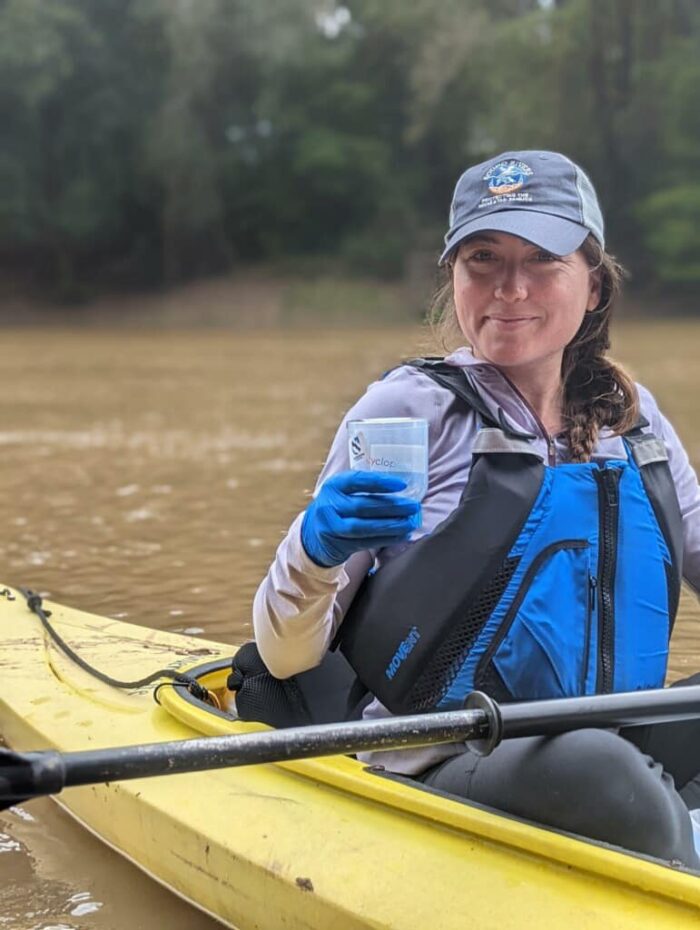
“By compelling this developer to contribute to land conservation in the Lick Creek watershed, we are able to turn this egregious environmental harm into a lasting protection for this impaired waterway and the community members who rely on it,” says Samantha Krop, the Neuse Riverkeeper and Director of Advocacy at Sound Rivers.
The legal victory
In 2023, SELC filed suit on behalf of Sound Rivers in the lawsuit against Clayton Properties Group, Inc. for violations of the Clean Water Act at the 216-acre, 616-lot subdivision in southeast Durham.
As part of a settlement approved this week, the developer has agreed to:
- Pay $270,000 to preserve a 62-acre tract in the Lick Creek watershed,
- Stop sediment pollution at Sweetbrier by stabilizing exposed soils, and installing/maintaining additional erosion and sedimentation control measures, and
- Pay $80,000 in civil penalties and fees for harming water quality and aquatic life.
Making the case
Sound Rivers’ extensive sampling downstream of Sweetbrier showed severe and pervasive water quality violations for over two years, including sediment pollution at levels that were regularly 10 to 20 times higher than North Carolina’s standard for healthy waterways.
Our partner also documented more than 300 instances of permit violations based on inspections of the site, including the chronic failure to properly install or maintain erosion control measures.
The reasons that make Durham desirable and North Carolina a place where we all want to live must be protected even as development booms.
Jamie Whitlock, Senior Attorney
“The reasons that make Durham desirable and North Carolina a place where we all want to live must be protected even as development booms,” said SELC Senior Attorney Jamie Whitlock. “We cannot allow North Carolina’s streams and waterways or Falls Lake to become dumping grounds for developers.”
Development booms
More development means more sediment pollution.
Sediment is the leading cause of water pollution in the state by volume, and the effects of sediment pollution can persist in streambeds long after the end of construction. The destruction of habitat can affect wildlife long term.
“We hope this settlement serves as a powerful deterrent to bad actors who recklessly harm our waterways with irresponsible construction practices,” added Krop. “And an unambiguous warning that pollution of our waterways will be met with serious legal and financial consequences.”