
Win: Latest settlement addresses Charleston-area sewage overflows
There’s nothing sanitary about the “sanitary sewer overflows” plaguing Charleston.
Sometimes, all it takes is routine rainfall for sewage to flow into the area’s streets, rivers, and residences, putting residents at risk of exposure to bacteria and pathogens.
Now thanks to our latest settlement, relief is on the way. On behalf of Charleston Waterkeeper, we reached an agreement to address these sewer overflows with the Charleston Water System.
What are sanitary sewer overflows?
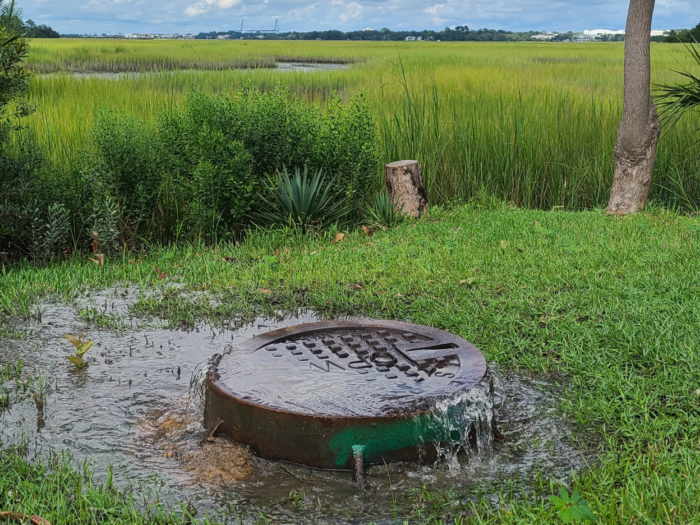
A sanitary sewer overflow, or “SSO,” occurs when untreated or partially treated sewage overflows from the wastewater system into nearby rivers, marshes, streets, and residences. In Charleston, SSOs often occur when excess water overwhelms sewer pipes due to “wet weather.”
These spills threaten the environment and public health, especially the huge number of people who recreate and fish in Charleston waters.
What’s included in the settlement?
In 2024, on behalf of Charleston Waterkeeper, we sent Charleston Water System a notice of intent to sue under the federal Clean Water Act. The goal was to address sewage overflows, most of which occur within West Ashley.
In the agreement, Charleston Water System commits to
- Continue and expedite planned inspections, repairs, and replacements to its sewer system to reduce sewage overflow events in West Ashley;
- Carry out more rigorous pipe inspections where necessary in West Ashley;
- Send Charleston Waterkeeper, and make publicly available, quarterly reports on the progress of their pipe inspection and repair program in West Ashley; and
- Deploy a customer notification system that alerts customers when there is a sewage overflow event in their area.
In the agreement, CWS also commits to recommending to their board the funding of a newly established sewer lateral line replacement grant program to assist homeowners in addressing leaking sewer line connections to their homes.
The program will offer a defined reimbursement for the repair or replacement of certain lines, with recommended funding for the next five years of $50,000 annually.
“This doesn’t just address the issue of sewage overflows—this agreement will create new solutions that will help the community for years to come,” said SELC Senior Attorney Emily Wyche. “We’repleased with this result that followed many productive conversations with Charleston Water System.”
The history
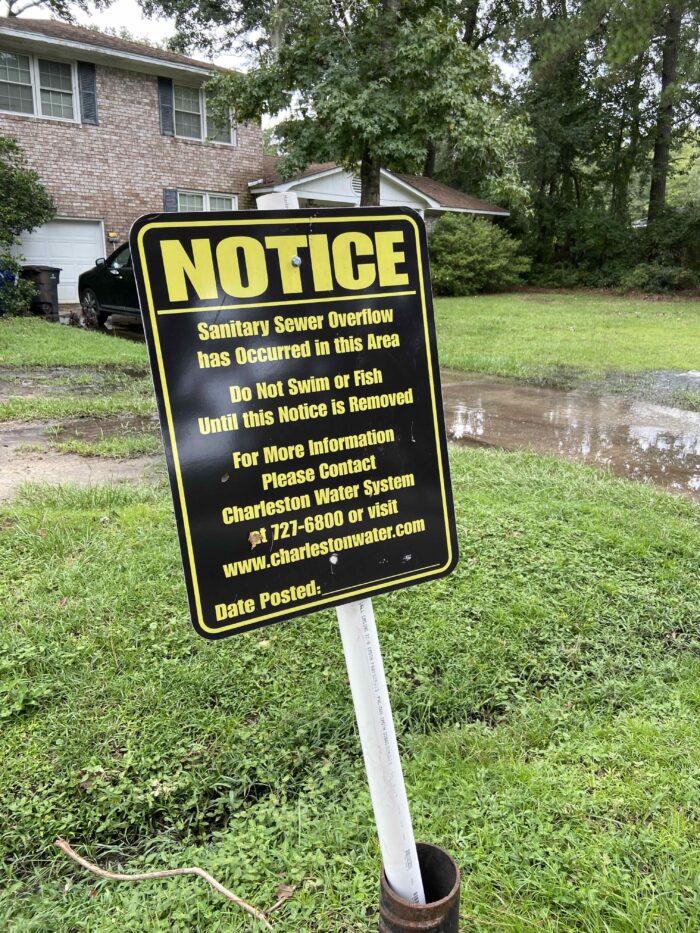
Since 2015, the city’s public utility, Charleston Water System, has had at least 176 illegal sewer overflows, many of which spilled sewage into Charleston’s waterways, including the Ashley and Cooper Rivers and James Island Creek. More than half of the overflows were caused by storm events, and about half of those storm events were just routine rain.
In December 2023, rain overwhelmed Charleston Water’s Plum Island sewage treatment plant and caused three separate SSOs – combined, they spilled around 40,000 gallons of sewage into roads and waters.
In 2020, the Post and Courier reported on the frequent sewer spills on Donahue Drive in West Ashley, one of Charleston Water System’s service districts. Residents there said the sewer overflows have been happening for 10 to 20 years.
“Stopping sewage overflows, especially in West Ashley, has been a top priority for Charleston Waterkeeper for years,” said Andrew Wunderley, Charleston Waterkeeper. “This settlement shows that Charleston Water System is ready to take care of this serious problem, and we’re excited to be part of the positive result.”