

Breaking down barriers to the outdoors
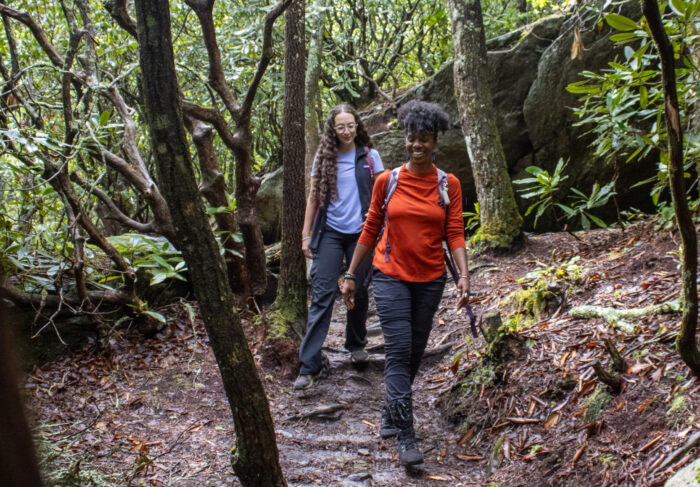
It’s a cloudy morning in North Carolina’s Pisgah National Forest, and Simone Adams is hiking up Hawksbill Mountain in the Linville Gorge Wilderness Area.
“Getting outside and hiking has helped me deal with all the stresses of adulthood,” she said.
But getting outdoors is more than a way for Simone to relieve stress—it’s become part of her mission. Four years ago, she founded the nonprofit organization Color My Outdoors, where she still works as the founding executive director.
“Our mission is to change the outdoor narrative to celebrate People of Color, and for us that means getting more Black and Brown folks into the outdoors and into outdoor leadership positions in the South,” she explained.
An early realization
Simone has enjoyed being in the outdoors ever since she was a kid growing up in Marietta, Georgia.
“I was the curious child who loved to play outside. I walked through the creek and collected fireflies and climbed trees,” she said. “And then at some point my dad introduced me to the outdoors formally and we started hiking and camping. I absolutely loved camping.”
But she says she noticed early on that there weren’t as many People of Color hiking, camping, and backpacking in the areas she typically visited.
I understood it as a kid because I was the only person who looked like me who wanted to do these things. And so it was me and my brother a lot of the times.
Simone Adams, Color My Outdoors
Adams adds, “One time we got my mom to go camping, because she is not an outdoors person, and when we went to pack up camp we realized somebody has slashed all of our tires. Even at a young age I had seen racism already, so I knew why our tires had been slashed.”
Barriers to the outdoors
Simone’s experiences are backed up by data. A 2018 survey from the National Park Service found that 51 percent of respondents said they had visited a National Park Service site in the previous two years. But that same study found that just 30 percent of Black respondents had visited — a figure that’s nearly half the percentage of white respondents who had visited an NPS site.
As I continue to get older, I think part of those barriers were, for most people, a lack of exposure which meant a lack of interest.
Simone Adams, Color My Outdoors
The difference is even starker when you look at specific outdoors activities. A 2016 study from the U.S. Census Bureau estimated that of the nearly 36 million Americans interested in fishing, just 3 million were Black.
That lack of interest is, in part, because of a legacy of laws that kept People of Color out of public lands. Researchers at North Carolina State University found that in 1952, for example, Black Americans had access to only 12 of the 180 state parks across nine southern states.
There are also financial barriers preventing People of Color from getting involved in outdoors activities.
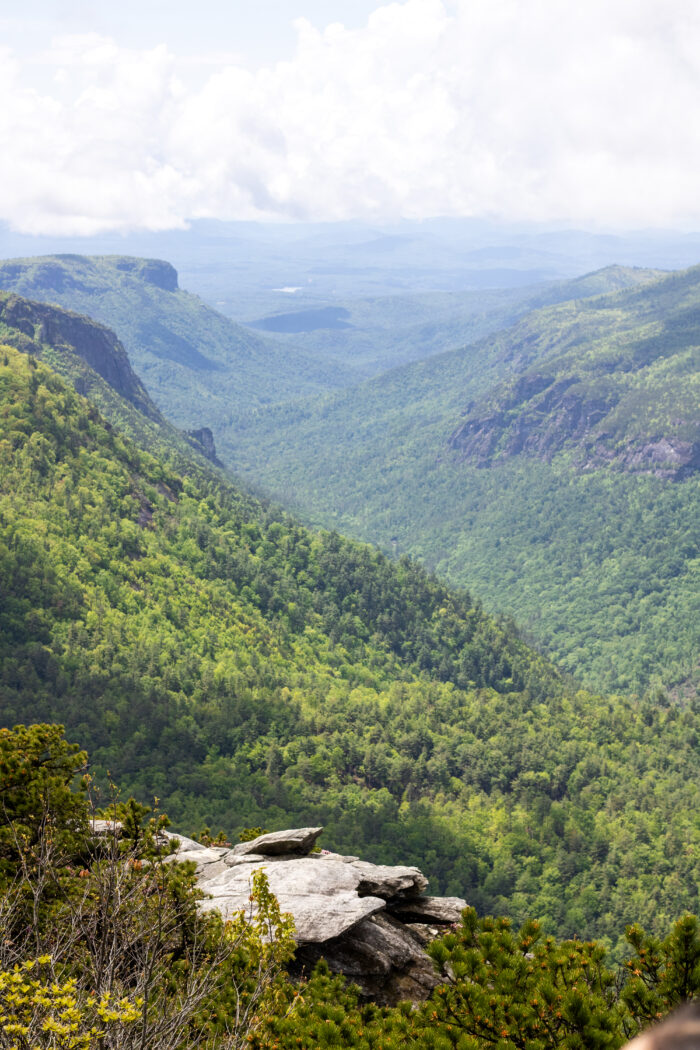
“Even for myself, there are activities that I’ve wanted to get into without having friends or family to introduce me to it, so that means that I have to spend money,” Simone explained, referencing the need to buy gear or hire guides when beginning a new type of activity.
Another factor is the lack of representation of People of Color enjoying the outdoors in books, TV shows, movies, or other media.
“I think one of the reasons that we’re underrepresented in the outdoors is because we aren’t represented in stories about the outdoors,” Simone said.
Simone says this underrepresentation in the outdoors has a real impact on communities of color who end up missing out on the proven benefits of being in the outdoors.
“There’s all sorts of scientific evidence about how nature impacts our health and wellness,” she said, adding that being in nature can help people feel connected to their heritage.
“We’re so disconnected from who we were that we don’t even realize that our ancestors had such a close connection with the earth, and so to find that again feels empowering and beautiful,” she said. “Especially for people who feel disconnected from their culture already, finding that can give you that sense of connection that a lot of us are missing in our day-to-day life.”
Color My Outdoors stepping up
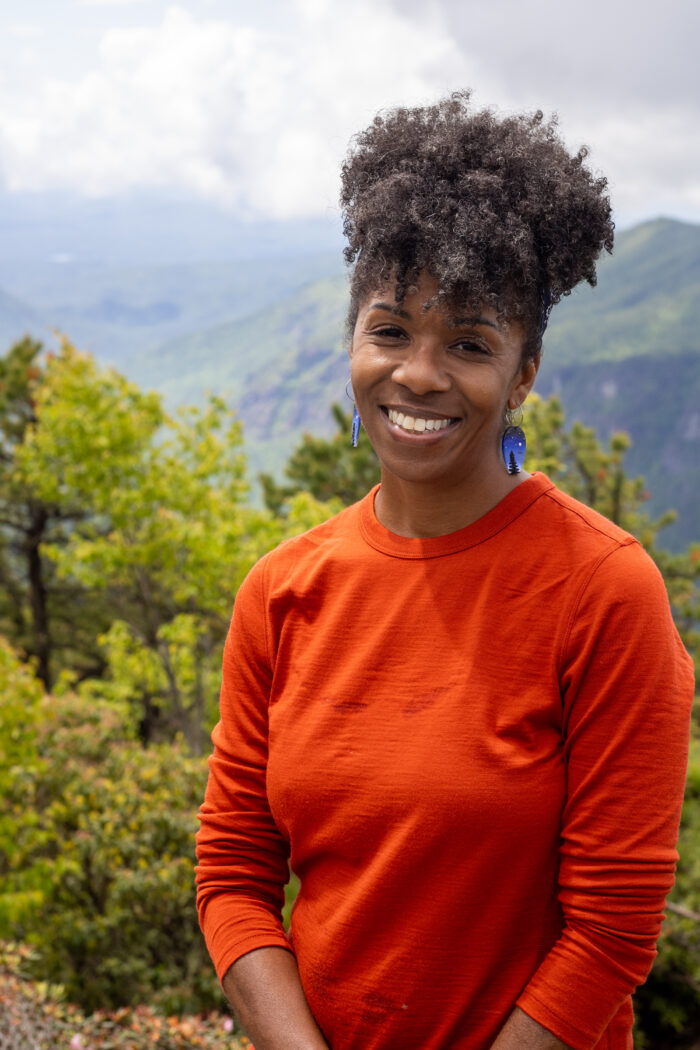
Since Color My Outdoors was founded in 2021, they’ve worked to try and break down those barriers, getting more People of Color into nature. The organization has four programmatic pillars, looking to confront both the financial and social hurdles.
“The first is changing perception and under that pillar we have our storytelling, which is where we are doing interviews with People of Color about their relationship to the outdoors. This is a way for us to increase representation,” Simone explained. Some recent examples include stories featuring a person doing street clean-ups in Atlanta and interviews with an Asian American and Pacific Islanders group in Western North Carolina.
Color My Outdoors also offers scholarship programs, helping connect communities with outdoors trainings like wilderness first aid and wilderness first responder classes. The trainings offer opportunities for more People of Color to get into outdoor leadership positions or to find jobs in the outdoor recreation space.
The organization is also building a directory of groups and businesses with similar missions or goals, and has opportunities to help get People of Color of all ages into the outdoors so they can feel more confident and comfortable while hiking, camping, backpacking, or enjoying other activities.